Choosing among the leading composite decking brands is one of the biggest decisions in any deck project, because the boards you pick determine how the deck looks, how much maintenance it demands, and how long it lasts. Composite decking blends recycled wood fibers and plastic to create boards that resist rot, splinters, and fading far better than traditional wood, without the annual staining and sealing. But the brands differ significantly in construction, appearance, warranty, and price, so understanding the landscape helps you spend wisely.
Part of our Decks & Outdoor guide — explore the full guide →
What Composite Decking Actually Is
Composite decking is made from a mix of wood flour or fibers and plastic polymers, often from recycled sources. Older, first-generation composites were uncapped, meaning the wood-plastic core was exposed on all sides, which left them prone to fading, staining, and mold. Modern premium boards are capped composites, wrapped in a durable polymer shell that resists scratches, stains, fading, and moisture. There is also full PVC decking, which contains no wood fiber at all, making it the lightest and most moisture-proof but often the priciest. When comparing brands, knowing whether a line is capped composite, uncapped, or PVC tells you a lot about its performance tier.
Trex
Trex is the name most homeowners recognize and effectively created the category. It offers several tiers, from the entry-level line to mid-range and premium collections with more realistic wood-grain looks and deeper multi-tonal colors. Trex boards are capped composite made largely from recycled materials, backed by long warranties, and available nearly everywhere, which makes finding contractors familiar with the product easy. Trex is a safe, widely supported choice that spans budget levels.
TimberTech (AZEK)
TimberTech, which includes the AZEK premium line, is Trex’s main rival and is often praised for the most realistic wood appearance. TimberTech offers both capped composite lines and capped polymer (PVC) lines under the AZEK name, the latter being extremely durable, lightweight, and fade-resistant. Many homeowners who prioritize looks and top-tier stain and scratch resistance gravitate to TimberTech’s premium collections, which carry strong warranties. Expect to pay more for the higher-end lines, but the realism and durability are frequently rated at the top of the market.
Fiberon
Fiberon is a strong value-oriented competitor that offers capped composite decking with attractive multi-tonal colors and solid warranties, often at a slightly lower price than the premium Trex and TimberTech lines. Fiberon is a good pick for homeowners who want capped composite performance and good looks without paying for the absolute top tier. It is widely available and well regarded for its balance of quality and cost.
Other Notable Brands
Beyond the big three, several other brands serve specific needs:
- Deckorators offers a unique mineral-based composite in some lines that is lighter and highly slip-resistant, appealing for wet environments and docks.
- MoistureShield is known for boards that can be installed in ground contact or even submerged, useful for docks and unusual applications.
- Cali Bamboo and other niche makers offer bamboo-based composites and distinctive looks.
- Store brands at home centers can offer budget entry points, though features and warranties vary.
Comparing Key Features
When you compare brands and lines, focus on the factors that actually affect daily life on the deck:
- Capping: Fully capped (four-sided) boards resist stains and fading best.
- Warranty: Premium lines offer 25-year to lifetime limited warranties, including fade and stain coverage; read what is actually covered.
- Heat retention: Darker boards get hotter in direct sun; some brands engineer cooler-surface technology.
- Scratch and stain resistance: Higher tiers with tough caps handle pets and furniture better.
- Appearance: Multi-tonal, embossed wood-grain boards look far more natural than flat, repetitive early composites.
- Hidden fastener compatibility: Grooved boards accept hidden clips for a clean, screw-free surface.
Price Tiers
Composite decking is sold by the linear or square foot, and prices vary by brand and tier. Budget capped composite lines run roughly $4 to $7 per linear foot for the boards alone. Mid-range lines land around $7 to $10, and premium capped composite and PVC lines can run $9 to $15 or more per linear foot. For a typical 300-square-foot deck, materials alone might range from $2,000 on a budget line to $6,000-plus on a premium one, before framing, fasteners, railing, and labor. Installed, composite decks commonly run $30 to $60 per square foot all-in, considerably more than pressure-treated wood but with far lower lifetime maintenance cost.
Composite vs. Wood: The Long View
Composite costs more up front than pressure-treated lumber, but the math shifts over time. Wood needs cleaning, sanding, and re-staining or sealing every one to three years, which adds up in materials, labor, and weekends. Composite needs only occasional soap-and-water cleaning. Over a 20- to 25-year lifespan, the reduced maintenance and longer service life often make composite the better value, especially for homeowners who do not want to spend every spring refinishing a deck. Wood still wins on lowest upfront cost and on that natural look and feel some people prefer.
Installation Considerations
Composite decking installs on the same pressure-treated framing as wood, but with a few brand-specific rules. Follow each manufacturer’s joist spacing requirements, often 16 inches on center for residential and closer for diagonal or commercial installs, since composite is less stiff than wood and can flex or sag if joists are too far apart. Leave the specified gaps for thermal expansion, since composite boards expand and contract with temperature. Use the brand’s approved hidden fasteners or color-matched screws. Getting joist spacing and gapping right per the specific brand is essential to a flat, long-lasting deck and to keeping the warranty valid.
Common Mistakes to Avoid
- Buying uncapped to save money. Uncapped boards stain and fade; capped is worth the difference.
- Ignoring joist spacing. Too-wide spacing causes flex and voids warranties.
- Skipping expansion gaps. Composite moves with heat; tight-butted boards can buckle.
- Choosing dark boards for a sunny deck. They get hot underfoot; consider lighter colors or cooler-surface lines.
- Not reading the warranty. Coverage varies widely; know what fade and stain protection you actually get.
How to Choose the Right Brand
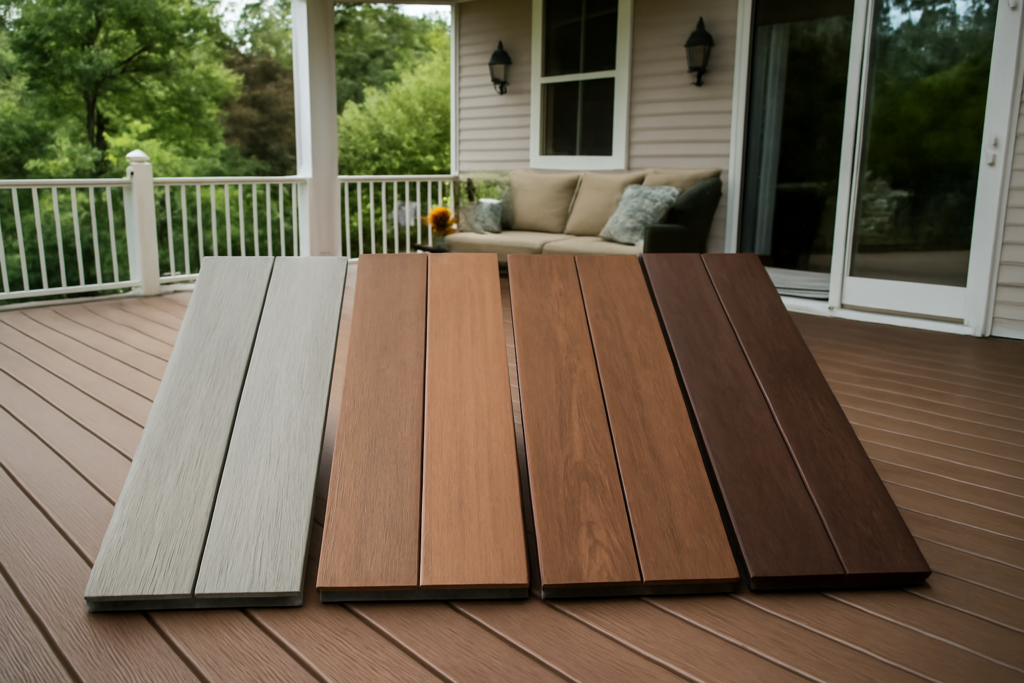
Start by ordering physical samples from two or three brands and viewing them in your own outdoor light, since screen images do not capture texture or color accurately. Weigh your priorities: if realism and top durability matter most, look at TimberTech and premium Trex; if value is key, consider Fiberon or entry Trex; if you need ground-contact or wet-area performance, look at MoistureShield or Deckorators. Confirm local availability and that contractors in your area are experienced with the brand, since familiarity affects install quality and cost.
Reading and Comparing Warranties
Warranties are a major selling point for composite decking, but they vary more than the marketing suggests, so read them closely. Premium capped composite and PVC lines typically carry 25-year, 30-year, or even lifetime limited warranties that cover not just structural integrity but also fade and stain resistance, often with a specific limit on how much color change is permitted. Budget and uncapped lines may cover only material defects, not fading or staining, which are the very problems that make a deck look old. Note whether the warranty is transferable to a new homeowner, which adds resale value, and understand that most warranties require installation to the manufacturer’s exact specifications, so cutting corners on joist spacing or fasteners can void coverage. A strong, clearly written fade-and-stain warranty is a sign the maker is confident in the product’s long-term appearance.
Maintenance and Longevity
One of composite decking’s biggest advantages is how little it asks of you, but low maintenance is not no maintenance. Twice a year, sweep off debris and wash the boards with soap and water or a composite deck cleaner to remove pollen, dirt, and the film that can feed mold in damp, shaded areas. Avoid pressure washing at high settings or with the wrong tip, which can damage the cap and actually void some warranties; follow the brand’s recommended pressure and distance. Clean up grease and food spills promptly, since even stain-resistant caps do better when messes are not left to bake in. Keep gaps between boards clear so water drains and air circulates underneath. With this modest routine, a quality capped composite deck holds its color and finish for decades, delivering on the low-upkeep promise that draws so many homeowners away from wood in the first place.
The best of the composite decking brands for you is the one that matches your budget, climate, and looks while offering a capped surface and a warranty you understand. Trex, TimberTech, and Fiberon anchor the market, with specialty brands filling niche needs. Order samples, respect each brand’s installation specs, and weigh upfront cost against decades of low maintenance. Do that and you will end up with a deck that looks great and stays that way for many summers with minimal work.