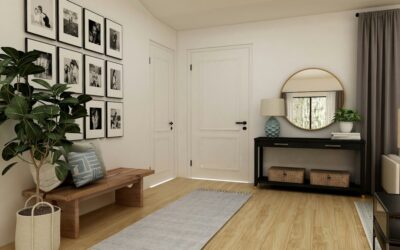
A console table looks simple, yet it is one of the easiest pieces to get wrong in an entryway or hall. The standard console table height is 28 to 32 inches, with 30 inches being the most common, while bar-height versions stand about 36 inches tall. Depth usually runs 10 to 16 inches and length anywhere from 36 to 72 inches, chosen to fit the wall and leave a clear walkway.
Height matters because a console usually sits against a wall where it relates to a mirror, a sofa back, a window sill or a light switch. Depth matters because these tables often live in narrow halls where every inch of floor is shared with foot traffic. Length ties the table to the wall it fills.
- Standard Console Table Height
- 36 Inch Height and Bar Height Console Tables
- Entry Table Height and Mirror Placement
- Console Table Depth
- Console Table Length and Wall Width
- Hallway and Walkway Clearance
- How to Choose the Right Console Table
- Troubleshooting Console Table Problems
- Cost Ranges
- When to Call a Pro
- Frequently Asked Questions
Getting all three right turns a console from a hip-bumping obstacle into a useful drop zone for keys, mail and lamps.
Standard Console Table Height
Most furniture makers build console tables between 28 and 32 inches tall, which places the top close to standard dining and desk height. That range sits comfortably at hip level for most adults, so you can set down a bag or reach a lamp switch without bending.
The standard console table height of about 30 inches also works well behind a sofa. Sofa backs are usually 28 to 34 inches tall, and a console placed behind one should be level with the back or an inch or two lower so it does not look like it is peeking over. Measure your sofa back before buying.
Console Table Height Chart
| Style | Height | Typical Use |
|---|---|---|
| Low console | 24 to 28 in | Under windows, behind low sofas |
| Standard console | 28 to 32 in | Entryways, halls, living rooms |
| Counter height | 34 to 36 in | Serving, buffet, standing drop zone |
| Bar height | 40 to 42 in | Bar stool seating, high ledges |
Matching Height to Nearby Furniture
Console table height rarely exists in isolation. In a living room, line the top up with the sofa back or a nearby window sill so the room reads as orderly. In a dining area, a console used as a sideboard often looks best a few inches taller than the dining table, which places serving dishes at a comfortable reach for standing guests. Under a wall-mounted TV, a lower table around 24 to 28 inches keeps the screen from riding too high. If two tables flank a doorway, keep them the same height even when their styles differ.
36 Inch Height and Bar Height Console Tables
A 36 inch height console table matches kitchen counter height and works well as a standing drop zone, a serving buffet in a dining area or a coffee station. It also suits tall homeowners who find a 30-inch table too low for daily use. A console high table at this height can double as a narrow eating ledge with counter stools tucked underneath.
True bar height consoles reach roughly 40 to 42 inches and are paired with bar stools. They are less common in entryways because they can feel imposing in a narrow hall and may block wall art or a mirror. Before choosing a taller table, check that it will not interfere with light switches, which are usually mounted around 48 inches above the floor, or with window sills.
Entry Table Height and Mirror Placement
Entry table height usually lands at the same 28 to 32 inches as other consoles. Entrance table height should leave space for a mirror or art above. A common guideline is to hang the bottom of a mirror about 6 to 10 inches above the tabletop so the two read as a grouping. With a 30-inch table, that puts the mirror bottom near 36 to 40 inches, and the center of a medium mirror close to eye level at about 57 to 60 inches.
If the entry has a light switch beside the door, keep the table and any lamp from blocking it. A small table lamp on a console should have its cord routed neatly to an outlet behind the table; avoid running cords across the walkway.
Console Table Depth
Depth is where console tables earn their reputation as space savers. Most measure 12 to 16 inches deep, and narrow versions go as slim as 8 to 10 inches. That shallow footprint lets them fit in halls where a regular side table would block traffic.
- 8 to 10 inches: Very narrow halls, behind doors, minimal decor
- 12 to 14 inches: Typical entryway with lamp and tray
- 15 to 18 inches: Behind sofas, living rooms, buffet use
Deeper tables offer more surface and more stable footing for lamps, but they cost walkway width. In a narrow hall, choose a shallow table and mount a mirror or shelf above for extra surface instead of adding depth.
Console Table Length and Wall Width
Lengths range from small 30 to 36 inch tables to grand 72-inch versions. A good rule is to choose a table that covers about two thirds to three quarters of the wall width, leaving open space at each end. On an 8-foot wall that suggests a table around 64 to 72 inches long; on a 5-foot wall, around 40 to 45 inches.
Behind a sofa, the console should be shorter than the sofa itself, usually by about 6 to 12 inches on each end, so it does not stick out past the arms. For a typical 84-inch sofa, a 60 to 72 inch console works well.
Hallway and Walkway Clearance
Clear walking space is more important than any decor choice. Plan to keep at least 36 inches of clear walkway between the front edge of the console and the opposite wall or furniture. Many interior halls are only 36 to 42 inches wide, which means a 12-inch deep table would shrink a 42-inch hall to 30 inches, too tight for comfortable passage.
In that situation, pick an 8 to 10 inch deep console, a wall-mounted floating shelf, or skip the table and use hooks and a slim ledge. In wider entries of 48 inches or more, a 14 to 16 inch table leaves plenty of room. Also watch door swings: front and closet doors should open fully without hitting the table.
Rugs and Floors
Entryways see grit and moisture. If you place a runner in front of a console, use a non-slip pad cut slightly smaller than the rug and keep edges flat so no one trips. Felt pads under table legs protect hardwood and vinyl from scratches when the table shifts.
How to Choose the Right Console Table
- Measure the wall width. Plan for a table covering about two thirds to three quarters of it.
- Measure hall width. Subtract 36 inches of walkway to find your maximum depth.
- Check nearby heights. Note sofa back, window sill, switch and outlet heights.
- Choose height. Use 28 to 32 inches for most spots, 36 inches for a standing or serving zone.
- Plan what goes on it. A lamp and tray need about 12 inches of depth; a slim decor piece needs less.
- Tape the footprint. Mark it on the floor and walk past several times.
- Anchor if needed. Tall or narrow tables can tip, so secure them to a wall stud in homes with kids or pets.
Troubleshooting Console Table Problems
- Table wobbles: Add adjustable glides or shims, and tighten leg hardware.
- Hall feels cramped: Swap for a shallower table or a floating shelf.
- Looks lost on the wall: Add a large mirror or art above, or move up to a longer table.
- Too low behind a sofa: Raise it with furniture risers or choose a table level with the sofa back.
- Narrow table tips forward: Use an anti-tip strap into a wall stud.
Cost Ranges
Simple metal or engineered-wood console tables often cost well under a couple hundred dollars. Solid wood tables, stone tops and storage versions with drawers commonly land in the mid to high hundreds. Custom-built consoles or floating shelves installed by a carpenter vary with materials and finish but usually cost more because of labor.
When to Call a Pro
Freestanding consoles are an easy DIY purchase. Hire a carpenter or handyman for a wall-mounted floating console, which must be fastened securely into studs to carry lamps and decor, or for a built-in unit scribed to an uneven wall. If you want a new outlet or a switched outlet behind the table for a lamp, a licensed electrician should handle that work.
Frequently Asked Questions
What is the standard height of a console table?
Most console tables are 28 to 32 inches tall, with 30 inches the most common height.
How tall should a console table be behind a sofa?
Level with the sofa back or an inch or two lower, which usually means 28 to 32 inches.
Is a 36 inch console table too tall for an entryway?
Not necessarily. It works as a standing drop zone, but check that it does not block light switches, windows or a mirror.
How deep should a console table be for a hallway?
Keep at least 36 inches of clear walkway. In narrow halls that often means an 8 to 12 inch deep table.
How long should a console table be?
About two thirds to three quarters of the wall width, or 6 to 12 inches shorter than the sofa on each end when placed behind one.