
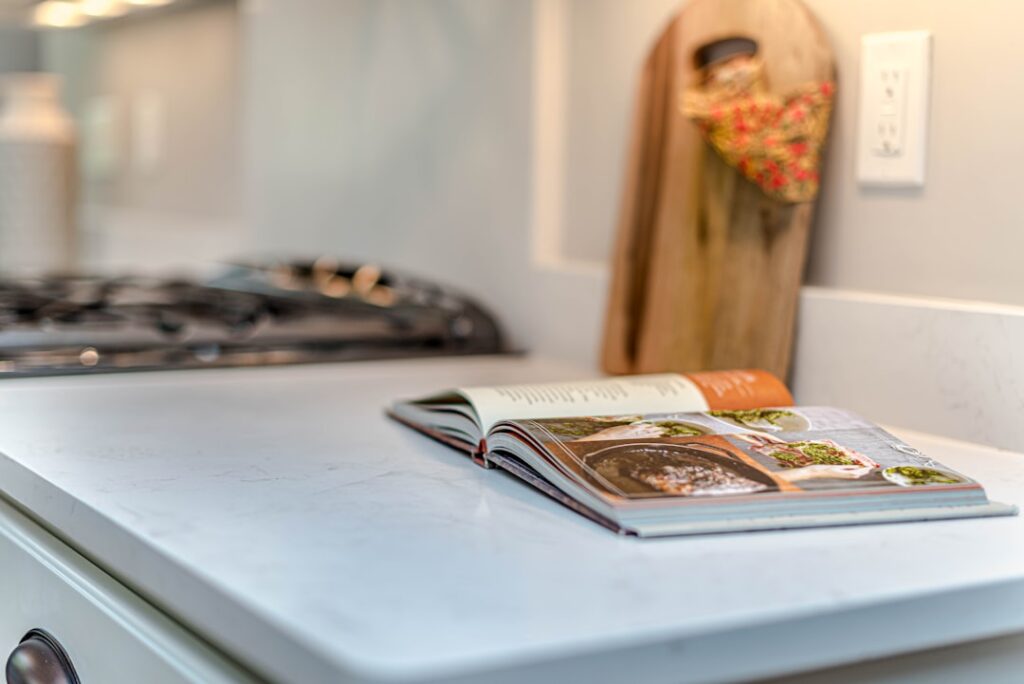
Updating a kitchen or bathroom counter does not have to mean a five-figure stone budget. Countertop laminate sheets deliver an affordable, versatile, and surprisingly attractive surfacing option that comes in an enormous range of colors and patterns, from solid hues to convincing marble and wood looks. These thin, durable sheets bond to a substrate to create smooth, easy-to-clean counters that suit almost any style. This guide covers the types of sheets available, how much they cost, how to choose the right one, and what to expect from installation.
When homeowners picture a kitchen makeover, they often assume that beautiful counters require a stone-sized budget, and that assumption stops many worthwhile projects before they start. Laminate quietly upends that expectation. Modern countertop laminate has come a long way from the dated patterns of decades past, offering finishes so convincing that guests frequently cannot tell them from natural stone or wood at a glance. Combined with a price that is a small fraction of what quarried slabs command, this makes laminate one of the most practical ways to refresh a kitchen or bathroom without draining your savings. The sheets are also forgiving to work with, opening the door to satisfying do-it-yourself installations that further stretch your budget. Whether you are updating a rental, outfitting a laundry room, or giving a starter home a fresh face, understanding how these sheets work, what they cost, and how to install them empowers you to make a smart, confident choice. With that promise in mind, let us begin by examining exactly what countertop laminate sheets are and how they are constructed.
- What Are Countertop Laminate Sheets
- Types and Finishes Available
- Standard Sizes and Thickness
- Cost and Budget Considerations
- How to Choose the Right Sheet
- Installing Countertop Laminate Sheets
- Care, Durability, and Limitations
- Popular Edge Treatments for Laminate Counters
- Laminate Versus Other Countertop Materials
- Are Countertop Laminate Sheets Right for You
What Are Countertop Laminate Sheets
Countertop laminate sheets are thin, rigid sheets made by fusing layers of kraft paper and a printed decorative layer under a clear protective coating, all bonded together with resin under heat and pressure. This creates a hard, wear-resistant surface commonly known by brand names that have become nearly generic in the industry. The sheets are sold separately from any substrate and are glued to a base of plywood or particleboard to form a finished countertop. Because the decorative layer is printed, the design possibilities are essentially unlimited, spanning solids, stone looks, wood grains, and abstract patterns.
Types and Finishes Available
The variety of countertop laminate sheets is one of their biggest selling points. Beyond color and pattern, the surface finish dramatically changes the look and feel.
- Matte finish: Understated and forgiving, hiding fingerprints and minor scratches.
- Gloss finish: Bright and reflective for a sleek, modern appearance.
- Textured and matte stone looks: Mimic the feel of honed granite or marble.
- Wood-grain patterns: Add warmth without the maintenance of real wood.
- Solid colors: Clean, timeless options for minimalist kitchens and baths.
Standard Sizes and Thickness
Countertop laminate sheets come in standard dimensions that make planning straightforward. Common widths range from 24 to 60 inches, and lengths run from 72 up to 144 inches, allowing you to cover most counters with a single sheet and minimal seams. The material itself is thin, typically around 1/16 inch or about 1 millimeter for general-purpose grades, though thicker and thinner options exist for specific uses like vertical surfaces. Buying a sheet large enough to cover your counter in one piece produces the cleanest result, so measure carefully and allow extra for trimming.
Cost and Budget Considerations
Affordability is the headline advantage of laminate. Countertop laminate sheets themselves generally cost between 20 and 100 dollars per sheet depending on size, brand, and finish, with premium patterns commanding more. Installed as a finished countertop, laminate typically runs 10 to 40 dollars per square foot, a fraction of the 50 to 100-plus dollars per square foot common for granite or quartz. For a DIY installation, your main costs are the sheets, contact adhesive, a substrate, and basic tools. This budget-friendly profile makes laminate ideal for rentals, starter homes, laundry rooms, and cost-conscious remodels.
How to Choose the Right Sheet
Selecting the best countertop laminate sheets involves balancing looks, durability, and practicality. Consider the finish first, since matte hides wear better in busy kitchens while gloss offers drama in low-traffic spots. Choose a pattern and color that complements your cabinets and flooring, and order a sample to view it in your actual lighting. Think about the grade too, as general-purpose laminate suits horizontal counters while a lighter vertical grade works for backsplashes and cabinet faces. Always buy a bit more than your measurements require to allow for trimming errors and future repairs.
Installing Countertop Laminate Sheets
Applying laminate is a popular DIY project, though it rewards careful preparation. Begin by cutting your substrate to size and ensuring it is clean, flat, and dust-free. Rough-cut the laminate sheet slightly oversized, then apply contact cement to both the substrate and the sheet, allowing it to become tacky. Because contact cement bonds instantly, use dowels or a slip sheet to position the laminate precisely before pressing it down and rolling it firmly to eliminate air pockets. Finally, trim the overhang flush with a router and laminate bit, then file or bevel the edges smooth.
- Prepare a clean, flat, well-supported substrate.
- Apply contact cement evenly to both surfaces and let it flash off.
- Position carefully with dowels, then roll for full adhesion.
- Trim edges with a router and finish with a file.
Care, Durability, and Limitations
Laminate counters are easy to live with, cleaning up with mild soap and water and resisting everyday stains well. To keep them looking their best, always use a cutting board rather than knives directly on the surface and trivets under hot pots, since laminate can scorch and its surface can be scratched or gouged. Avoid abrasive scrubbers and standing water at seams, which can seep into the substrate. While laminate is not as heat- or scratch-proof as stone, treating it with reasonable care yields a durable, attractive counter that lasts many years.
Popular Edge Treatments for Laminate Counters
The edge profile you choose has a big impact on how finished and upscale your laminate counter looks. The most economical option is a self-edge, where a strip of the same laminate is applied to the counter’s front edge and trimmed flush, creating a clean square profile with a thin visible brown line. A beveled edge softens that line with an angled cut for a slightly more refined appearance. For a seamless, higher-end look that hides the dark seam entirely, some manufacturers offer molded or wrapped edges where the laminate curves smoothly over the front without a visible joint. Rolled and beveled factory edges also help contain spills. Choosing an edge treatment is a chance to elevate an affordable material, and even a simple beveled self-edge looks tidy and intentional when trimmed cleanly with a router.
Laminate Versus Other Countertop Materials
It helps to see where laminate stands among the alternatives. Compared with granite and quartz, laminate is dramatically cheaper and easier to install, but it is less heat- and scratch-resistant and does not add the same resale value. Against solid surface materials, laminate wins on price while offering fewer seamless-repair options. Butcher block brings warmth but needs regular oiling, whereas laminate is essentially maintenance-free. Tile counters cost less but have grout lines to clean.
- Versus stone: far cheaper and DIY-friendly, but less durable.
- Versus butcher block: lower maintenance, no oiling required.
- Versus tile: smooth surface with no grout lines to scrub.
Are Countertop Laminate Sheets Right for You
For homeowners seeking an affordable, stylish, and DIY-friendly counter surface, countertop laminate sheets are an excellent choice. They offer a vast selection of colors, patterns, and finishes, install at a fraction of the cost of natural stone, and clean up with minimal fuss. While they require some care around heat and sharp objects, their durability and value are hard to beat. Measure carefully, choose a finish that fits your lifestyle, and whether you install them yourself or hire a pro, laminate sheets can give your kitchen or bath a fresh, budget-friendly transformation.
Prefer to explore on your own?
See how new flooring looks in your actual room in seconds — free, no signup.
Try the free Floor Studio →

