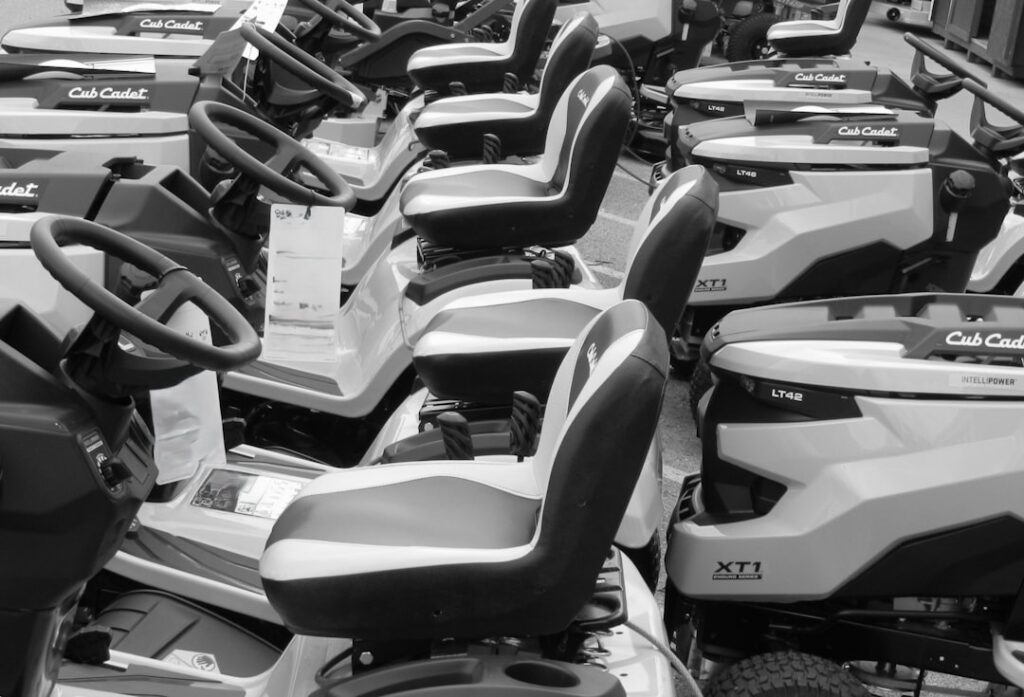
A Cub Cadet lawn mower is one of the most recognizable names in American lawn care, and for good reason. The brand spans everything from a $250 push mower to a $6,000 zero-turn, so picking the right Cub Cadet lawn mower comes down to matching deck size, drive type, and engine to the yard you actually have. This guide walks through the lineup, real prices, and how to keep one running for a decade.
- Who Makes Cub Cadet
- The Full Lineup at a Glance
- Walk-Behind Mowers
- Riding Lawn Tractors: XT1 and XT2
- Zero-Turn Mowers
- Engines, Decks, and Transmissions
- What It Costs to Own
- Warranty and Where to Buy
- Maintenance and Safety Basics
- Common Problems and Fixes
- Attachments and Accessories
- Battery vs. Gas in the Cub Cadet Line
- How Cub Cadet Compares
- Which Cub Cadet Should You Buy?
Who Makes Cub Cadet
Cub Cadet started building compact tractors in 1961 and is now owned by MTD, which is itself part of Stanley Black and Decker. That corporate backing means wide parts availability and a dealer network, plus a lot of shared engineering with brands like Troy-Bilt. Engines come from Kohler, Briggs and Stratton, and Cub Cadet’s own branded units.
The Full Lineup at a Glance
Cub Cadet organizes its mowers into a few clear categories, each aimed at a different lawn size and budget.
- Push and self-propelled walk-behinds for lawns up to about half an acre.
- Riding lawn tractors (XT1 and XT2 Enduro series) for half an acre to three acres.
- Zero-turn mowers (Ultima and Pro Z) for open acreage where speed matters.
- Battery-electric models for homeowners cutting the cord.
Walk-Behind Mowers
The walk-behind range covers the SC and CC series. A basic push mower like the CC 30 starts around $250 to $330. Self-propelled models with a 21-inch steel deck and a Briggs engine run roughly $400 to $550. Look for the SignatureCut models if you want rear-wheel drive, which pulls better on hills and turns easier than front-wheel drive.
Cub Cadet also sells a battery walk-behind on its 60-volt platform. It delivers gas-like torque for a small lawn, runs quiet, and skips oil changes, though a single charge covers roughly a quarter to a third of an acre depending on grass thickness.
Riding Lawn Tractors: XT1 and XT2
The Enduro XT1 series is the volume seller. Expect a 42, 46, or 50-inch deck, an 18 to 24 HP engine, and a hydrostatic transmission that lets you change speed without shifting. Prices land between $2,300 and $3,300. The XT1 is the sweet spot for one to two acres of mostly open lawn.
Step up to the XT2 and you get fabricated (welded) decks instead of stamped steel, better ground speed up to about 7.5 MPH, and higher-spec Kohler engines. XT2 tractors run $3,000 to $4,200. If you tow a cart, spread seed, or mow uneven ground, the XT2’s heavier build pays off.
Zero-Turn Mowers
Zero-turns pivot on the spot using two lap bars that independently drive the rear wheels, so they carve around trees and beds far faster than a steering wheel. The Ultima ZT1 and ZT2 are the homeowner line, with 42 to 60-inch decks and prices from about $3,300 to $5,500. The Pro Z series is commercial-grade, built for landscapers who mow all day, and runs well past $6,000.
A zero-turn earns its keep on flat, open acreage. On slopes over about 15 degrees they can slide, so a lawn tractor is the safer pick for hilly terrain.
Engines, Decks, and Transmissions
Three specs drive performance. The engine, measured in HP or cc, determines how it handles tall or wet grass. The deck size sets how much ground you cover per pass, so a 50-inch deck cuts a two-acre lawn in noticeably less time than a 42-inch. The transmission, almost always hydrostatic on riders, controls how smoothly you change speed.
Fabricated decks made from thicker welded steel resist dents and last longer than stamped decks pressed from a single sheet. If you mow rough ground or plan to keep the mower 10-plus years, pay for the fabricated deck.
What It Costs to Own
Beyond purchase price, budget for consumables. A riding mower needs oil and filter changes every 50 hours (about $25 in parts), a new blade set once or twice a season ($30 to $60), and an air filter and spark plug yearly. Gas is the biggest recurring cost for large properties. Battery models cost more upfront but skip nearly all of this.
Warranty and Where to Buy
Cub Cadet backs most residential mowers with a 3-year limited warranty, and some decks carry longer coverage. You can buy at Home Depot, Tractor Supply, Lowe’s, and independent Cub Cadet dealers. Dealers cost a little more but handle warranty service and setup, which matters on a $4,000 zero-turn. Big-box units often arrive needing final assembly and oil.
Maintenance and Safety Basics
Keeping a Cub Cadet reliable is mostly about routine care, and every job under the deck starts with the same safety step. Before you clean the deck, sharpen or change a blade, or reach anywhere near the cutting area, shut the engine off and disconnect the spark plug wire so the engine cannot start. On battery models, remove the battery pack.
- Change oil after the first 5 hours on a new engine, then every 50 hours or once a season.
- Sharpen or replace blades when the cut looks ragged; dull blades shred grass and stress the engine.
- Keep the deck underside clean so clippings don’t rot and rust the steel.
- Store fuel with a stabilizer, and run the tank near empty or add stabilizer before winter.
- Never refuel a hot engine, and never run a gas mower in a closed garage.
- Check tire pressure; uneven pressure gives an uneven cut.
Common Problems and Fixes
Most no-start complaints trace back to stale fuel gumming the carburetor after winter storage, a fix that a stabilizer or a $15 carb cleaning prevents. Uneven cutting usually means a bent blade, unequal tire pressure, or a deck that needs leveling. A drive belt that slips or squeals is a wear item you can replace yourself for $20 to $40 in about an hour.
Attachments and Accessories
Part of the appeal of a Cub Cadet lawn tractor is how much more it can do than just mow. The XT1 and XT2 accept a wide range of attachments that turn the mower into a year-round property tool.
- Baggers collect clippings and leaves into twin or triple hoppers, typically $350 to $450.
- Mulching kits chop clippings fine and return them to the lawn as fertilizer for about $40 to $70.
- Tow-behind carts, spreaders, and aerators haul mulch, spread seed, or pull plugs.
- Snow blades and blowers let some models clear a driveway in winter, extending the machine’s usefulness beyond mowing season.
Check compatibility before you buy, since attachments are matched to specific frame and deck sizes. The ability to bag, mulch, tow, and plow from one machine is a big reason lawn tractors remain popular over single-purpose zero-turns for many homeowners.
Battery vs. Gas in the Cub Cadet Line
Cub Cadet has expanded its battery offerings well beyond a single walk-behind. The brand now offers battery-electric riding mowers and zero-turns that eliminate gas, oil, and tune-ups entirely, running near-silently and starting instantly. For homeowners cutting under an acre who value quiet and low maintenance, an electric model is worth considering. The tradeoffs are a higher purchase price and run time limited by battery capacity, so for large properties or long mowing sessions, gas still offers the endurance and quick-refuel advantage. Match the power source to your lawn size and how long you mow at a stretch.
How Cub Cadet Compares
Against John Deere, Husqvarna, Toro, and Craftsman, Cub Cadet lands in the value-to-mid tier with strong features for the money. John Deere generally commands a premium and a reputation for resale value and dealer support. Husqvarna and Toro compete closely on zero-turns. Craftsman, also under the Stanley Black and Decker umbrella, shares some engineering with Cub Cadet at similar prices. Cub Cadet’s advantage is wide availability, a broad lineup spanning $250 to $6,000-plus, and features like steering-wheel-equipped zero-turns (the Ultima ZTX) that appeal to buyers nervous about lap bars.
Which Cub Cadet Should You Buy?
For a small flat lawn, a self-propelled walk-behind or the 60-volt battery mower is plenty. For half an acre to two acres, the XT1 lawn tractor hits the best balance of price and capability. For open acreage where mowing time matters, an Ultima zero-turn is worth the jump. And if you mow professionally or have rough three-acre-plus terrain, step up to the XT2 or Pro Z. Match the deck and engine to your lot, keep up with basic maintenance, and a Cub Cadet lawn mower will earn its place in the garage for years.