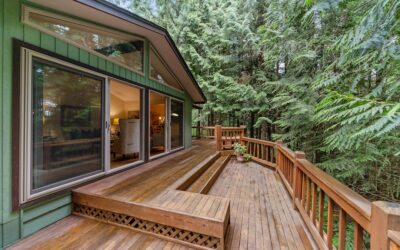
Walk through any neighborhood and you will see decks that look brand new after fifteen years sitting next to ones that warped and splintered in three. The difference almost always comes down to the boards underfoot. Choosing among the available deck flooring options is the single decision that affects your maintenance schedule, your weekend free time, and how much you will spend over the next two decades. This guide walks through every major surface material, what it actually costs, and where each one wins or loses.
Part of our Decks & Outdoor guide — explore the full guide →
Pressure-Treated Wood: The Budget Standard
Pressure-treated pine remains the most common decking in America for one reason: it is cheap. Expect to pay roughly $2 to $5 per square foot for the boards alone, which puts a 300-square-foot deck surface around $600 to $1,500 in material before fasteners and framing.
The catch is upkeep. Treated lumber needs cleaning and resealing every two to three years, and even then it cups, checks, and pops nails as it dries out. Plan to budget a weekend and about $150 in stain every other season. If you enjoy the smell of cedar oil and a roller in your hand, it is a fine choice. If you do not, the savings up front evaporate fast.
Cedar and Redwood: Natural Beauty
For homeowners who want real wood without the green tint of treated pine, cedar and redwood deliver tight grain and natural rot resistance. Western red cedar runs about $4 to $8 per square foot, while clear-grade redwood can climb past $10 in regions far from the West Coast.
Both species resist decay through natural oils rather than chemicals, so they feel and smell better than treated lumber. They are still wood, though. Skip the annual sealing and they fade to a silvery gray and grow brittle. Many owners actually prefer that weathered look, which makes cedar a low-fuss pick if you accept the color change.
Composite Decking: Low Maintenance Leader
Composite boards blend wood fibers with recycled plastic, and they have taken over the mid-to-upper end of the market. Brands like Trex, TimberTech, and Fiberon sell capped composite in the $4 to $13 per square foot range for material, with installed costs often landing between $12 and $22.
What you buy is freedom. No staining, no sealing, no splinters. A garden hose and an occasional soapy scrub keep composite looking right for 25 years or more, and most lines carry warranties to match. The trade-offs are real, too: composite gets noticeably hot under bare feet in direct sun, and lighter colors can show surface scratches. Choose a textured, capped board in a mid-tone shade and you sidestep most complaints.
PVC and Cellular Boards: Pure Plastic Performance
Step up from composite and you reach fully synthetic decking. Cellular PVC boards contain no wood at all, which makes them the lightest and most moisture-proof option on the shelf. Pricing overlaps the high end of composite, generally $8 to $15 per square foot for material.
Because there is no organic content, PVC will not rot, swell, or feed mold even in a humid Gulf Coast backyard or a poolside install where boards stay wet. It also weighs less, which speeds up installation. The downside is a slightly more plastic look up close and the same heat-retention issue that affects dark composite. For waterfront and pool decks, though, few materials hold up better.
Aluminum and Steel Decking
Metal decking sits in a niche, but it earns its place in wildfire zones and rooftop applications. Powder-coated aluminum planks resist fire, never rot, and shrug off insects. Material costs run $9 to $13 per square foot, and many systems include integrated drainage that keeps the space below dry.
Aluminum stays cooler than you would expect thanks to reflective coatings, and it carries the longest lifespan of anything on this list. The look is undeniably industrial, however, so it suits modern architecture far better than a traditional craftsman home.
Tile and Stone Surfaces
On a ground-level patio or a structurally rated balcony, porcelain pavers and natural stone open up a whole different aesthetic. Outdoor-rated porcelain tile costs $5 to $15 per square foot and comes in pedestal-set versions that float over a flat roof or concrete pad.
Tile gives you a seamless indoor-outdoor flow and zero maintenance beyond sweeping. It does demand a rigid, level substrate, so it is rarely practical on an elevated wood-framed deck. For terraces and patios, it is one of the most durable surfaces you can install.
Don’t Forget the Framing Below
Whatever surface you choose, it is only as good as the structure under it. The joists, beams, and posts carry the load and set the lifespan of the whole deck, so it makes little sense to spend $15 a square foot on premium PVC boards over a frame of cheap, undersized lumber. Most decks use pressure-treated framing because it is structural and rot-resistant, but the joist spacing matters more than people expect.
Composite and PVC boards are more flexible than wood, so they need closer joist spacing to feel solid underfoot. Many composite makers require joists at 12 inches on center for diagonal installs rather than the 16 inches typical for wood decking. Skip that detail and the floor feels bouncy. Hidden fastener systems, which clip boards from the side for a screw-free surface, also depend on consistent joist spacing to work cleanly. Plan the frame around the surface you intend to install, not the other way around.
Heat, Slip, and Comfort Underfoot
Sample boards in a showroom tell you nothing about how a surface behaves outdoors in July. Dark composite and PVC can reach surface temperatures well above 130 degrees Fahrenheit in direct southern sun, hot enough to be uncomfortable on bare feet. Lighter colors, shaded layouts, and pergolas all bring that down. Real wood stays cooler but splinters as it ages, which is its own barefoot hazard. For slip resistance, textured composite and grooved PVC outperform smooth wood when wet, an important factor around pools and in rainy climates. If anyone in your household goes barefoot or you entertain poolside, weigh these comfort factors as heavily as the price.
How to Choose the Right Surface
Match the material to how you actually live, not to a showroom sample. Run through these questions before you buy:
- Budget over 20 years, not 20 minutes: Treated wood is cheap to buy and expensive to own. Composite flips that math.
- Climate: Humid and poolside settings favor PVC. Wildfire regions point to aluminum.
- Sun exposure: Full southern sun makes dark composite and PVC uncomfortably hot. Lighter tones or shaded layouts help.
- Maintenance tolerance: If you will not reseal wood on schedule, do not buy wood.
- Resale and style: Real wood and stone still photograph beautifully for listings, while synthetics win on inspection reports.
Among all the deck flooring options here, there is no single best answer, only the best fit. Buy a few sample boards, set them outside for a week, and walk on them barefoot at noon. The material that still feels good after that test is the one to put on your deck.
Prefer to explore on your own?
See how new flooring looks in your actual room in seconds — free, no signup.
Try the free Floor Studio →