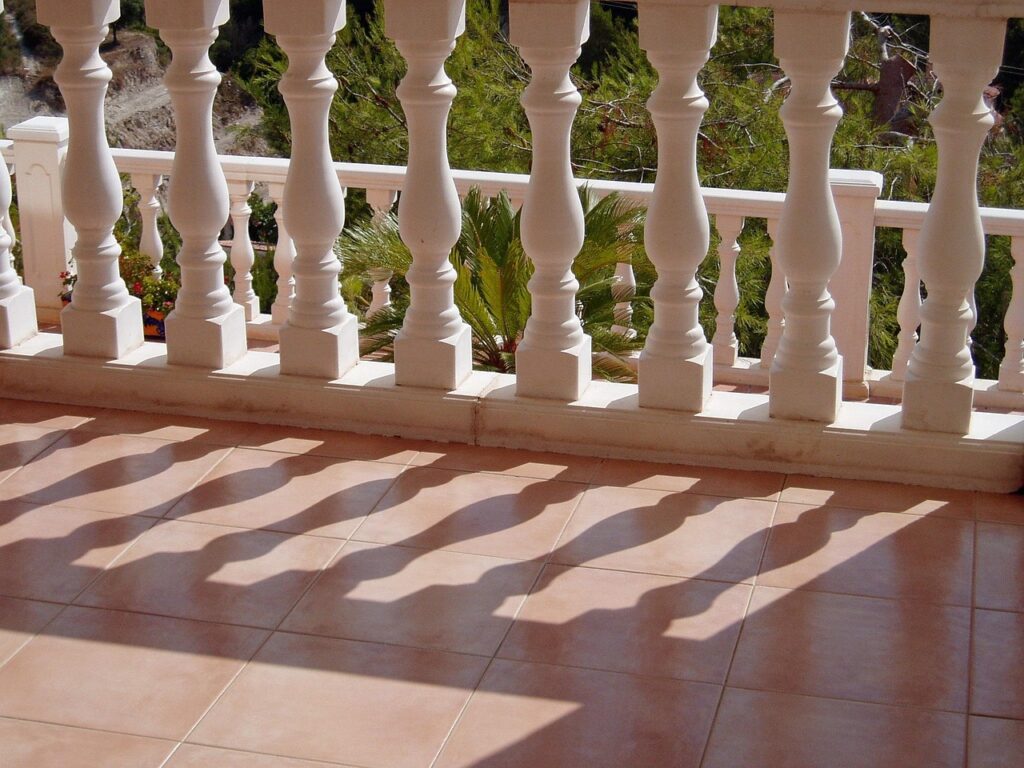
The vertical bars in your deck railing do more work than their slim profile suggests. Deck railing spindles, also called balusters, are what keep a child or pet from slipping through the rail, and they set the entire visual rhythm of the deck. Choose the wrong spacing and you fail an inspection; choose the wrong material and you sign up for years of scraping and repainting. Getting spindles right is equal parts building code and design, and both are easy to nail once you understand the rules.
Part of our Decks & Outdoor guide — explore the full guide →
Spindles Versus Balusters: The Terminology
You will hear the words used interchangeably, and for practical purposes they mean the same thing: the repeated vertical members between the top and bottom rails. Traditionally, a baluster is a shaped or turned post and a spindle is a thinner rod, but at the home center both terms point to the same infill pieces. What matters far more than the name is the material and the gap between them.
The Spacing Rule You Cannot Ignore
This is the single most important number in the whole project. Building codes across the U.S. require that spindles be spaced so a 4-inch sphere cannot pass between them. In plain terms, the gap between spindles must be less than 4 inches.
That standard exists because it is roughly the size that would prevent a small child’s head from passing through. Inspectors check it with an actual 4-inch ball, so there is no fudging it. Guardrails themselves must generally be at least 36 inches tall on residential decks, and 42 inches in many jurisdictions for decks above a certain height, so confirm your local code before you build.
Common Spindle Materials
Material choice drives cost, maintenance, and looks. Each option has a clear trade-off.
- Pressure-treated wood: Cheapest at about $1 to $3 per spindle, but needs sealing or painting and can warp over time.
- Aluminum: Popular round or square balusters at $2 to $6 each, rust-resistant, powder-coated, and virtually maintenance-free.
- Composite: Matches composite decking for a unified look, $4 to $10 each, no painting required.
- Cable and glass: Premium infill for unobstructed views, $15 to $50-plus per linear foot of system.
Aluminum balusters have become the default upgrade because they slot into wood or composite rails easily, never rot, and hold their finish for decades. For view-focused decks, horizontal cable or glass panels open up sightlines but cost considerably more.
Calculating How Many You Need
Estimating your spindle count keeps the budget realistic. Measure the total linear feet of railing, then plan for spindles spaced on-center so the clear gap stays under 4 inches. As a rule of thumb, square balusters set at roughly 5 inches on-center yield about 2.4 spindles per linear foot once you account for standard 1.5-inch spindle widths.
A 40-foot run of railing therefore needs somewhere around 90 to 100 spindles. Always buy 5 to 10 percent extra to cover cuts, mistakes, and the occasional warped piece.
Mounting Styles and Installation
How the spindles attach depends on the system. Wood spindles are typically face-screwed to the inside of the top and bottom rails or toe-nailed at an angle. Metal balusters usually insert into pre-drilled holes or use small connector brackets that screw into the rails, which speeds installation dramatically.
- Confirm the rail height and mark a consistent baluster layout with a spacer block cut to your exact gap.
- Pre-drill wood rails to prevent splitting near the ends.
- Set each spindle plumb using a level, working from one end.
- Fasten top and bottom, checking your spacer between every piece.
A shop-made spacer block is the secret to a professional result. It guarantees identical gaps and keeps you code-compliant without measuring each one.
Cost of a Full Railing Project
For a typical deck, spindles are a modest part of the total railing cost. Wood balusters for a 40-foot railing might run $100 to $250 in materials, while aluminum runs $300 to $600 and composite $400 to $900. Add rails, posts, and hardware, and a complete DIY railing system lands around $20 to $45 per linear foot in materials.
Professional installation typically doubles that to $40 to $90 per linear foot installed, with cable and glass systems reaching $100 or more per foot. The labor premium reflects the layout precision the job demands, since inconsistent spacing is immediately visible along a long run and invites an inspector’s scrutiny.
Finish and upkeep vary sharply by material. Wood spindles need a fresh coat of sealer or exterior paint every two to three years to fend off rot and graying, and a failed section usually means replacing individual spindles. Aluminum and composite ask for nothing more than a periodic rinse, which is why many homeowners accept the higher upfront cost to escape the recurring maintenance a wood railing demands.
Common Mistakes to Avoid
The number-one mistake is exceeding the 4-inch spacing, which fails inspection and, more importantly, is genuinely unsafe. Always verify with a 4-inch object as you go. The second error is mixing materials that expand differently, like tight wood spindles in a composite rail, which can bind or gap seasonally. Match your infill to your rail system. Finally, homeowners often skip pre-drilling wood balusters, splitting the ends and weakening the connection right where strength matters most.
Choosing Spindles That Last
Deck railing spindles are where safety and style meet, so let both guide the choice. Lock in code-compliant spacing under 4 inches, pick a material that matches your tolerance for maintenance, and use a spacer block for clean, uniform gaps. Aluminum offers the best balance of cost and durability for most homeowners, while cable and glass reward those chasing an unobstructed view. Whatever you choose, a well-built railing makes the whole deck feel finished and safe.