In Japan, rain chains have guided water from temple and home roofs for centuries, turning a plain drainage job into something you want to watch and listen to. Decorative rain chains carry on that idea: a series of cups, links or shapes that lead rain from the gutter to the ground in a visible, gently splashing stream. The style you choose affects how much water the chain handles, how loud it is, and how it ages. Cup styles move more water with less splash. Link styles look lighter and more delicate but overflow sooner. Metal choice sets the long-term look, from copper that darkens to a deep patina to aluminum and stainless steel that stay bright.
Good installation matters as much as looks. A chain needs a secure hanger at the gutter, a basin to catch water, and an anchor at the bottom so wind and ice cannot swing it into the house. Here is how to choose a style and metal and set it up so it performs well year round.
Where Decorative Rain Chains Come From
The traditional Japanese rain chain is called kusari-doi, which roughly translates to “chain gutter.” Japanese rain chains were often simple loops or cups hung from temple eaves, leading water into a stone basin or barrel for gardens and household use. The sound of water traveling down the chain became part of the appeal, a quiet, calming trickle instead of the drum of a metal pipe.
Modern versions borrow the same idea with more variety. A Japanese gutter chain might still be a plain loop design, while a modern rain chain might use geometric cups, square funnels or sleek rectangles. Many homeowners pick one as a focal point by a front entry, garden gate or patio.
Cup vs Link Styles: How They Perform
The basic choice is between cups and links, and it is mostly about water volume.
Cup styles
Cups are open-bottomed funnels stacked along a chain. Each cup catches water from the one above and passes it down through a center hole. Because the water is contained at each step, cup chains handle more flow and splash less. Shapes vary widely: lotus rain chain designs with petal-shaped cups, bell rain chain styles, mushroom rain chain caps, square cups, and rain chain buckets that look like tiny pails. Deep, wide cups are the best performers in heavy rain.
Link styles
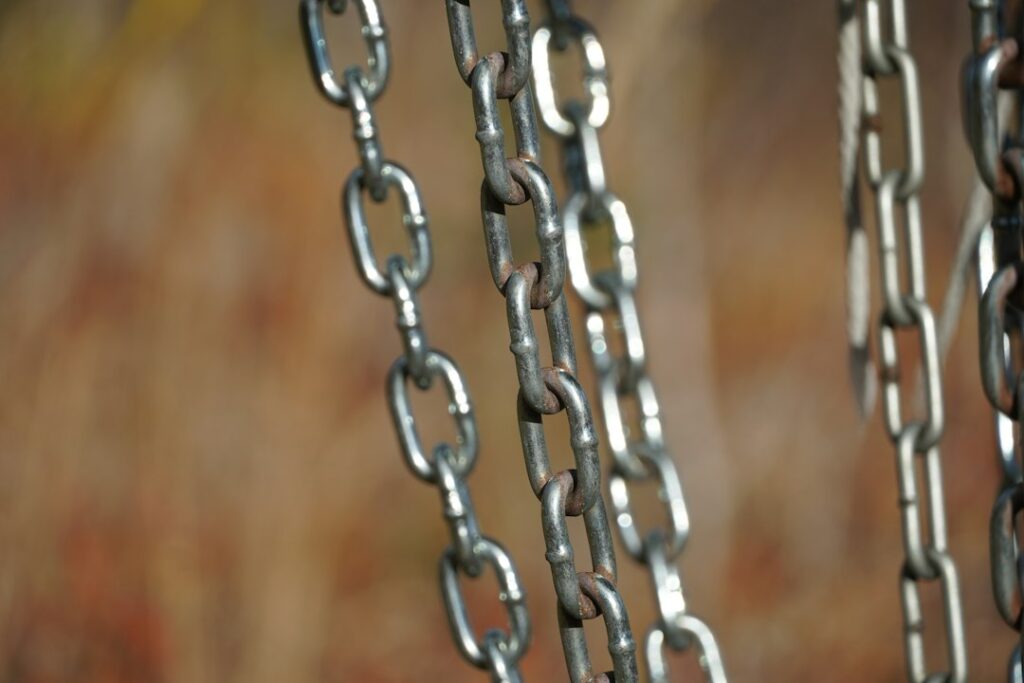
Links are loops or shaped rings joined in a line. Water clings to the metal and slides down by surface tension. A simple rain chain of round links is the lightest and most minimal look, but it sheds water outward once flow gets heavy. Links work best on small roofs, porches, sheds and gazebos, or anywhere a little splash is fine.
Rain chimes
Rain chimes are a variation that adds bells or small metal pieces that ring softly as water passes. Copper rain chimes are popular for their warm tone. As rain chimes for gardens, they add sound even on a light drizzle; as rain chimes for gutters, they replace a downspout like any other chain. Expect less flow capacity than a cup chain.
Choosing a Metal: Copper, Aluminum, Steel and More
The metal decides how the chain ages, how much it weighs and how it holds up to weather.
- Copper: the classic choice. It starts bright, darkens to brown within months, and eventually can turn blue-green in a damp climate. It resists corrosion and lasts for decades. Pure copper is heavier and costs more.
- Aluminum rain chains: light, rust-free and affordable. Aluminium rain chain finishes (the British spelling shows up often in product listings) come powder-coated in black, bronze or other colors. Thin aluminum can bend under ice.
- Stainless steel rain chain: sleek, modern and bright; holds its finish and is stronger than aluminum.
- Bronze rain chain or bronze-finish: true bronze ages to a deep brown; bronze-finish versions are usually coated aluminum or steel.
- Painted or galvanized metal rain chain: budget options. Plain steel will rust unless coated, which can stain siding and pavers.
- Glass rain chain accents: some designs add glass beads or cups for color. They are delicate and best kept to sheltered spots out of hail and ice.
For a lasting decorative gutter chain that looks better with age, copper is hard to beat. For a crisp contemporary home, stainless steel or a black powder-coated aluminum design suits the clean lines.
Matching style to the house
Think about the setting before falling for a design. A craftsman bungalow or traditional home pairs naturally with copper cups that darken over time. A farmhouse suits bucket or bell shapes in an oil-rubbed or black finish. Contemporary homes with flat planes and metal accents look sharp with square stainless cups or a minimal link chain. Garden spaces and cottage-style yards can carry more playful options like lotus or mushroom cups. Decorative rain chains also look best when the length is right: the bottom should just reach into the basin, not pile up on the ground or hang short and splash.
Basins, Anchors and Hanging
Every chain needs somewhere for the water to land and something to hold it straight. Unique rain chains often get paired with equally decorative basins.
- Basin ideas: a stone or ceramic bowl, a half barrel, a copper basin, or a shallow pit lined with river rock. A rain barrel under the chain collects water for the garden.
- Anchoring: secure the bottom link to a ground stake, a hook inside the basin, or a heavy stone. This stops the chain from swinging into windows or siding in wind.
- Drainage: make sure the basin overflows onto ground sloping away from the house, or into gravel or a buried drain. Call 811 before digging a drain line.
At the top, chains hang from a bar or gutter adapter that sits in the gutter outlet. An adapter helps funnel water onto the chain and reduces spill at the top. Make sure the gutter is clean and sloped toward the outlet.
Installing safely
- Pick a calm, dry day and remove the existing downspout if one is there.
- Set a ladder on firm, level ground, extended at least 3 feet above the gutter if you need to step near the edge, and keep three points of contact.
- Avoid leaning the ladder on the gutter itself; use a stabilizer or set it against the wall beside the outlet.
- Seat the hanger or adapter, hang the chain, and check it falls straight.
- Trim or adjust the length so it ends inside the basin, then anchor the bottom.
- Test with a garden hose before the next storm.
Have a helper steady the ladder and hand up the chain, which can be surprisingly heavy in copper. On two-story roofs, hire a gutter or handyman pro.
Winter Ice and Weight
Ice is the biggest risk for a decorative chain in cold climates. Freezing rain coats every cup or link and adds a lot of weight, which can bend a gutter outlet or pull a hanger loose. Ice also breaks off in chunks, a hazard over walkways. Reinforce the gutter with extra hangers near the outlet, use a sturdy hanger bar, keep the chain anchored at the bottom, and in harsh winters take the chain down and attach a temporary downspout.
Costs and Troubleshooting
Simple link chains in aluminum or steel are inexpensive, often under $50. Cup styles cost more, and copper cup designs commonly range from around $100 to several hundred dollars depending on length and cup size. Basins, stakes and outlet adapters add small extra costs.
Too much splash: switch to a cup style, use an outlet adapter and add a wider basin.
Stains on siding or patio: plain steel may be rusting, or copper runoff may be tinting stone. Move the basin or choose a coated finish.
Chain twists or tangles: anchor it and make sure it hangs straight from the hanger.
Noisy chain: links clinking against the house; pull the chain further from the wall or use a different hanger.
When to Call a Pro
Call a gutter contractor if the gutter sags, pulls away from the fascia, or needs a new outlet cut. For high or steep installations, or homes with a history of foundation water, hire a pro to install the chain and design drainage at the base. The right combination of style, metal and anchoring makes decorative rain chains a long-lasting, low-maintenance feature.
Frequently Asked Questions
Which is better, a cup or link rain chain?
Cup chains handle more water and splash less, so they suit heavier rain. Link chains look lighter and work well on small roofs, porches and garden structures.
What metal is best for rain chains?
Copper lasts decades and develops a rich patina. Aluminum is light and affordable, and stainless steel holds a bright, modern finish without rusting.
What is a Japanese rain chain called?
It is called kusari-doi, meaning chain gutter. It was traditionally used on temples and homes to guide rainwater into basins or barrels.
Do rain chains need a basin?
Yes. A basin, gravel bed or barrel catches the water, reduces splash and protects the foundation, especially if the ground slopes away from the house.
Can rain chains handle ice?
They can collect heavy ice that strains the gutter. Use a sturdy hanger, extra gutter hangers and a bottom anchor, or remove the chain for harsh winters.