
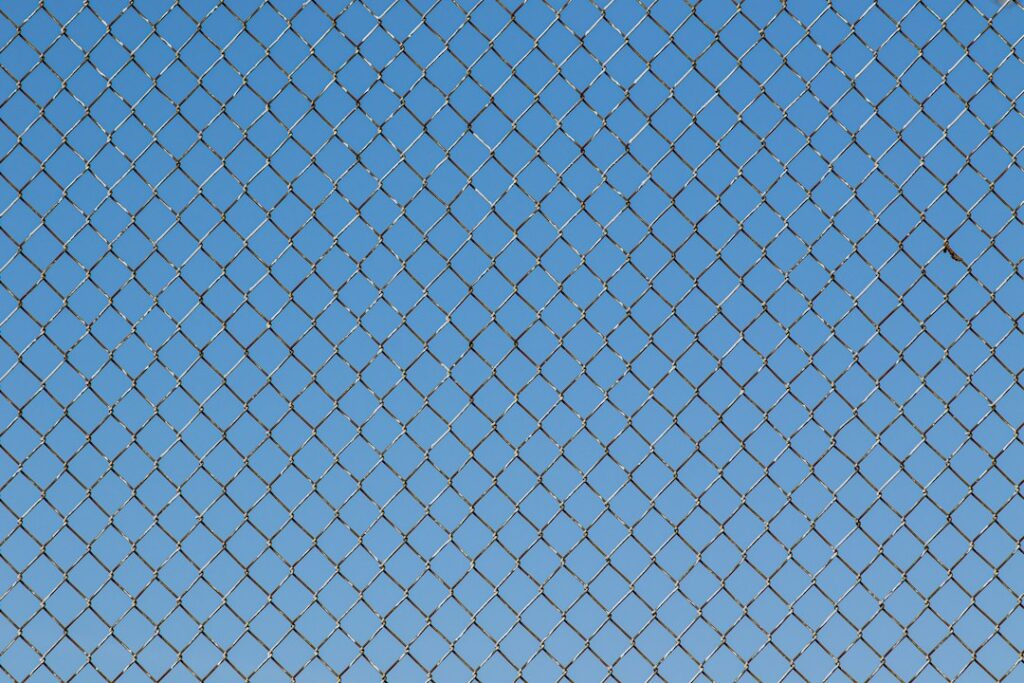
Two rolls of fence mesh can look identical in the store aisle and perform completely differently after five winters. Chain link fabric is graded by three things: wire gauge (thickness), mesh size (the width of each diamond) and coating. A residential yard usually does well with 11 or 11.5 gauge wire in a 2-inch diamond with galvanized or vinyl coating, while commercial fences, kennels and security perimeters step up to 9 gauge. Choosing the right combination saves money now and prevents sagging, rust and pet escapes later.
The mesh is only one part of a chain link system, but it is the part people see and touch, and it accounts for a large share of material cost. Understanding the labels on a roll makes comparing products far easier.
- How Chain Link Fabric Is Graded
- Coatings: Galvanized, Aluminized and Vinyl
- Roll Heights, Lengths and How Much to Buy
- Ties, Tension Wire and Hardware Spacing
- Picking Fabric for Common Projects
- Stretching the Fabric Tight
- Troubleshooting Sagging and Rust
- Cost Ranges
- When to Call a Pro
- Frequently Asked Questions
How Chain Link Fabric Is Graded
Each roll label lists height, length, gauge, mesh size, coating and knuckle or twist finish. Here is what those terms mean in practice.
Wire gauge
Gauge numbers run backward: a lower number means thicker wire. The common residential and light commercial gauges are:
- 9 gauge (about 0.148 inch): heavy, rigid and resistant to bending or cutting. The standard for commercial, school, industrial and security fences.
- 11 gauge (about 0.120 inch): the residential workhorse. Strong enough for most yards and medium-sized dogs.
- 11.5 gauge (about 0.113 inch): lighter and cheaper, fine for low-traffic residential fences, garden enclosures and temporary lines.
- 12.5 gauge and lighter: sometimes sold for budget fences; prone to denting and sagging.
Be aware that coated wire is often labeled by its core gauge or by its finished gauge. A vinyl-coated product marked 9 gauge finished may have an 11 gauge steel core inside. Read the specification sheet if strength matters.
Mesh size
Mesh size is the distance between parallel wires in each diamond. The standard is 2 inches. Smaller diamonds use more wire and cost more, but they are harder to climb and keep small animals in or out.
- 2 3/8 inch: economy option, mostly for agricultural or light fencing.
- 2 inch: the default for homes, parks and most commercial fences.
- 1 3/4 inch: common on tennis courts and some sports fencing.
- 1 inch to 1 1/4 inch: pool enclosures where climb resistance matters, and kennels for small dogs.
- Mini-mesh (3/8 to 5/8 inch): high-security sites; very difficult to climb or cut.
Selvage (knuckled vs twisted)
The top and bottom edges of the fabric are finished either knuckled (wire ends bent back into a smooth loop) or twisted (ends twisted together, leaving sharp barbs). Knuckle-knuckle is the safe choice for homes, pools and anywhere kids or pets touch the fence. Twisted tops are used for security where you want to discourage climbing.
Coatings: Galvanized, Aluminized and Vinyl
The coating determines how long the steel survives rain, salt air and lawn sprinklers.
| Coating | Look | Best for |
|---|---|---|
| Galvanized (GAW or GBW) | Bright silver, dulls to gray | General residential and commercial use |
| Aluminized | Matte silver | Longer life in many climates, high-humidity regions |
| Vinyl-coated (PVC bonded or fused) | Black, green, brown | Appearance, blending into landscapes, extra corrosion protection |
Galvanized before or after weaving
Galvanized-before-weaving (GBW) wire is coated first, then woven. Galvanized-after-weaving (GAW) dips the finished mesh, coating the cut ends and contact points. GAW typically has a heavier zinc layer and lasts longer, especially at the knuckles where rust tends to start. Zinc weight is listed in ounces per square foot; heavier zinc means more years before red rust appears.
Aluminized steel
Aluminum coatings resist corrosion well and can outlast standard galvanizing in many environments. They are common on commercial jobs and cost a bit more than ordinary galvanized fabric.
Vinyl-coated mesh
Black vinyl fades visually into hedges and lawns, making the fence look far less industrial. The coating also adds a second layer of protection over a galvanized core. Pair coated mesh with matching coated posts, rails and fittings for a consistent look. Vinyl can nick during installation, so handle rolls carefully and avoid dragging them over concrete.
Roll Heights, Lengths and How Much to Buy
Residential chain link fabric is usually sold in 50-foot rolls, with commercial products also available in longer rolls. Common heights are 36, 42, 48, 60 and 72 inches, with 84 inches and taller for commercial and security work.
- Measure the fence line. Walk the full perimeter with a measuring wheel, noting corners, gates and grade changes.
- Subtract gate openings. Gates come with their own fabric already installed.
- Add a little extra. Allow a few feet per run for stretching and tying off at terminal posts.
- Divide by roll length. Round up to whole rolls. Leftover fabric can be joined to the next roll by weaving in a single picket wire.
- Match height to the top rail. Fabric height should match the distance from about 2 inches above grade to the top rail.
Ties, Tension Wire and Hardware Spacing
Fabric is only as strong as its attachment. Typical spacing guidelines used by installers include:
- Line posts: fabric ties about every 12 to 14 inches along the post height.
- Top rail: ties about every 24 inches along the rail.
- Bottom tension wire: hog rings about every 24 inches to keep the bottom edge tight and stop animals from pushing under.
- Terminal posts: a tension bar threaded through the end of the fabric, held by tension bands spaced roughly 12 to 15 inches apart.
Use ties that match the fabric coating (aluminum or galvanized ties for metal fabric, coated ties for vinyl mesh) to avoid galvanic corrosion and a mismatched look.
Picking Fabric for Common Projects
- Backyard and pets: 11 gauge, 2-inch mesh, knuckle-knuckle, galvanized or black vinyl. Add a bottom tension wire for diggers.
- Large or strong dogs and kennels: 9 gauge, 2-inch mesh or smaller, with tight tie spacing.
- Pool enclosures: small mesh (often 1 1/4 inch or less) to limit climbing; confirm local pool barrier rules before buying.
- Gardens: 11.5 gauge works; consider adding small-mesh hardware cloth along the bottom for rabbits.
- Commercial and security: 9 gauge, aluminized or heavy galvanized, possibly mini-mesh with a twisted top.
- Coastal homes: vinyl-coated or aluminized fabric resists salt air far better than light galvanizing.
Stretching the Fabric Tight
Even the heaviest mesh looks cheap if it is hung loose. Installers unroll the fabric along the outside of the posts (the side facing away from the yard), thread a tension bar through the first row of diamonds and bolt it to the terminal post with tension bands. At the far end, a fence stretcher or come-along pulls the fabric until the diamonds close up slightly and the mesh feels firm when you press it with your hand. A good rule: you should be able to squeeze the diamonds together only about a quarter inch at mid-span.
Pull from a temporary stretcher bar woven through the mesh a few feet past the terminal post, then insert the permanent tension bar, tighten the bands and cut off the excess by untwisting a single picket wire. Avoid over-stretching vinyl-coated fabric, since the coating can split at the knuckles. On long runs, stretch in sections between terminal posts rather than trying to pull hundreds of feet at once, and tie the top rail and line posts only after the run is fully tensioned.
Troubleshooting Sagging and Rust
- Fabric sags between posts: it was not stretched enough. Re-tension with a fence stretcher from the terminal post and add ties.
- Bottom edge bows outward: missing or loose bottom tension wire. Install one and hog-ring the fabric to it.
- Rust at the knuckles: common with light GBW coatings. Clean and treat with cold galvanizing spray, or plan to upgrade to heavier zinc or vinyl.
- Vinyl cracking: sun exposure or damage during install. Small areas can be patched; widespread cracking means the coating has failed.
Cost Ranges
Fabric prices depend on gauge, height, coating and steel markets. As a general guide, light-gauge galvanized rolls are the least expensive, 11 gauge sits in the middle and 9 gauge costs noticeably more per foot. Vinyl coating typically adds a meaningful premium, and smaller mesh sizes cost more because they use more wire. Expect the fabric itself to be a substantial share of a DIY materials list, with posts, rails, fittings and concrete making up the rest. Installed residential fences vary widely by region and site conditions.
When to Call a Pro
Professional installers have fence stretchers, post-hole augers and the experience to keep long runs tight and straight. Call one for runs over a few hundred feet, steep slopes, pool barriers that must pass inspection, or commercial projects. Call 811 before any post holes are dug, and check permit, HOA and setback rules before ordering materials.
Frequently Asked Questions
What gauge chain link is best for a home?
11 gauge is the common residential choice. Choose 9 gauge for large dogs, high-traffic areas or a longer service life.
Is a lower gauge number stronger?
Yes. Gauge numbers run backward, so 9 gauge wire is thicker and stronger than 11 or 11.5 gauge.
What is the standard chain link mesh size?
The 2-inch diamond is standard for most residential and commercial fences. Smaller mesh is used for pools, tennis courts and security.
Is vinyl-coated chain link worth it?
It costs more but looks better, blends into landscaping and adds corrosion protection, especially near the coast.
How long is a roll of chain link fabric?
Residential rolls are usually 50 feet long. Commercial rolls may be longer.
What is knuckle-knuckle selvage?
Both edges of the fabric are bent into smooth loops instead of sharp twisted ends, making the fence safer for kids and pets.


