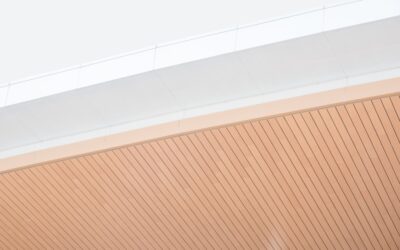
Shadow lines sell modern buildings, and nothing casts them like deep groove metal siding — vertical panels whose ribs and recesses run 3/4 inch to 3 inches deep, throwing crisp dark stripes that shift with the sun. Architects spec deep groove metal siding on everything from mountain-modern homes to brewery taprooms precisely because flat siding can’t produce that relief. This guide covers the actual profiles behind the look, the gauge and substrate decisions that determine longevity, and honest installed costs.
“Deep groove” isn’t one product; it’s a family of high-relief profiles from agricultural panels costing $3 a square foot to architectural systems past $20. Knowing which family you’re pricing keeps quotes comparable.
What Counts as a Deep Groove Profile
Standard corrugated and low-rib panels run 1/2 to 5/8 inch of relief. Deep groove territory starts around 3/4 inch and includes:
- 7.2 panel (western rib): the modern-architecture workhorse — symmetrical trapezoidal ribs 1.5 inches deep on 7.2-inch centers. Bold, even rhythm; works vertically or horizontally.
- High-rib ag panels (AG/R-panel variants): 3/4- to 1.25-inch ribs on 9- to 12-inch centers; the budget route to strong shadow lines.
- Deep box-rib panels: square-shouldered ribs 1 to 2 inches deep for a machined, contemporary read.
- Standing seam (1 to 3 inch seams): flat pans with tall vertical legs on 12- to 18-inch centers — grooves by way of seams, with fully concealed fasteners.
- Concealed-fastener plank profiles: interlocking flush panels with recessed reveal joints 3/4 to 1 inch wide reading as deep grooves between flat faces.
Manufacturers to search when comparing: Bridger Steel, AEP Span, Pac-Clad, McElroy Metal, Metal Sales, and regional roll-formers who will run 7.2 panel to length for surprisingly little.
Where Deep Groove Panels Get Used
Vertical installation dominates residential work — full walls on modern farmhouses, gable accents, and the ever-popular mixed façade pairing 7.2 panel with wood-look siding or board-and-batten. Commercially, deep-rib panels skin shops, breweries, self-storage, and school gyms because they span girts without continuous sheathing and shrug off abuse.
Deep profiles also solve practical problems flat panels can’t. The rib depth adds bending strength, letting 26-gauge material span framing 24 inches on center or more, and the geometry hides oil-canning — the visible waviness that plagues wide flat pans. If you love the look of standing seam but fear oil-canning on a big sunlit wall, a ribbed deep-groove profile is the safer aesthetic bet at lower cost.
Gauge and Substrate: The Decisions That Matter
Steel panel gauge runs backward — smaller number, thicker metal:
- 29 gauge (about 0.014 in): ag-building thickness; dents from hail and ladders. Avoid on homes.
- 26 gauge (about 0.019 in): the residential siding sweet spot for ribbed profiles; roughly 30 percent thicker than 29 and noticeably stiffer.
- 24 gauge (about 0.024 in): architectural standard, required for most standing seam and premium color warranties; best dent resistance and flattest faces.
- 22 gauge: commercial/industrial; overkill on most houses except impact zones.
Under the paint, insist on galvanized G-90 or, better, Galvalume AZ-50/AZ-55 substrate — the aluminum-zinc alloy coating that carries 25-year-plus perforation warranties. Finish matters just as much: PVDF paint systems (Kynar 500/Hylar 5000) hold color and resist chalking for decades and are standard on 24-gauge architectural lines; SMP (silicone-modified polyester) finishes on cheaper 26/29-gauge panels fade faster, especially in dark bronze and matte black — the exact colors everyone wants. Aluminum versions exist for coastal salt exposure at a 20 to 40 percent premium over steel.
Installed Cost per Square Foot
2026 numbers for materials plus labor on residential walls:
- High-rib ag panel, 29/26 gauge, SMP finish: $4 to $7 installed ($1.50 to $3 materials)
- 7.2 panel, 26 gauge: $6 to $10 installed
- 7.2 or box rib, 24 gauge PVDF: $8 to $13 installed
- Standing seam wall applications: $10 to $18 installed
- Concealed-fastener architectural plank systems: $12 to $22 installed
Trim drives hidden cost. Every window, corner, and termination needs matching flashings — figure trim at 15 to 25 percent of panel material cost on a simple box, more on a cut-up façade. For comparison, fiber cement lands around $6 to $12 installed and vinyl $4 to $8, so mid-grade deep-groove steel is price-competitive with fiber cement while lasting as long or longer.
Installation: What a Clean Job Requires
The sequence on a typical vertical 7.2-panel wall:
- Weather-resistive barrier over sheathing, seams taped; add furring/rainscreen strips if the design calls for a drainage gap (a best practice worth its $0.50 to $1 per square foot).
- Base flashing and drip at the bottom, leaving panel cut edges 6 to 8 inches above grade.
- Inside/outside corner trims and window flashings set before panels.
- Panels hung plumb off a chalked start line — the first panel controls the whole wall’s rhythm.
- Exposed-fastener profiles: gasketed screws in the flat, 12 to 24 inches on center, driven snug not proud, never overdriven through the gasket. Concealed systems: clips or flange screws per the panel spec.
- Top terminations under eave trim with insect closure strips in the rib voids — foam closures matched to the profile keep wasps and mice out of those inviting 1.5-inch channels.
Cutting matters: shears and nibblers, not abrasive chop saws, which burn the coating and embed hot filings that rust-freckle the finish. A competent two-person crew hangs 300 to 500 square feet of exposed-fastener panel a day; concealed systems run slower.
Living With It: Durability and Maintenance
Expect 40 to 60 years from 24/26-gauge Galvalume with PVDF paint — the finish will outlive two rounds of neighbors’ vinyl. Maintenance is a rinse once or twice a year and a fastener check on exposed-screw walls each decade; gaskets on quality screws last 20-plus years, but budget for a re-screw with oversized fasteners somewhere around year 25 on exposed systems. Dents are the main risk: hail over 1.5 inches, errant basketballs, and string-trimmer gravel all mark thin gauge, and individual panel replacement is easy on exposed-fastener walls but fussy on interlocked concealed systems — order 5 percent attic stock in your exact color lot either way.
Dark matte finishes on south and west walls get hot enough to soften vinyl windows’ nail fins nearby and will show fade differentials where trees shade part of the wall; PVDF minimizes this, SMP doesn’t.
Design Moves That Make Deep Grooves Work
Orientation is the first decision: vertical ribs stretch a building taller and shed water fastest; horizontal runs read long and low but demand dead-straight framing because any wave in the wall shows as a bent shadow line running thirty feet. Mixing materials is the second — deep-groove steel almost always photographs better as a contrast panel against cedar, stucco, or fiber cement than as a monolithic wrap, and limiting it to gables, entry volumes, or a single massing block also caps the budget hit of 24-gauge PVDF where it shows most.
Color behaves differently on ribbed walls than flat ones. Every rib throws its own shadow, so a medium gray reads two shades darker installed than on the sample chip, and matte finishes exaggerate the effect. Order a full panel sample, not a chip, and stand it against the house at midday and late afternoon before committing 2,000 square feet to it. Regional roll-formers will usually lend display panels free.
Choosing Your Profile
Match profile to budget and building. For a modern accent gable or a shop house on a budget, 26-gauge 7.2 panel in an SMP color delivers 90 percent of the architectural look for $6 to $10 a foot. For a full high-visibility façade you’ll photograph, spend up for 24-gauge PVDF in the same profile, or move to a concealed-fastener plank system if screw heads offend you. Coastal, go aluminum. Get panel, gauge, substrate, and finish system in writing on every quote — “black metal siding” describes a $4 panel and a $20 panel equally well, and the difference shows up on the wall within five summers.