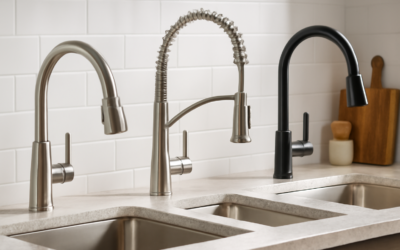
A pull-down sprayer is the single most-used feature on a modern kitchen faucet, and the reason so many people cite it as their favorite upgrade after a remodel. A Delta kitchen faucet with sprayer pairs that convenience with two technologies the brand is known for: Touch2O taps-on control and a magnetic docking spray head that snaps back into place every time. Whether you want a simple side sprayer or a fully touch-activated pull-down, understanding Delta’s lineup helps you match a faucet to how you actually cook and clean.
Part of our Kitchen Remodeling guide — explore the full guide →
Sprayer Styles Delta Offers
Delta builds sprayer functionality into three main configurations, and the right one depends on your sink and habits. Each moves water differently and installs a little differently too.
- Pull-down: The spray head is the spout itself and pulls straight down into the sink. Best for deep single-bowl sinks.
- Pull-out: A shorter spout with a wand that pulls out horizontally toward you. Better for shallow sinks and lower-clearance windows.
- Side sprayer: A separate spray hose mounted in its own deck hole beside a traditional spout. The classic look for a three or four-hole sink.
Most current Delta pull-down and pull-out models include MagnaTite docking, a magnet strong enough to hold the wand snugly in place so it never droops over time, a common failure point on cheaper faucets.
Touch2O and VoiceIQ Technology
Delta’s signature feature is Touch2O, which lets you start and stop water flow with a tap anywhere on the spout or handle, useful when your hands are covered in raw chicken or bread dough. A Delta kitchen faucet with sprayer and Touch2O runs on a small battery pack or optional AC adapter and uses capacitance sensing to tell a deliberate tap from an accidental brush.
Higher-end models add Touch2O.xt, which extends the touch zone with a proximity sensor, and VoiceIQ, which connects to a smart-home hub so you can dispense a measured amount of water by voice. These features add convenience but also cost and a battery to maintain, so decide whether you will genuinely use them.
Spray Modes and Flow
The wand itself typically toggles between a wide aerated stream for filling pots and a concentrated spray for blasting stuck-on food. Many Delta wands include a third pause button so you can move a full pot across the sink without dribbling. Standard flow rate is 1.8 gallons per minute, with WaterSense-labeled models trimming that slightly for efficiency.
Look for the ShieldSpray option on premium wands, which surrounds a powerful center jet with a cone of water to contain splatter, so you can scrub a greasy pan without redecorating your shirt.
Finishes and Matching Your Kitchen
Delta offers its faucets in a broad finish range, and the same model number usually ships in several colors. The most durable everyday choices are:
- Arctic Stainless: A brushed, warm-toned finish that hides water spots and fingerprints
- SpotShield Stainless: A coated version specifically engineered to resist fingerprints and spotting
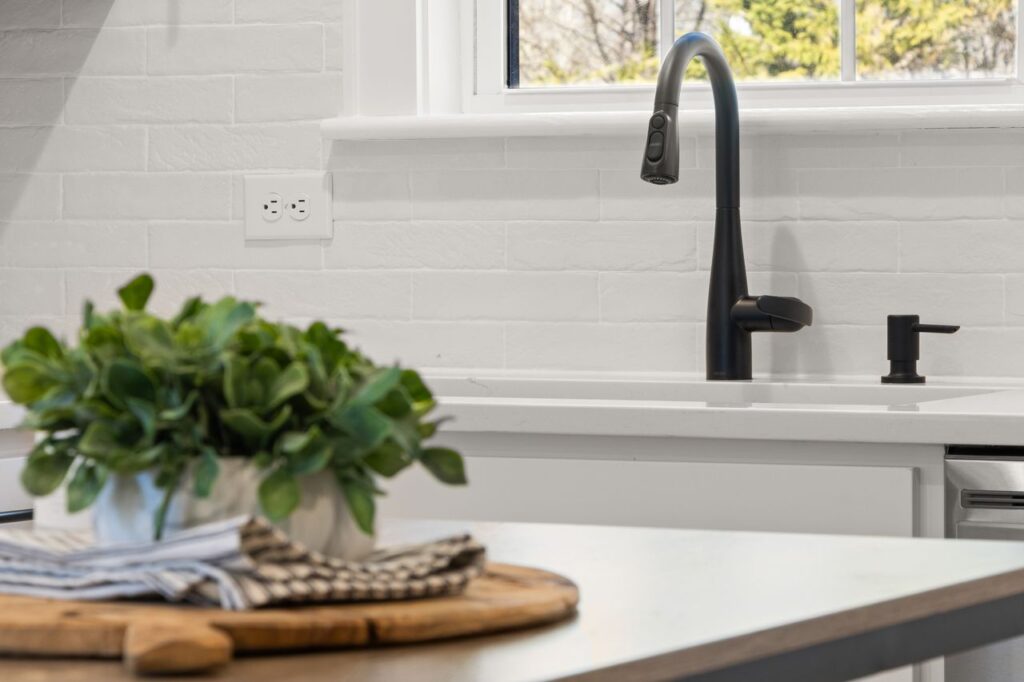
- Matte Black: Bold and modern, pairs well with white or wood cabinets
- Champagne Bronze: A warm gold tone for transitional and farmhouse kitchens
- Chrome: Bright, classic, and the easiest to clean
Installation Basics
Most Delta pull-down faucets install in a single deck hole, and the brand’s DIAMOND Seal valve and pre-assembled quick-connect hoses make the job approachable for a confident DIYer. Plan on 1 to 2 hours for a straightforward swap.
- Shut off the hot and cold supply valves under the sink and open the old faucet to relieve pressure.
- Disconnect the supply lines and sprayer hose, then remove the mounting nut and lift out the old faucet.
- Feed the new faucet’s lines and hoses through the deck hole and secure with the included mounting hardware.
- Connect the supply lines, attach the quick-connect hose to the spray wand, and clip on the MagnaTite weight.
- If using Touch2O, connect the battery pack and solenoid, then run water to flush the lines before checking for leaks.
Delta’s InnoFlex PEX supply lines are built into many models, meaning fewer connection points under the sink where leaks can start.
Maintenance and Troubleshooting
A Delta sprayer faucet asks little of you, but a few habits keep it performing like new. If the spray pattern grows uneven or weak, the aerator or spray face is clogged with mineral scale, especially in hard-water areas. Delta’s Touch-Clean spray holes let you wipe away buildup with a fingertip, and soaking the wand face in white vinegar for an hour dissolves stubborn deposits.
If a Touch2O model starts responding erratically or stops turning on with a tap, the batteries are usually the cause; the LED near the base blinks to warn you when they run low. Swapping the six AA batteries takes a minute and restores normal operation. Should the wand stop docking firmly, check that the MagnaTite weight is still clipped to the hose under the sink, since a slipped weight is the most common reason a spray head starts drooping.
Warranty and Value
One reason a Delta kitchen faucet with sprayer holds its value is the lifetime limited warranty on the faucet and finish, and a five-year warranty on electronic components. If a cartridge ever drips, Delta will send a replacement free, and cartridges are a simple swap. Expect to pay $120 to $200 for a solid pull-down without touch technology, $250 to $400 for a Touch2O model, and $400 and up for VoiceIQ smart faucets. For most kitchens, a mid-range MagnaTite pull-down hits the sweet spot of durability, convenience, and price, giving you a reliable sprayer that docks itself every single time.
How a Delta Side Sprayer Works and How to Fix One
A Delta side sprayer is a separate spray head on its own hose, mounted in a deck hole beside the main spout. When you squeeze the trigger, a diverter inside the faucet body sends water from the spout to the hose. Most side-sprayer problems trace back to that diverter, the hose, or mineral buildup in the head, and all three are owner-replaceable parts.
Where a side sprayer fits best
Side-spray models suit sinks that already have three or four holes, so you can replace a dated faucet without patching or drilling. Many Delta side-spray faucets are built for a four-hole sink with 8-inch centers, while some single-handle versions can go on a two- or four-hole setup. Check the product page for your exact model number before buying, since hole count and spacing vary across the line. A side sprayer reaches less far than a pull-down, but it keeps the spout fixed and leaves fewer moving parts in the spout itself.
Troubleshooting a side sprayer
| Symptom | Likely cause | Fix |
|---|---|---|
| Weak spray from the head | Mineral scale in the spray face | Soak the head in white vinegar, then rinse |
| Spout keeps running while spraying | Worn or stuck diverter | Replace the diverter for your model |
| Sprayer drips or leaks under the sink | Cracked hose or loose connection | Tighten the fitting or replace the hose |
| Hose snags or will not retract | Hose catching on supply lines or a disposal | Reroute the hose and clear the cabinet space |
| Low flow from both spout and sprayer | Clogged aerator or partly closed supply valve | Clean the aerator and open the valves fully |
Replacing the head and hose
On many models the spray head and hose are sold as one assembly, so a cracked hose often means ordering the complete unit. Shut off both supply valves, open the faucet to relieve pressure, unthread the hose from its connection under the deck, and feed the new hose up through the sprayer base. Match the part to your faucet’s model number, which is usually on the original box or the faucet’s product page, and check the maker’s current parts list for the correct replacement.
If you decide to remove a side sprayer entirely, the hose connection under the sink must be capped with the cap your model specifies, or water will flow out of the open port. The empty deck hole can then hold a soap dispenser or a hole cover in a matching finish.