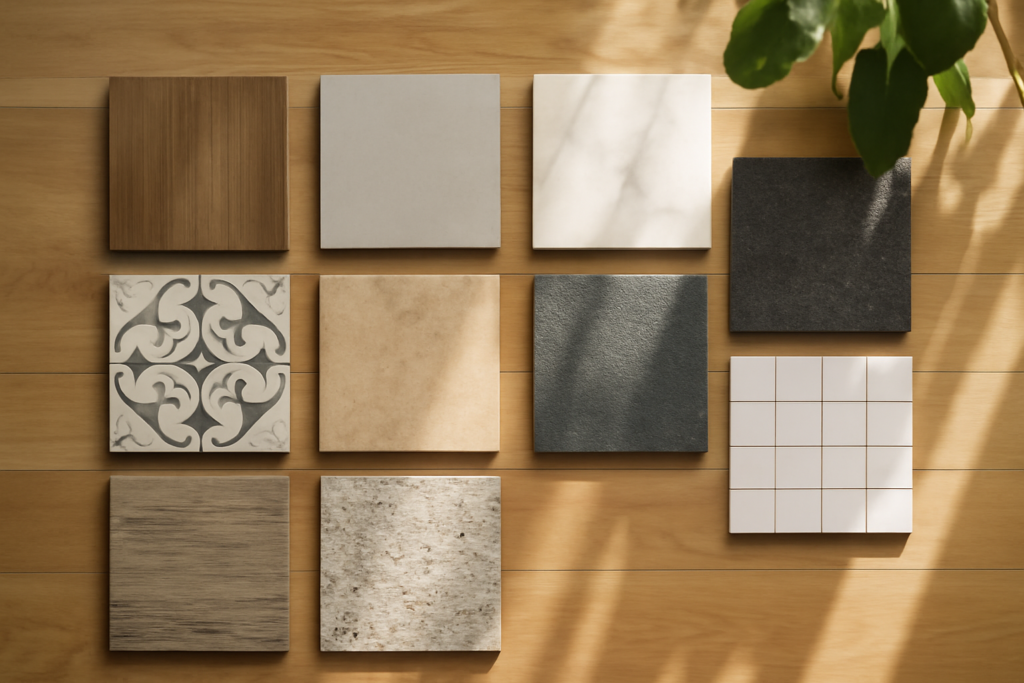
Standing in a tile showroom for the first time can feel overwhelming. There are different floor tiles for nearly every budget, room, and design style, and each material behaves differently underfoot, in moisture, and over decades of wear. Picking the wrong type for the wrong space is one of the most common and costly flooring mistakes homeowners make. This guide breaks down the major tile categories so you can match the right product to the right room with confidence.
Porcelain Tile: The Workhorse
Porcelain is fired at higher temperatures than standard ceramic, which makes it denser, harder, and far more water-resistant. Its water absorption rate sits below 0.5 percent, so it shrugs off spills, mopping, and bathroom humidity. That durability is why porcelain dominates in kitchens, bathrooms, mudrooms, and entryways.
You will find porcelain in two main forms. Through-body porcelain carries the same color all the way through, so chips are less noticeable. Glazed porcelain has a printed surface layer that can mimic wood, marble, or concrete with striking realism. Expect to pay roughly $3 to $10 per square foot for the tile itself, with premium designer lines running higher.
Ceramic Tile: Budget-Friendly and Versatile
Ceramic is the more affordable cousin of porcelain. It is softer, easier to cut, and lighter, which makes installation simpler for DIYers. Glazed ceramic resists stains well and comes in an enormous range of colors and patterns, often starting around $1 to $5 per square foot.
The tradeoff is durability. Ceramic absorbs more water and chips more easily, so it suits lower-traffic areas and indoor spaces that do not face freeze-thaw cycles. It is a smart choice for guest bathrooms, laundry rooms, and decorative accents rather than heavy-traffic main floors.
Natural Stone Tile
Stone tile brings unmatched character because no two pieces are identical. The category includes several materials, each with its own personality and maintenance needs.
- Marble: Elegant and luxurious, but soft and prone to etching from acids. Best for low-traffic, refined spaces.
- Granite: Extremely hard and scratch-resistant, ideal for busy areas, though it needs periodic sealing.
- Travertine: Warm, earthy tones with a porous surface that must be sealed to resist stains.
- Slate: Naturally slip-resistant and rugged, popular for entryways and outdoor patios.
All natural stone requires sealing, usually every one to three years, to guard against staining. Prices vary widely, often from $5 to $20 or more per square foot depending on the species and grade.
Vinyl and Luxury Vinyl Tile
Luxury vinyl tile, or LVT, has earned a place in serious flooring conversations. It is fully waterproof, warmer and softer underfoot than ceramic, and remarkably convincing at imitating stone or wood. Click-together planks and tiles make it one of the most DIY-friendly options available, often installing right over an existing subfloor.
LVT typically costs $2 to $7 per square foot and stands up well to pets, kids, and high traffic. For basements and rooms where comfort matters, it is hard to beat. The main limitation is that very heavy furniture can dent softer products, so look for a thicker wear layer in busy households.
Mosaic and Specialty Tiles
Mosaics are small tiles, usually mounted on mesh sheets, made from glass, porcelain, stone, or a blend. While more common on backsplashes and shower walls, penny rounds and hexagons make charming floor accents in bathrooms. Their many grout lines add traction, a plus for wet areas.
Cement tiles and encaustic patterns have surged in popularity for statement floors. They deliver bold, handmade color and geometry but are porous and require sealing and gentle cleaning to keep their finish.
How to Choose the Right Tile for Each Room
Match the material to how the room is used. For a busy kitchen, porcelain or LVT handles spills and traffic with ease. In a bathroom, prioritize slip resistance by choosing tiles with a textured surface or a higher coefficient of friction rating. For a formal entry where you want drama, natural stone makes a strong first impression.
Tile size also matters. Large-format tiles, such as 24 by 24 inches, make small rooms feel larger and reduce grout lines, while smaller tiles add grip and visual texture. Always order about 10 percent extra to cover cuts, breakage, and future repairs from the same dye lot.
Grout, Sealing, and Long-Term Care
Tile is only as good as the installation and upkeep around it, and grout is often the weak point. Standard cement grout is porous and stains over time, so many homeowners now choose epoxy grout or a stain-resistant formula for floors. Sealing cement grout after installation, and resealing it every year or two, keeps it cleaner and easier to maintain.
Natural stone needs sealing on the tile surface itself, not just the grout, since the material absorbs liquids. A simple water-drop test tells you when it is time to reseal: if water beads up, the seal is intact, but if it soaks in and darkens the stone, it is time for another coat. Porcelain and glazed ceramic skip this step, which is part of their low-maintenance appeal.
Common Mistakes to Avoid
A few missteps trip up first-time tile buyers, and knowing them ahead of time saves money and frustration. Avoid these pitfalls before you commit.
- Buying too little: Always add roughly 10 percent for cuts and future repairs from the same dye lot.
- Ignoring slip ratings: Polished tile can be dangerously slick in wet areas; check the friction rating.
- Mismatched dye lots: Tiles from different batches can vary in shade, so verify lot numbers.
- Skipping subfloor prep: An uneven or flexing subfloor leads to cracked tile and grout.
- Choosing softness over durability: Match the tile hardness rating to the room’s traffic level.
Final Thoughts
The wide world of different floor tiles means there is a perfect fit for every project, but only if you match material, durability, and maintenance to the way you live. Porcelain and LVT cover most everyday needs, ceramic stretches a tight budget, and natural stone rewards those willing to maintain it. Take samples home, view them under your own lighting, and walk on them barefoot before committing. The right choice will look good and perform for decades.
Prefer to explore on your own?
See how new flooring looks in your actual room in seconds — free, no signup.
Try the free Floor Studio →