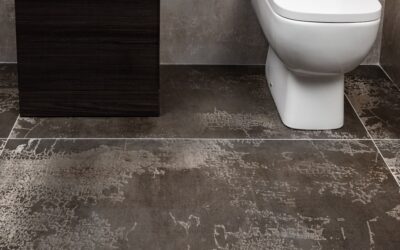
Most people never think about toilet height until they sit on one that feels wrong. Knees too high. Knees too low. Suddenly the basic task of standing back up takes more effort than it should. Different toilet heights are not a marketing gimmick — they reflect a real range of human body sizes and accessibility needs. Understanding the three main height categories and which one fits your household will improve your bathroom comfort for the next 20 years. This guide breaks down every height standard sold today, who each one is for, and the install details that can change a one-inch difference into a noticeable comfort change.
- The Three Main Toilet Height Categories
- Standard Height (14-15 inches)
- Comfort Height (16-17 inches)
- ADA-Compliant Height (17-19 inches)
- Matching Toilet Height to User Height
- Rough-In Distance Matters Too
- One-Piece vs Two-Piece Heights
- Toilet Seat Thickness Variables
- Cost by Height Category
- Picking the Right One for Your Home
The Three Main Toilet Height Categories
Every toilet sold in North America falls into one of three height ranges, measured from the floor to the top of the seat:
- Standard height — 14 to 15 inches
- Comfort height (also called Right Height or Universal Height) — 16 to 17 inches
- ADA-compliant or chair height — 17 to 19 inches
These numbers refer to the finished seat, not the bowl rim. The seat itself typically adds 1/2 to 3/4 of an inch on top of the bowl height. When shopping, check the seat-height spec rather than bowl rim height to compare apples to apples.
Standard Height (14-15 inches)
The historic American toilet height, in use since the early 1900s when residential plumbing standardized. Standard-height toilets put your knees slightly above hip level when seated, which is the optimal natural position for elimination according to most gastroenterologists. Many doctors recommend standard-height toilets specifically because they encourage the squat-like posture that engages the puborectalis muscle properly.
Use standard height in:
- Households with young children
- Households where the primary users are 5 foot 5 or shorter
- Powder rooms primarily used by guests and children
- Anyone prioritizing the natural elimination posture
The drawback is harder standing up. For older adults or anyone with knee or hip issues, getting up from a 14-inch seat takes more effort than from a 17-inch seat.
Comfort Height (16-17 inches)
Comfort height became dominant in American new construction around 2010. The seat height matches a standard dining chair (17-19 inches), which makes sitting down and standing up roughly the same effort as getting out of a kitchen chair. Most adults over 5 foot 8 prefer this height.
Marketing names vary by brand:
- Kohler calls it “Comfort Height”
- TOTO calls it “Universal Height”
- American Standard calls it “Right Height”
- Mansfield calls it “SmartHeight”
All four marketing terms describe seats between 16 and 17 inches. Use comfort height in:
- Adult-primary bathrooms
- Aging-in-place renovations for people 55 and older
- Bathrooms shared by tall adults and average-height adults
- Universal-design new construction
ADA-Compliant Height (17-19 inches)
The Americans with Disabilities Act sets a minimum 17-inch and maximum 19-inch seat height for accessible toilets in commercial spaces. Residential ADA-compliant toilets typically land at 17-18 inches and are functionally identical to comfort height. The 19-inch maximum is reserved for the tallest commercial models.
Use a true ADA-compliant height when:
- A household member uses a wheelchair (the seat needs to align with chair height for transfers)
- A household member is recovering from hip or knee surgery
- You are building a fully accessible bathroom in anticipation of future needs
Add grab bars on at least one side, with a horizontal bar 33-36 inches above the floor.
Matching Toilet Height to User Height
A useful rule of thumb when the user can be measured: the seat height should land 1-3 inches below the user’s popliteal height (the bend behind the knee when standing). For most adults that translates to:
- Under 5 foot 4 — 14 to 15 inch seats feel best
- 5 foot 4 to 5 foot 10 — 16 to 17 inch seats feel best
- Over 5 foot 10 — 17 to 18 inch seats feel best
Couples with significantly different heights should pick the height that fits the shorter user better and let the taller user adapt. Sitting too high is harder on circulation than sitting slightly low.
Rough-In Distance Matters Too
Independent of seat height, the toilet rough-in determines whether a specific model fits your existing plumbing. Standard rough-in is 12 inches from finished wall to centerline of the waste flange. Older homes (pre-1970s) sometimes use 10-inch or 14-inch rough-ins. Measure before you buy.
Most manufacturers offer comfort-height bowls in 12-inch rough-in only. If you have a 10- or 14-inch rough-in and want comfort height, your model options shrink to about a dozen specific SKUs across all brands.
One-Piece vs Two-Piece Heights
One-piece toilets often run 1 inch shorter overall than two-piece equivalents because the tank-to-bowl junction is internal. That can affect comfort height calculations — a one-piece “comfort height” sometimes measures 16 inches at the seat, while a two-piece comfort height measures 16.5 inches.
Toilet Seat Thickness Variables
Standard plastic seats add about 1/2 inch to bowl height. Wooden seats add 3/4 to 1 inch. Soft-close, padded, or heated seats can add 1.5 inches or more. If you are buying a toilet right at the edge of a comfort range, factor in seat thickness before ordering.
Cost by Height Category
Pricing scales mostly with brand and flush technology, not seat height. Typical ranges:
- Standard height, basic two-piece — $120-$280
- Comfort height, two-piece — $180-$450
- Comfort height, one-piece — $350-$1,200
- ADA-compliant with elongated bowl — $250-$600
- Bidet-integrated comfort height — $1,500-$5,500
Picking the Right One for Your Home
Most adult-only households should default to a 16-17 inch comfort height. Families with young children should keep at least one toilet in the home at standard 14-15 inch height — preferably the bathroom the kids actually use. Aging-in-place renovations should choose comfort height with the flange positioned to accept grab bars on both sides. The different toilet heights available today mean almost every household can find an exact match. The mistake is defaulting to whatever the builder installed without thinking about who actually uses the bathroom every day.