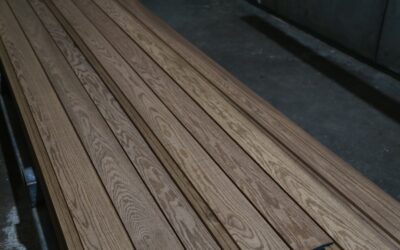
“Buy direct and save” is one of the most repeated promises in the flooring world — and one of the most misunderstood. Direct hardwood flooring generally refers to purchasing wood floors from a manufacturer, mill, or importer that sells straight to consumers, skipping the traditional retail showroom markup. The savings can be real, but so can the trade-offs, and the term gets attached to everything from legitimate factory-direct mills to drop-ship resellers with no inventory. This guide gives you an honest framework for evaluating any “direct” hardwood seller, rather than promoting a single company.
What “Direct” Actually Means
In a conventional supply chain, hardwood travels from mill to distributor to retailer to you, with each step adding margin. A genuine direct model removes one or more of those layers. There are a few versions you will run into:
- Factory-direct mills that manufacture their own flooring and sell it from a warehouse or website.
- Importer-direct sellers that bring in containers of engineered or exotic species and sell from a regional warehouse.
- Online direct retailers that carry inventory and ship nationwide with lower overhead than a mall showroom.
- Drop-shippers that list product but never touch it — these are “direct” in name only and deserve extra scrutiny.
Knowing which model you are dealing with tells you a lot about pricing, lead times, and how problems get resolved. A factory-direct mill that warehouses its own goods can usually ship quickly and resolve a defect claim straight from the source. A drop-shipper, by contrast, may not even know there is a problem until your pallet arrives damaged, because they never handled the product and are simply relaying orders to a third party. The label “direct” on a website tells you nothing on its own — what matters is who actually owns and ships the wood.
The Real Advantages
When the model is legitimate, buying direct can genuinely lower your cost per square foot. Removing a layer of distribution can shave anywhere from 10 to 30 percent off comparable retail pricing, especially on engineered and exotic species where retail markups are highest.
Beyond price, you sometimes get access to wider plank widths, longer board lengths, and mill-run options that big-box stores never stock. Direct sellers focused on flooring also tend to employ staff who actually know Janka ratings, finish chemistry, and acclimation — a real upgrade over a general home-improvement floor associate.
Selection depth is often the underrated benefit. Mass retailers carry a handful of fast-moving SKUs in standard colors and widths because their shelf space is limited. A direct importer or mill may stock dozens of species, grades, and finishes, including exotics and specialty cuts that would otherwise require a special order with a long wait. If you want something beyond builder-grade oak, the direct channel frequently has it on hand.
The Honest Drawbacks
The savings come with real responsibilities shifted onto you. Most direct purchases do not include installation, so you either hire your own installer or do it yourself. You also lose the hand-holding of a local showroom that will reorder a missing box or send someone to inspect a complaint.
Other things to weigh carefully:
- Sight-unseen risk. Photos and even mailed samples never fully capture color variation across a whole order.
- Freight and damage. Hardwood ships on pallets by LTL freight; you must inspect before signing, because carriers resist claims after delivery.
- Returns are hard. Restocking fees of 15 to 25 percent plus return freight can erase your savings if the floor is wrong.
- Warranty support. A claim is only as good as the company standing behind it — and some direct sellers vanish.
How to Evaluate a Direct Seller
Treat the purchase like a contract, not a checkout. Before you send money, work through a short due-diligence list that any reputable direct seller will pass easily.
- Confirm they hold inventory. Ask where the product physically ships from and the realistic lead time. Vague answers signal a drop-shipper.
- Order samples first. Never buy hundreds of square feet off a website photo. Pay for samples and view them in your own light.
- Read the warranty in full. Note finish vs. structural coverage, what voids it, and whether it is prorated.
- Verify the species and construction. For engineered, ask the wear-layer thickness in millimeters and core type; for solid, confirm the grade and milling.
- Check return and damage policy. Get the restocking fee, the inspection window, and the freight-claim process in writing.
- Look for real reviews and a physical address. A verifiable location and a track record matter more than slogans.
Getting an Accurate Quote
To compare a direct price against your local retailer fairly, build a true all-in number. Add the material cost, freight, the 10 percent overage you should always order for cuts and waste, any underlayment or moisture barrier, and your installation labor — whether that is a hired crew or your own time and tool rental.
Only then can you see the genuine spread. Sometimes direct wins by a wide margin; other times, once freight and the hassle of self-managing the job are added in, a local installed quote is competitive and far less risky.
Is Buying Direct Right for You?
Direct purchasing rewards organized, hands-on buyers. If you are comfortable measuring accurately, coordinating freight, inspecting a pallet on arrival, and either installing yourself or managing a separate installer, the savings can be substantial and the product selection broader.
If you would rather have one company measure, supply, install, and answer the phone when something goes wrong, a full-service local retailer earns its markup. Either way, the smart move with direct hardwood flooring is to verify the seller, order samples, read the fine print, and price the whole job — not just the sticker per square foot — before you commit.
Common Direct-Buying Mistakes to Avoid
A few predictable errors trip up first-time direct buyers, and all of them are avoidable with a little planning. The most expensive is under-ordering. Because reordering means new freight and the risk of a mismatched dye lot, running short mid-install is far worse with a direct purchase than at a local store you can drive back to. Always measure carefully and add the full 10 percent overage up front.
The second common mistake is failing to inspect the freight delivery before signing for it. Once you sign the carrier’s delivery receipt without noting visible damage, you accept the shipment as-is, and recovering money for crushed corners or water-stained cartons becomes nearly impossible. Open and inspect every pallet at the curb, photograph any damage, and note it on the paperwork before the driver leaves. Finally, do not skip acclimation just because you saved money on the wood — letting solid hardwood adjust to your home’s humidity for the manufacturer’s recommended period is what prevents gapping and cupping later.
Prefer to explore on your own?
See how new flooring looks in your actual room in seconds — free, no signup.
Try the free Floor Studio →