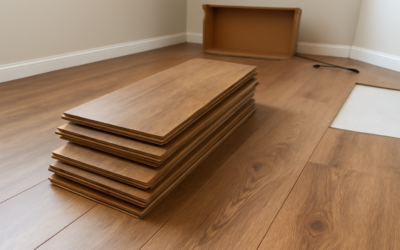
Tracking down discontinued Pergo laminate flooring is a headache almost every longtime Pergo owner faces sooner or later. Maybe a burst pipe ruined three planks in the dining room, or you are finishing a closet with leftover boards that ran out two feet short. Pergo has been a household laminate name for decades, which means millions of homes have floors whose exact line no longer sits on a shelf anywhere. The good news is that patient sourcing and smart matching can usually get you a repair that nobody notices.
- Why Pergo Lines Get Discontinued
- Start With the Original Source
- Hunting Down Leftover Stock
- Matching When the Exact Line Is Gone
- Handling Locking and Thickness Differences
- Weighing Repair Against Replacement
- Final Takeaways
- How to Remove and Reuse Existing Planks
- Protecting Yourself From Future Shortages
Why Pergo Lines Get Discontinued
Flooring is a fashion business as much as a building-materials one. Manufacturers refresh their collections on regular design cycles, retiring older colors and embossing patterns to make room for whatever wood-look and gray-toned trends are selling that season. A décor that felt current a decade ago simply stops moving, so it gets cut.
Pergo also changed hands. Mohawk Industries acquired the Pergo brand, and after that acquisition the lineup was reorganized around Mohawk’s own collections and distribution, which quietly sunset a number of legacy product names. On top of that, locking technology keeps evolving. As newer click-lock joint systems replaced older glue-together and first-generation angle-tap profiles, the planks built on the old mechanisms were phased out. That last point matters for repairs, because an old profile may not click into a newer one even if the color looks identical.
Start With the Original Source
Your best first move costs nothing but a phone call. Contact whoever supplied the floor originally, whether that was a big-box retailer, a flooring specialty store, or the contractor who installed it. Installers in particular sometimes keep attic stock or remember the exact product name and run, which is the single most valuable piece of information you can recover.
- Dig out the original receipt, order confirmation, or installation invoice.
- Check the garage, attic, or basement for a leftover carton with a label.
- Photograph any printed product name, color name, or item number you find.
- Look on the back of a spare plank; batch and product data are often stamped there.
Even a partial name gets you far. Armed with the collection and color, a retailer can tell you whether any warehouse still holds sealed boxes.
Hunting Down Leftover Stock
Once you know what you are chasing, widen the search. Closeout and liquidation sellers exist precisely to move discontinued and overstock flooring, and they are the likeliest place to find sealed cartons of a retired Pergo line at a discount. Call several, because inventory turns over fast and what is gone this week may reappear when another warehouse clears out.
Online marketplaces are the other major channel. Homeowners routinely sell unopened boxes left from their own projects, and you can occasionally buy exactly the run you need from someone two states away. Contractor and builder overstock is a third avenue; flooring installers and general contractors sometimes sit on surplus from large jobs and will part with a few boxes.
When buying secondhand, confirm the seller has the same product, not just a similar photo, and ask for close-up pictures of the plank face and the locking edge. Dye lots drift between production runs, so even a genuine match can shade slightly. Buy a little extra whenever you can.
Matching When the Exact Line Is Gone
Sometimes the original is truly unavailable, and then the goal shifts from perfect match to convincing blend. The most reliable method is physical: pry up one existing plank from an inconspicuous spot, a closet or under an appliance, and carry that sample to the store.
- Bring a real plank sample; screens and memory both lie about color.
- Match by décor family and wood species look, not just a color name.
- Compare gloss level and surface embossing, which read as strongly as color.
- Check plank width and thickness so the new boards sit flush.
Look at current Pergo collections first, since a newer product in the same oak or hickory family may sit remarkably close. If the tone is a hair off, use the substitute where scrutiny is lowest, inside a closet, a pantry, or under furniture, and keep the true original in the open, high-visibility field.
Handling Locking and Thickness Differences
Color is only half the battle; the boards also have to physically join. Older Pergo used locking profiles that will not always engage newer ones, so a visually perfect replacement can refuse to click into your existing floor. Test-fit before you commit to a full purchase.
When profiles will not marry, installers fall back on proven workarounds. You can glue an odd plank into place rather than relying on the click joint, or isolate the mismatched product in its own room or closet separated by a transition strip. A slight thickness difference can be shimmed from below, but a large one is best broken with a T-molding at the doorway so the eye reads it as intentional.
Weighing Repair Against Replacement
At some point the math tilts. If you need only a handful of planks and can source them, a spot repair is cheap and quick. But if you are hunting dozens of boards of a long-gone line, chasing marketplaces for weeks, and still landing an imperfect match, replacing the whole room can be the saner, better-looking choice.
Consider the floor’s overall age and condition too. A fifteen-year-old laminate that is wearing thin at the traffic lanes may not be worth an expensive patch. Sometimes the honest answer is to relocate salvaged planks into a small back room and lay a fresh, currently available floor in the main living space.
Final Takeaways
Repairing discontinued Pergo laminate flooring rewards patience and legwork. Chase the original paper trail first, lean on closeout sellers and marketplaces for sealed stock, and when the exact line is truly gone, match by wood family and hide any compromise in low-visibility rooms. Respect the locking-profile and thickness differences that trip up so many DIY repairs, test-fit before you buy in bulk, and always grab a few spare boxes when you find your match. Do that, and a discontinued floor need not mean a full tear-out.
How to Remove and Reuse Existing Planks
Because laminate floats, you can often harvest matching boards from a hidden area rather than buying anything at all. Pull planks from a closet, under the refrigerator, or inside a pantry, then move the fresh substitute boards into that low-visibility spot instead. This robbing-Peter-to-pay-Paul trick keeps your best-matching original material exactly where people look.
Work carefully so you do not crack the tongues and grooves you plan to reuse. On a click-lock floor you typically unlock from the nearest wall, lifting a full row at a low angle and setting each plank aside in order.
- Remove the baseboard or quarter-round along the wall you will open from.
- Lift the end plank at roughly a 30-degree angle to release the joint.
- Number the planks with painter’s tape so they go back in sequence.
- Inspect each groove; damaged edges can be glued rather than clicked.
Save every usable board even after a repair is done. A small stash of genuine, aged planks is worth more than any store-bought near-match down the road.
Protecting Yourself From Future Shortages
The best time to stockpile is the day you install. Anytime you lay a new laminate floor, keep at least one full unopened carton in dry storage as attic stock, because that sealed box is the perfect-match insurance no marketplace can guarantee later. Photograph the label and record the collection name, color, and item number somewhere you will actually find it in five years.
If you are shopping for a brand-new Pergo floor today, ask the retailer how long the line has been on the market and whether a refresh is imminent. Buying a collection that just launched buys you more years of easy replacement than one that is already circling the discontinued list.
Prefer to explore on your own?
See how new flooring looks in your actual room in seconds — free, no signup.
Try the free Floor Studio →