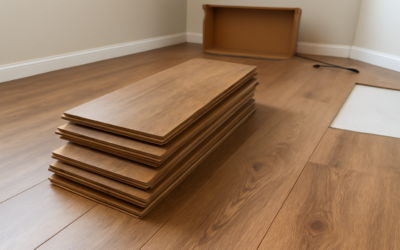
A burst pipe, a deep gouge, or a kitchen remodel that opens a wall, and suddenly you need a few boxes of a floor that no longer exists. Tracking down discontinued flooring is one of the most frustrating repair challenges homeowners face, but it is far from hopeless. With the right search strategy and a few backup plans, you can often find an exact match, a close substitute, or a smart way to disguise the gap. Here is where to look, how to identify what you have, and how to plan so discontinuation never catches you off guard again.
- Why Flooring Gets Discontinued
- First, Identify Exactly What You Have
- Check Your Attic Stock First
- Where to Hunt for Discontinued Stock
- When You Can't Find an Exact Match
- Watch Out for Color and Lot Variation
- Plan Ahead to Avoid This Headache
- Recap: The Search Order That Works
- When Replacing the Whole Floor Makes More Sense
- How to Disguise a Repair You Can't Perfectly Match
- Frequently Asked Questions
Why Flooring Gets Discontinued
Manufacturers retire products constantly. Styles fall out of fashion, color trends shift, suppliers change, and product lines get refreshed every few years. A floor you installed five or ten years ago may simply not be made anymore, even by a brand that is still going strong. Sometimes only a specific color or width is dropped while the line continues. Understanding this helps set expectations: discontinuation is normal, not a sign anything was wrong with your floor, and it means you are hunting leftover inventory rather than current production.
First, Identify Exactly What You Have
You cannot match what you cannot name. Before searching, gather every detail about your existing floor.
- Check leftover boxes: Manufacturer name, product line, color name, and style or SKU number are printed on the label. This is the single most valuable clue.
- Look for a lot or batch number: Crucial for matching color and texture exactly.
- Pull a sample plank: Remove a piece from a closet or under an appliance to bring or photograph when comparing.
- Note specs: Plank dimensions, thickness, wear-layer for vinyl, and finish.
The more precisely you can name the product, the better your odds of finding it.
Check Your Attic Stock First
Before buying anything, look around your own home. Many installs leave behind partial boxes, and the original installer or builder may have stored extra “attic stock” in a garage, basement, or crawl space. Even a few salvaged planks from a closet, a pantry, or beneath a built-in can supply enough material for a small repair. Pulling boards from a hidden area and replacing those with a close substitute is a classic trick: the perfect match goes where it shows, and the mismatch hides out of sight. Always exhaust your own supply before paying a premium elsewhere.
Where to Hunt for Discontinued Stock
When you need more, several sources specialize in exactly this.
- Flooring liquidators and overstock dealers: Stores and websites that buy up discontinued and surplus lots are often your best shot at finding retired products.
- eBay and online marketplaces: Homeowners and contractors regularly sell leftover boxes of specific discontinued lines; search the exact product and color name.
- Contact the manufacturer: Call the maker directly. They may have remaining stock, know which distributors do, or identify the closest current replacement.
- Original retailer or installer: The store or contractor who supplied the floor may have leftover inventory or supplier contacts.
- Local flooring stores and contractors: Pros often keep odd boxes of discontinued material from past jobs.
Cast a wide net and use the exact product and color name in every search.
When You Can’t Find an Exact Match
Sometimes the product is gone for good, and that calls for creative solutions. A near-match from the same manufacturer’s current line may be close enough, especially in a less visible room. You can relocate existing flooring: pull good boards from a closet or hidden area to patch the visible spot, then install a substitute where it won’t be noticed. Another approach is to introduce a deliberate transition, such as a threshold or a defined border, so a slightly different but coordinating floor in an adjoining area looks intentional rather than mismatched. For tile, a contrasting accent or feature strip can turn a forced patch into a design choice.
Watch Out for Color and Lot Variation
Even when you find the “same” product, be careful. Flooring color and texture can vary between production lots, so a different batch of the identical SKU may not perfectly match a floor that has also aged and faded with light and use. Whenever possible, compare a physical sample side by side with your existing floor before committing, and place any slight mismatch in lower-visibility spots. Wood and other natural products age in color, so even genuine matching material may need time, or some sun exposure, to blend with the older floor around it.
Plan Ahead to Avoid This Headache
The best fix for discontinued flooring is prevention. Whenever you install a new floor, buy extra (typically 10 percent or more beyond the room’s square footage) from the same production lot, and store it somewhere dry and climate-stable. Keep at least one full labeled box so you always have the manufacturer, product, color, and lot number on hand. Note these details in your home records. A modest amount of attic stock turns a future repair from a frantic internet search into a thirty-minute swap, and it costs far less than tracking down rare material years later.
Recap: The Search Order That Works
A discontinued floor is a solvable problem if you approach it methodically: identify the exact product and lot, raid your own attic stock first, then work the liquidators, marketplaces, manufacturer, and original retailer. When no exact match exists, relocate hidden boards, choose a coordinating substitute, or design in an intentional transition. Always compare samples for lot variation before you buy. And going forward, the single smartest habit is to keep extra material from day one, because the easiest discontinued floor to match is the one you set aside before it ever disappeared.
When Replacing the Whole Floor Makes More Sense
Sometimes the math points to starting over. If the damaged area is large, if you cannot find a reasonable match after exhausting your sources, or if the existing floor is already worn and dated, paying a premium for rare discontinued material may not be worth it. Tally the realistic cost and effort of hunting down old stock against the cost of a new floor, especially for a small room. A fresh, current product also restores a manufacturer warranty and gives you matching repair stock going forward. For a high-visibility space where a patch would always be noticeable, replacing the whole floor can deliver a better result for similar money than chasing an imperfect match.
How to Disguise a Repair You Can’t Perfectly Match
When you must work with a near-match, smart placement hides a lot. Break up the visual line by working the substitute material into a logical stopping point (a doorway, a threshold, or the edge of a room) so the eye reads the change as intentional rather than as a flaw. Blending a few off-boards randomly among the original ones, rather than clustering them in one obvious block, helps a slight color difference disappear into the natural variation of the floor. For wood, giving a newer patch some time and light to age toward the surrounding boards can close the gap further. With thoughtful placement, even an imperfect match can become nearly invisible in daily use.
Frequently Asked Questions
How do you find discontinued flooring by SKU or with no box?
Search the exact SKU or item number in quotes together with the brand name, since overstock listings and old product pages often still show it. With no box, check the back and edges of a loose plank for printed brand names or codes, run a reverse image search on a clear photo, and send that photo plus measurements to the manufacturer’s customer service.
Will a different brand of laminate or vinyl plank click into a discontinued floor?
Usually not. Locking profiles are designed by each manufacturer, so planks from another brand rarely lock correctly even when thickness and width match, and a forced joint tends to gap or break. Treat a different product as a separate floor and join the two at a doorway or threshold with a transition strip instead of mixing planks in one run.
How do you match discontinued floor tile?
Bring a loose tile, or a clear photo with exact length, width and thickness, to tile shops and salvage dealers, because nominal sizes can differ slightly between makers and a thicker tile will sit proud. If no match turns up, borrow tiles from under an appliance or inside a closet for the visible repair, or turn the patch into a deliberate accent band.
Prefer to explore on your own?
See how new flooring looks in your actual room in seconds — free, no signup.
Try the free Floor Studio →