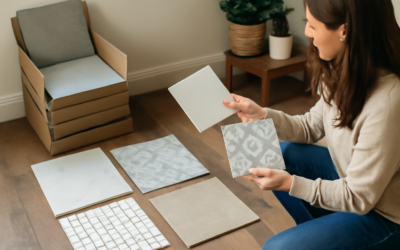
Buying discount floor tile is one of the smartest ways to cut a flooring budget, and it is also one of the easiest places to get burned if you do not know what to check. I have installed plenty of clearance and overstock tile that looked identical to full-price product, and I have also seen homeowners come up short on a project because they grabbed a bargain lot without counting boxes. The tile itself is often the same quality; the discount comes from how it is being sold, not from what it is.
Part of our Tile & Grout guide — explore the full guide →
This guide explains where the real deals are, what makes a tile cheap, and exactly what to inspect before you hand over your card. Done right, you can save 40 to 70 percent versus full retail.
Why Some Tile Is Discounted
Discounted tile falls into a few honest categories, and understanding them tells you whether the deal is safe:
- Overstock: the manufacturer or store simply over-ordered. This is prime, first-quality tile at a markdown. Buy with confidence.
- Closeouts and discontinued lines: the pattern is being retired. Quality is fine, but you cannot reorder later, so buy extra.
- Seconds (also called Grade 2 or B-grade): tiles with minor flaws such as slight size variation, glaze specks, or color inconsistency. Fine for many rooms if you inspect.
- Open or damaged boxes: cosmetic box damage often means a deep markdown on perfectly good tile.
The risky category is unmarked “as-is” pallets with no grade listed. If nobody can tell you why it is cheap, assume it is seconds and inspect accordingly.
Where to Find the Best Deals
Floor & Decor keeps a dedicated clearance and closeout section both in-store and online, and their per-square-foot prices on discontinued porcelain regularly drop to $0.79 to $1.99. Big-box stores like The Home Depot and Lowe’s run clearance racks and end-of-line markdowns, especially at quarter-end. Tile Shop and independent tile distributors sell display and overstock at a discount if you ask. Habitat for Humanity ReStores and local salvage yards sometimes carry surplus builder tile for under a dollar a foot. Do not overlook the “last chance” or “sale” filters on retailer websites, where discontinued SKUs get liquidated.
Understanding Price Per Square Foot
Full-price porcelain floor tile typically runs $2 to $7 per square foot, and premium looks go higher. Discount channels routinely put comparable tile at $0.69 to $2.50 per square foot. But price the whole job, not just the tile. You still need thinset (about $0.30 to $0.60 per sq ft), grout, and possibly an underlayment or waterproofing membrane. A rock-bottom tile with a $6 designer look can still be a great deal, but confirm the total delivered price, since some clearance tile carries freight if it ships from a warehouse.
The Dye Lot Trap
The number one mistake with discount tile is ignoring the shade or lot code printed on the box. Tile is produced in batches, and color can shift slightly from one production run to the next. Full boxes from a single lot blend perfectly; mixing lots can leave a visible stripe across your floor. When buying discount tile:
- Check that every box carries the same shade and caliber (size) code.
- Buy the entire quantity in one trip. Discontinued tile may be gone next week.
- Add 10 to 15 percent overage for cuts, breakage, and future repairs, more for diagonal layouts.
- If you must mix lots, blend tiles from different boxes as you set them so any shade shift averages out.
What to Inspect Before You Buy
Open boxes on the spot and lay several tiles face to face and back to back on a flat surface. Look for:
- Warping (lippage): tiles that rock or do not lie flat will fight you during install, especially large-format pieces over 15 inches.
- Size consistency: measure a few tiles with a tape. Seconds often vary by 1/16 inch or more, which shows up in grout lines.
- Glaze and edge defects: chips, pinholes, and glaze skips. A few in a discount lot are normal; scattered flaws in most tiles are not.
- PEI rating: for floors, look for PEI 3 or higher. Wall-rated tile (PEI 0-1) will wear through underfoot.
- Water absorption: true porcelain absorbs under 0.5 percent and suits wet areas and freeze zones; ceramic absorbs more and belongs indoors in dry rooms.
Reject any lot where the majority of tiles show defects. A 5 percent flaw rate you can cut around; a 30 percent rate is not a bargain.
Porcelain vs. Ceramic on a Budget
When you are hunting bargains, know the difference between the two main types, because both show up on clearance. Porcelain is fired denser and harder, absorbs under 0.5 percent water, and works on floors, in showers, and even outdoors in freeze zones. Ceramic is a bit softer, absorbs more water, and is better suited to indoor floors and walls in dry rooms. A discounted porcelain at $1.50 per square foot is usually a better long-term value than a discounted ceramic at $0.99, because the porcelain will take more abuse. That said, for a low-traffic bedroom or a laundry room, clearance ceramic is perfectly fine and stretches the budget further.
Calculating How Much to Buy
Coming up short on a discontinued lot is the fastest way to turn a bargain into a headache, so measure carefully. Multiply your room’s length by width in feet to get square footage, then add your waste factor. A standard straight layout needs about 10 percent extra; a diagonal or herringbone layout needs 15 to 20 percent because of the added cut waste. If the tile is discontinued, I bump that to a full extra box beyond the calculation, because a few spares for future repairs are priceless when you can never reorder. Write the square footage and box count on your phone before you leave the house so you are not doing mental math in a crowded clearance aisle.
When Discount Tile Makes Sense and When It Does Not
Discount tile shines in rental units, basements, laundry rooms, garages, and any large area where you want durable flooring on a tight budget. Seconds are perfect for a busy mudroom nobody photographs. Where I hesitate is a high-visibility kitchen or an open floor with a large-format tile, because size variation and lippage are unforgiving there, and you cannot reorder a discontinued lot if you come up short. For those spaces, spend a little more on first-quality overstock rather than true seconds.
Final Buying Checklist
Before you commit, confirm the grade, verify a single dye lot, calculate total square footage plus 15 percent, inspect at least three boxes, and price the full job including setting materials. Ask about the return policy, since many clearance items are final sale. Handle those steps and discount floor tile delivers the same durable, good-looking floor as full-price product for a fraction of the cost. Cut corners on the inspection, though, and the money you saved disappears into wasted labor and a floor you will look at every day.
Prefer to explore on your own?
See how new flooring looks in your actual room in seconds — free, no signup.
Try the free Floor Studio →