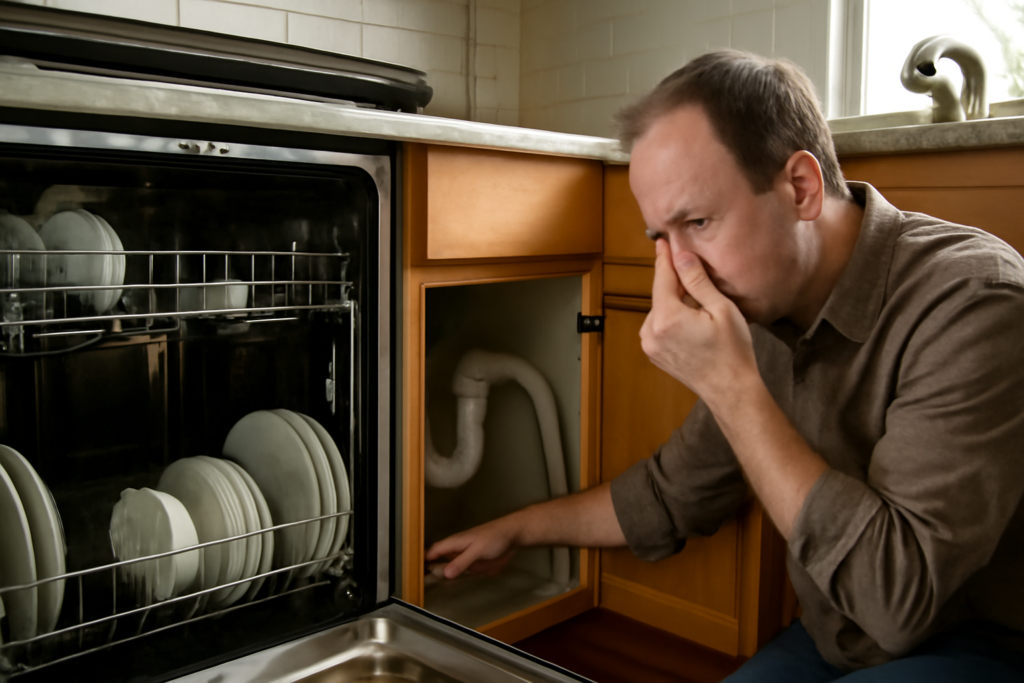
A dishwasher that smells fine when idle but stinks halfway through a cycle is telling you something specific. When a dishwasher smells while running, especially during the drain phase, the odor usually comes from dirty water moving the wrong way: from the sink drain or garbage disposal back into the dishwasher. That is a drain hookup problem, not a cleaning problem, and scrubbing the tub will not fix it.
Start with three checks. Look under the sink and confirm the drain hose rises in a high loop up to the underside of the counter or connects to an air gap on the sink deck. If the dishwasher was just installed with a new garbage disposal, confirm the plastic knockout plug inside the disposal inlet was removed. Then check the hose for kinks, sags and clogs. When a dishwasher smells while running only during the drain phase, those three issues are the first place to look. They account for most mid-cycle odors and for the related complaint that the sink smells when the dishwasher runs.
- Why a Dishwasher Smells While Running: How the Drain Works
- Safety Before You Reach Under the Sink
- Tools and Materials
- Step-by-Step Diagnosis and Fix
- Disposal and Sink Drain Causes
- When the Smell Is Not the Drain
- Troubleshooting Quick Reference
- Cost Ranges
- When to Call a Pro
- Frequently Asked Questions
If the hookup checks out, the remaining causes are a clogged filter, a blocked sink trap or a disposal full of rotting food. Each has a distinct pattern, and you can sort them out in about 30 minutes with a flashlight and a few basic tools.
Why a Dishwasher Smells While Running: How the Drain Works
A dishwasher drain pump pushes wastewater through a flexible hose to either the garbage disposal inlet or a branch tailpiece on the sink drain. Between pumping bursts, gravity wants to pull water back. If the hose runs flat or dips below the sink drain connection, sink water and disposal debris can siphon or drain back into the dishwasher sump. When the wash pump starts again, it warms that dirty water and blows the odor out through the door vent.
Two devices prevent that backflow. A high loop means securing the drain hose as high as possible under the counter, usually with a strap or clip, so water cannot flow back uphill. An air gap is a small fitting mounted on the sink deck or countertop that physically breaks the connection, so even a backed-up sink cannot siphon into the dishwasher. Some local plumbing codes require an air gap rather than a high loop, so check with your local building department before changing the setup.
Odor Timing Clues
- Smell at the start of the cycle: stagnant water sitting in the sump from backflow since the last run.
- Smell during drain: water struggling past a clog, or sink water being pushed back up.
- Sink gurgles or fills during drain: a clogged sink trap, disposal or partially blocked branch drain.
- Musty smell on opening the door: usually a dirty filter or door gasket, a cleaning issue.
Safety Before You Reach Under the Sink
Dishwashers and disposals combine water and electricity. Before you reach into the dishwasher tub, remove the filter or touch any wiring box, switch off the breaker that feeds the dishwasher (and the disposal if you will put a hand or tool near it) and confirm the power is off with a non-contact voltage tester. If the dishwasher plugs into an outlet under the sink, unplug it. Never put your hand inside a disposal. Use tongs or pliers to remove debris and keep the disposal breaker off while you work. Do not attempt any electrical test on a powered appliance. If the wiring connection box at the base of the dishwasher looks scorched or loose, stop and call a licensed electrician or appliance technician.
Under-sink outlets in kitchens should be GFCI protected. If the outlet that feeds the dishwasher or disposal is not GFCI protected and you are not sure how to add protection, a licensed electrician can handle it.
Tools and Materials
- Flashlight or headlamp
- Bucket and old towels
- Screwdriver and a 5/16 or 1/4 inch nut driver for hose clamps
- Pliers or tongs
- Hammer and a screwdriver or punch (for a disposal knockout)
- Bottle brush or a long, flexible hose brush
- Zip ties, a mounting strap or a high-loop clip
- Replacement drain hose, if the old one is cracked
- A dishwasher air gap kit, if your code calls for one or you want the extra protection
Step-by-Step Diagnosis and Fix
- Kill the power. Switch off the dishwasher and disposal breakers and confirm with a non-contact voltage tester, or unplug both.
- Trace the drain hose. Follow it from the dishwasher, through the cabinet wall, to where it connects. If it lies flat on the cabinet floor or droops below the connection point, you have found the most likely cause.
- Create a high loop. Lift the hose so its highest point sits just under the countertop, ideally 20 inches or more above the cabinet floor, and secure it with a strap, a screw-in clip or a zip tie through a cabinet-side hook. Avoid kinking it.
- Or install an air gap. If your sink has a spare hole or a knockout for one, an air gap kit routes the dishwasher hose up to the fitting and a second hose down to the disposal or drain tailpiece. Follow the kit instructions and local code.
- Check the disposal knockout. Loosen the clamp and pull the hose off the disposal’s dishwasher inlet. Look inside with a flashlight. If you see solid plastic, the knockout was never removed. Tap it out with a screwdriver and hammer, then fish the plug out of the disposal with pliers.
- Clear the hose. Over a bucket, look through the hose and run a bottle brush through it. Flush with hot water. Replace any hose that is cracked, brittle or packed with grease.
- Clean the dishwasher filter. Twist out the filter assembly from the tub floor, scrub it in hot soapy water and clear the sump of food and glass bits.
- Clear the sink trap and disposal. Remove standing food from the disposal with tongs and clean under the rubber splash guard. If the sink drains slowly, clean the trap.
- Reconnect and test. Tighten clamps snugly, restore power and run a short rinse cycle while watching for leaks and smelling at the door vent and the sink.
Disposal and Sink Drain Causes
The disposal and the sink drain share a pipe with the dishwasher, so problems there often show up as a smelly dishwasher drain. Rotting food stuck under the splash guard or in the grinding chamber releases odor whenever water flows past. A partially blocked trap lets wastewater pool, and when the dishwasher pumps out a full load, that pooled water gets pushed back up the hose.
Run the disposal with plenty of cold water for 20 to 30 seconds after each use. Clean the splash guard weekly with a brush and dish soap. If the sink gurgles or backs up while the dishwasher drains, the branch drain past the trap may be partly clogged. Clearing that line with a hand auger is a reasonable DIY step. If it keeps returning or you smell sewer gas at the sink between cycles, a licensed plumber should check the trap, the vent and the drain line.
When the Smell Is Not the Drain
Some odors during a cycle are not drain related at all. A sharp, hot plastic smell can come from a utensil or lid that fell onto the heating element. Unplug or switch off the breaker, let the tub cool and remove it. A burning or electrical smell is different: turn the dishwasher off, unplug it or shut off its breaker and call a licensed appliance technician before using it again. Do not try to diagnose a burning smell yourself.
A rotten egg smell can come from well water with sulfur, which becomes noticeable when water heats up. If the smell also shows up from the hot water tap, the source is the water supply, not the dishwasher. A musty smell that lingers on clean dishes points to mold in the door gasket or behind the filter, which a cleaning cycle with dishwasher cleaner and gasket scrubbing usually resolves.
Troubleshooting Quick Reference
| Symptom | Likely Cause | Fix |
|---|---|---|
| Smell mid-cycle, new install | Disposal knockout not removed | Knock out plug, retrieve it |
| Smell each cycle, hose on floor | No high loop | Secure hose high or add air gap |
| Sink smells when dishwasher runs | Clogged trap or disposal | Clean disposal and trap |
| Dirty water left in tub | Clogged filter or hose | Clean filter, flush hose |
| Burning smell | Electrical or element issue | Unplug, call a technician |
Cost Ranges
Most fixes are cheap. A high-loop clip or strap costs a few dollars. A new drain hose runs about $10 to $30. An air gap kit usually costs $15 to $40, plus the cost of drilling a countertop hole if there is no spare sink hole, which can add a stone fabricator’s fee for quartz or granite. A plumber visit to clear a drain line or reconfigure the hookup typically runs $150 to $350 depending on your area. An appliance technician’s diagnostic call often lands between $100 and $200 before parts.
When to Call a Pro
Call a licensed plumber if the sink drain backs up repeatedly, if you smell sewer gas between cycles, if local code requires an air gap and you need a new countertop hole, or if drain pipes under the sink are corroded or leaking. Call a licensed electrician if the dishwasher outlet lacks GFCI protection or the wiring box shows damage. Call an appliance technician for a burning smell, a drain pump that hums without pumping, or water that will not drain even with a clear hose. Hookup fixes like a high loop, a cleaned hose or a removed knockout are well within DIY range once the power is off.
Frequently Asked Questions
Why does my dishwasher smell only when it is running?
Dirty water from the sink or disposal is likely draining back into the dishwasher between cycles. When the wash heats that water, the odor escapes through the door vent. A missing high loop or air gap is the usual reason.
Why does my sink smell when the dishwasher runs?
The dishwasher pushes water through the same drain as the sink. If the disposal holds rotting food or the trap is partly clogged, the rush of water stirs up odor and can force it back into the sink basin.
Do I need an air gap or is a high loop enough?
That depends on local plumbing code. Some areas accept a high loop, while others require an air gap. Check with your local building department, and choose an air gap if you want the strongest backflow protection.
Can a new garbage disposal cause dishwasher odors?
Yes. New disposals ship with a plastic knockout plug in the dishwasher inlet. If it stays in place, the dishwasher cannot drain properly, water sits in the tub and it smells. Remove the plug and retrieve it from the chamber.
What should I do if the dishwasher smells like burning?
Turn it off and unplug it or switch off its breaker right away. Check for a fallen plastic item on the element once it cools. If there is no obvious melted item, have a licensed appliance technician inspect it before the next use.