Seeing a swarm of winged insects near your home triggers an immediate question: do termites fly, and is that what you are looking at? The short answer is yes, certain termites do fly, and spotting them is one of the earliest and most visible warnings of a termite infestation. Knowing the difference between flying termites and harmless look-alikes can save you thousands of dollars in structural damage.
Why Some Termites Have Wings
Not all termites fly. A termite colony produces three castes: workers, soldiers, and reproductives. Only the reproductive caste, called alates or swarmers, develops wings. Their sole purpose is to leave the parent colony, mate, and establish new colonies elsewhere.
Swarmers emerge when a colony matures, typically after 3-5 years of growth. A single colony can release hundreds to thousands of swarmers in a single event. Subterranean termites usually swarm in spring when temperatures rise above 70 degrees F and humidity is high, often on a warm day following rain. Drywood termites tend to swarm in late summer and fall.
What Flying Termites Look Like
Flying termites are roughly 3/8 inch long with straight, beaded antennae and two pairs of wings that are equal in length. Their bodies are uniformly thick without a noticeable waist. Wings are translucent and extend well beyond the body, often twice the body length. After swarming, termites shed their wings, so finding piles of small translucent wings on windowsills or near light sources is a strong indicator of termite activity.
Color varies by species. Subterranean termite swarmers are dark brown to black. Drywood termite swarmers tend to be lighter, ranging from tan to light brown. Formosan termite swarmers, found primarily in the Southeast, are yellowish-brown and slightly larger than other subterranean species.
Flying Termites vs. Flying Ants
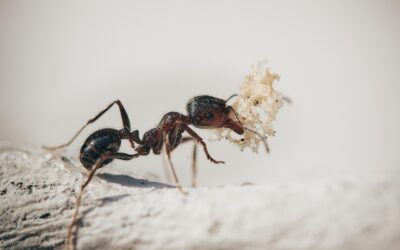
This is the identification that matters most, because flying ants are common, mostly harmless, and easily confused with termite swarmers. Four physical differences make the distinction clear:
- Waist: Ants have a narrow, pinched waist. Termites have a broad, straight-sided body with no waist constriction.
- Antennae: Ant antennae bend at a sharp 90-degree angle (elbowed). Termite antennae are straight with a subtle bead-like appearance.
- Wings: Both pairs of termite wings are identical in size. Ant front wings are noticeably larger than their hind wings.
- Wing durability: Termite wings break off easily and are frequently found in discarded piles. Ant wings stay attached.
If you are unsure, capture a few specimens in a sealed plastic bag and bring them to a local pest control company for free identification. Most exterminators offer this service because it leads to potential business.
Where and When Swarms Happen
Termite swarms gravitate toward light. Indoor swarms often cluster around windows, sliding glass doors, and light fixtures. You might find them in a bathroom or kitchen where moisture attracts subterranean species. Outdoor swarms typically emerge from soil near the foundation, tree stumps, woodpiles, or landscape timbers.
Timing depends on species and geography. In the southern United States, subterranean termite swarms peak from February through May. Northern states see swarms from March through June. Drywood termites swarm from August through November, primarily in coastal areas from the Carolinas to California.
A swarm inside your home is a more urgent sign than an outdoor swarm. Indoor swarmers almost certainly came from a colony already established within or directly beneath your home’s structure.
What to Do If You See Flying Termites
Stay calm and avoid spraying the swarmers with insecticide. Killing the visible swarmers does nothing to address the colony producing them, and it destroys the evidence a pest inspector needs to identify the species and locate the colony.
- Collect samples: Capture several swarmers or shed wings in a zip-lock bag for identification.
- Note the location: Mark exactly where you saw them. Take photos and note the date, time, and weather conditions.
- Schedule an inspection: Contact a licensed termite inspector within 48 hours. Most companies offer free inspections.
- Check for other signs: Look for mud tubes (pencil-width tunnels) on foundation walls, damaged wood that sounds hollow when tapped, and frass (termite droppings that resemble tiny wood-colored pellets).
Treatment Options After Confirming Termites
Professional termite treatment falls into two main categories. Liquid barrier treatments involve trenching around the foundation and applying termiticide (such as Termidor or Taurus SC) that kills termites on contact and transfers between colony members. This method costs $1,500-$3,000 for an average home and provides 5-10 years of protection.
Bait station systems like the Sentricon system place monitoring stations around the perimeter. When termites feed on the bait, they carry the slow-acting toxin back to the colony. Bait systems cost $2,500-$4,000 for initial installation plus $200-$400 per year for monitoring. They are especially effective for colonies that are difficult to reach with liquid treatments.
Drywood termite infestations may require localized treatment or whole-structure fumigation. Fumigation costs $1,200-$2,500 for localized treatment or $3,000-$8,000 for full-home tenting, depending on house size.
Preventing Future Termite Problems
Reducing moisture around your foundation is the single most effective prevention strategy. Fix leaky faucets, ensure gutters direct water away from the house, and grade soil so it slopes away from the foundation at a minimum of 6 inches over the first 10 feet.
- Eliminate wood-to-soil contact: Keep siding, door frames, and deck posts at least 6 inches above soil level.
- Remove wood debris: Old tree stumps, construction lumber, and firewood stacked against the house are termite magnets. Store firewood at least 20 feet from the structure.
- Ventilate crawl spaces: Proper airflow reduces moisture that attracts subterranean termites. Install vapor barriers on crawl space floors.
- Schedule annual inspections: A professional inspection once a year costs $75-$150 and catches colonies before they cause significant structural damage, which averages $3,000-$5,000 to repair.
So do termites fly? They absolutely do, and seeing them is not a reason to panic but a reason to act quickly. Early detection through recognizing swarmers gives you the best chance of treating a colony before it compromises your home’s structure.