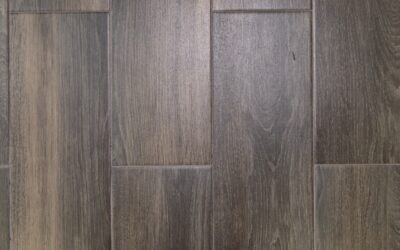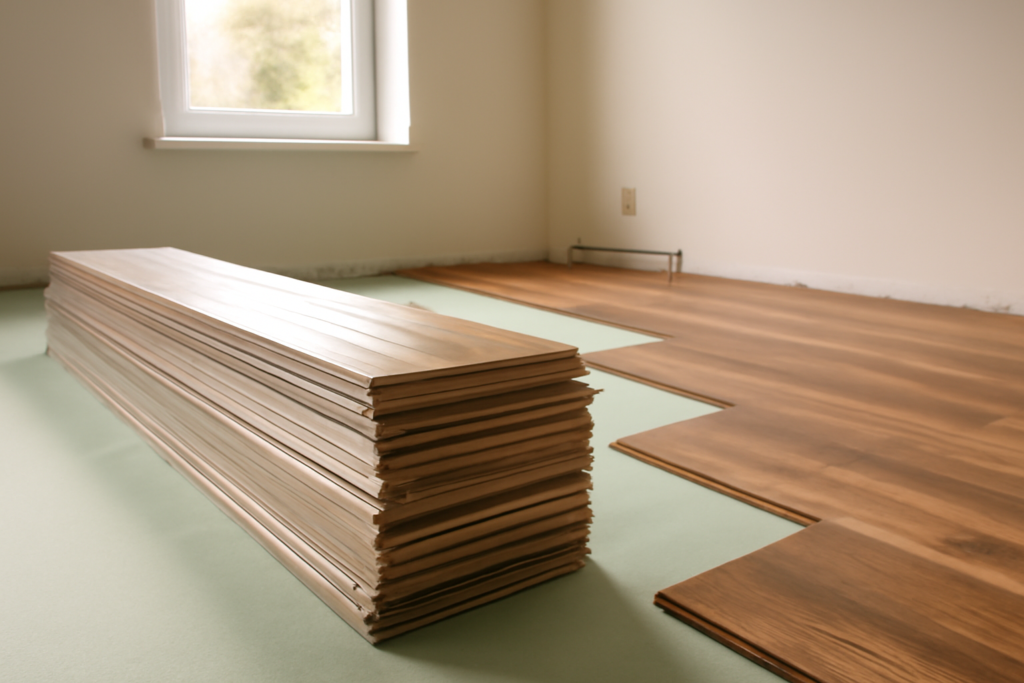
Does laminate flooring need to acclimate is the question every contractor hears at least twice a week, and the answer is yes, almost always, with very few exceptions. The HDF (high-density fiberboard) core absorbs and releases moisture as it equalizes with the room’s humidity, and a plank installed before that equalization finishes will move after install. That movement shows up as peaked seams, cupped boards, or gapped joints within months. Skipping acclimation is the single most common cause of laminate failures.
- Why Acclimation Matters Mechanically
- Standard Acclimation Times
- The Right Way to Acclimate
- Common Acclimation Mistakes
- What Happens When You Skip It
- When Acclimation May Not Be Required
- Subfloor Moisture vs Plank Moisture
- Climate and Seasonal Considerations
- Acclimation Checklist Before Install
- Final Verdict
Why Acclimation Matters Mechanically
Laminate’s HDF core is roughly 80% wood fiber and 20% binders. Wood fiber expands when humidity rises and contracts when it falls. A plank that ships from a 50% RH warehouse but is installed in a 35% RH winter living room will lose moisture content, contract laterally, and create gaps at every seam.
The reverse is worse. A plank that arrives at 35% RH and gets installed in a 65% RH summer kitchen will absorb moisture, expand, and push against expansion gaps. If those gaps are pinched (under 5/16 inch), the floor peaks at random seams within weeks.
Standard Acclimation Times
- Most major brands: 48 hours minimum
- Quick-Step, Pergo, Mohawk: 48 hours per stated spec
- Premium European laminate: 72 hours often recommended
- Climate-extreme installs (very dry winter, very humid summer): 72-96 hours
- Some waterproof laminates (Pergo Outlast Plus, Mohawk RevWood): 24 hours minimum, but 48 still safer
Always check your specific product’s installation guide. Manufacturer warranty terms hinge on following the stated acclimation period, and “I waited 24 hours instead of 48” is a recurring reason claims get denied.
The Right Way to Acclimate
Move sealed boxes into the actual install room (not the garage, not a covered porch, not the basement if the install is upstairs). Stack boxes flat, no more than 3 high, with 4-6 inches of air space around each stack. Do not open the boxes or stand the planks on edge.
Maintain the room’s normal operating climate during acclimation. Run the HVAC at the year-round target temperature and humidity. If you typically keep your home at 68°F and 45% RH, acclimate at 68°F and 45% RH. Acclimating in a 90°F empty house and then turning on AC after install defeats the entire purpose.
Avoid stacking near exterior walls, vents, or windows. Drafts and cold spots create uneven moisture content within the same box.
Common Acclimation Mistakes
Mistake 1: Acclimating in the wrong room. A garage at 80% RH or a basement at 30% RH will not match your finished living space. Move boxes into the install room before the clock starts.
Mistake 2: Opening boxes too early. Open boxes accelerate moisture exchange unevenly and can cause one side of a plank to absorb faster than the other, leading to subtle cupping. Keep boxes sealed during the full acclimation period.
Mistake 3: Skipping HVAC. Acclimating in an unconditioned new construction shell, then installing after the HVAC starts running, is essentially a do-over. The planks need to equalize at the climate they will actually live in.
Mistake 4: Trusting a 24-hour shortcut. Even waterproof laminates with reduced acclimation specs benefit from 48 hours in the actual install conditions. The extra day costs nothing and prevents most failures.
What Happens When You Skip It
Within 30-90 days post-install, laminate that did not acclimate properly typically shows one or more failures. Peaked seams (raised edges along plank joints) appear when humidity rose post-install and pinched expansion gaps fight back. Gapped seams (visible cracks between planks) appear when humidity dropped post-install and planks contracted toward each other.
Cupped or buckled planks indicate severe moisture mismatch. The board edges curl up from a flatter center as fiber expands unevenly. Once cupping appears, the plank is permanently compromised and must be replaced.
Click-system separation is the third major failure. The mechanical joints unlock as planks shift, leaving visible gaps that grow over time. Re-clicking a separated joint is rarely possible without lifting half the floor.
When Acclimation May Not Be Required
A handful of waterproof laminates have engineered cores that resist moisture exchange enough to claim no acclimation needed. Pergo Outlast Plus, Mohawk RevWood Plus, and Quick-Step Aquanto are examples that allow installation immediately upon delivery in some scenarios.
Even with these products, acclimation never hurts and often helps. The “no acclimation required” claim assumes ideal conditions: steady 65-75°F, 35-65% RH, and no climate transitions during install. Real installs rarely meet that ideal, so the safer move is 48 hours regardless.
Subfloor Moisture vs Plank Moisture
Acclimation addresses the plank’s moisture content. It does not solve subfloor moisture issues. A wet concrete slab will damage even properly acclimated laminate within months. Test the subfloor separately using a calcium chloride or RH probe per ASTM F1869 or F2170.
Below-grade installs (basements) require both proper plank acclimation and a moisture barrier under the underlayment. Above-grade installs over wood subfloor need acclimation plus subfloor moisture testing if the subfloor is over a crawl space.
Climate and Seasonal Considerations
Winter installs in cold dry climates (below 30% RH) benefit from running a humidifier during and after install. Without humidification, planks can lose 2-3% moisture content within weeks of install, creating gaps that close again in summer when humidity rises.
Summer installs in humid climates (above 65% RH) benefit from running a dehumidifier or AC during install to bring planks closer to year-round average humidity. Otherwise, the floor expands during install conditions and may pinch when winter humidity drops.
Acclimation Checklist Before Install
- Plank boxes in install room: 48-72 hours
- Stacks flat, 3 high maximum, with air space
- Boxes sealed (do not open early)
- HVAC running at normal operating climate
- Subfloor moisture tested separately
- Indoor RH within 35-65% range
- Indoor temp within 60-80°F range
Final Verdict
Yes, laminate flooring needs to acclimate, period. The investment is 48-72 hours of patience and zero dollars in materials, and it prevents the most common laminate failures. Even waterproof products perform better with proper acclimation. Move sealed boxes into the install room, run your HVAC at normal settings, wait two days, and start the install. Skip this step and you will read the same forum threads later that you skimmed past today, only this time you will be the one looking for an answer to seam separation that has no good fix.
Prefer to explore on your own?
See how new flooring looks in your actual room in seconds — free, no signup.
Try the free Floor Studio →