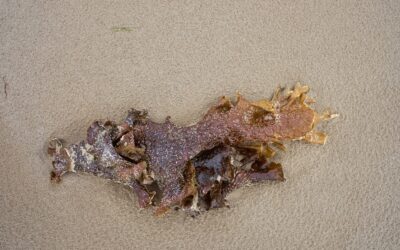
You step outside one morning and discover a bright yellow, foamy, vomit-like blob on your mulch, deck, or patio. It looks disgusting. It looks alive. And it appeared overnight.
Meet Fuligo septica — commonly known as dog vomit slime mold. Despite its alarming appearance, this organism is harmless to humans, pets, and plants. It is not a fungus, not a mold (despite the name), and definitely not actual dog vomit. It is a fascinating single-celled organism that just happens to look absolutely revolting.
- Table of Contents
- What Is Dog Vomit Slime Mold?
- How to Identify Dog Vomit Slime Mold
- Is Dog Vomit Slime Mold Harmful?
- What Causes Dog Vomit Slime Mold?
- Where Dog Vomit Slime Mold Grows
- How to Remove Dog Vomit Slime Mold
- How to Prevent Dog Vomit Slime Mold
- Slime Mold on Decks, Patios & Outdoor Flooring
- Frequently Asked Questions
- Is dog vomit slime mold dangerous to dogs?
- Will dog vomit slime mold kill my plants?
- How do I get rid of dog vomit slime mold permanently?
- Does vinegar kill slime mold?
- Why does slime mold keep coming back?
- Is dog vomit slime mold the same as yellow mold?
- Can slime mold grow indoors?
- What time of year does dog vomit slime mold appear?
This guide explains exactly what dog vomit slime mold is, whether you need to worry about it, how to remove it, and how to prevent it from showing up on your outdoor surfaces and landscaped areas.
Table of Contents
What Is Dog Vomit Slime Mold?
Dog vomit slime mold (Fuligo septica) belongs to a group of organisms called myxomycetes — sometimes classified as protists. Despite being commonly called a “mold,” it is not a true mold or fungus. Slime molds are single-celled organisms that can aggregate into larger, visible masses.
In its active stage (called the plasmodium), the organism moves slowly across surfaces, engulfing bacteria, fungal spores, and decaying organic matter as food. Yes, it actually moves — typically a few centimeters per hour, though you will not see it in real time without time-lapse photography.
After feeding, the slime mold enters its fruiting stage, where it hardens, darkens, and produces spores for reproduction. The spores are carried by wind to new locations, where the cycle starts again when conditions are right.
How to Identify Dog Vomit Slime Mold
Dog vomit slime mold is one of the most recognizable organisms you will encounter in your yard. Here is what to look for.
| Stage | Appearance | Texture | Color | Duration |
|---|---|---|---|---|
| Early plasmodium | Wet, foamy, blob-like | Soft, spongy, moist | Bright yellow, sometimes white or orange | 12 – 24 hours |
| Mature plasmodium | Larger, spreading mass | Firm but still moist | Yellow fading to tan | 24 – 48 hours |
| Fruiting / drying | Crusty, hardened | Dry, powdery inside | Brown, tan, purple-brown | Several days |
| Spore release | Crumbling, powdery mass | Dusty, breaks apart easily | Dark brown to black | Final stage |
Size
Individual colonies range from a few inches to over a foot across. In ideal conditions, colonies can reach two feet or more in diameter. The size depends on how much food (decaying organic matter) is available.
Commonly Confused With
- Scrambled eggs fungus — very similar appearance; also a slime mold
- Yellow stinkhorn eggs — rounder, more egg-like shape
- Expanding foam insulation — yes, people have mistaken it for this
- Cat or animal vomit — the resemblance is uncanny, hence the name
Is Dog Vomit Slime Mold Harmful?
The short answer: no. Dog vomit slime mold is not harmful to humans, pets, plants, or lawn/garden surfaces.
| Concern | Risk Level | Details |
|---|---|---|
| Toxic to humans | None | Not toxic; some cultures historically ate it |
| Toxic to dogs/cats | None to minimal | May cause mild stomach upset if eaten in large quantities |
| Damages plants | None | Feeds on decaying matter, not living plants |
| Damages mulch | None | Actually helps decompose mulch (beneficial) |
| Damages decks/patios | Minimal | Can stain light-colored surfaces if left too long |
| Allergen risk | Low | Spores may trigger sensitivity in some people when disturbed |
While harmless, dog vomit slime mold is unsightly — and that is reason enough for most homeowners to want it gone. It can also stain light-colored surfaces (wood decks, concrete patios, light-colored stone) if left in place for extended periods, particularly during the fruiting stage.
What Causes Dog Vomit Slime Mold?
Three conditions must be present for slime mold to appear:
- Moisture. Heavy rain, overwatering, or high humidity is the primary trigger. Slime molds need wet conditions to become active and move.
- Organic matter. Mulch (especially hardwood mulch), decaying leaves, rotting wood, compost, and lawn thatch provide food for the organism.
- Warm temperatures. Dog vomit slime mold thrives in temperatures between 50°F and 85°F (10°C to 30°C). It is most commonly seen in spring and fall, though summer occurrences happen after extended rainy periods.
Spores are naturally present in soil and air nearly everywhere. You cannot eliminate them. But you can control the conditions that allow them to activate and grow.
Where Dog Vomit Slime Mold Grows
You will most commonly find it on:
- Mulch beds — by far the most common location, especially fresh hardwood mulch
- Wood chip paths
- Decaying logs & stumps
- Wooden decks & raised garden beds
- Compost piles
- Grass & lawn thatch (less common)
- Outdoor storage areas with damp cardboard or wood
- Patio surfaces near mulch beds or garden areas
It rarely appears on inorganic surfaces (tile, concrete, stone) unless organic debris has accumulated on those surfaces. If you find slime mold on your outdoor tile or patio, it is feeding on leaf litter or organic buildup rather than the surface itself.
How to Remove Dog Vomit Slime Mold
Method 1: Simply Wait
Dog vomit slime mold completes its life cycle in 2–5 days and dries up on its own. If it is in a hidden area or does not bother you aesthetically, the easiest solution is to leave it alone. It will dry, crumble, and blow away.
Method 2: Scoop and Dispose
The most effective removal method. Use a shovel, garden trowel, or stiff piece of cardboard to scoop the slime mold off the surface. Place it in a plastic bag and dispose of it in the trash. Do this while it is still in the wet plasmodium stage — once it dries and produces spores, disturbing it spreads spores around your yard.
Method 3: Blast with Water
A strong spray from a garden hose breaks up the slime mold and washes it into the soil. This is quick and easy but does spread spores. Since spores are already present in most environments, this is a minor concern for most homeowners.
Method 4: Rake and Dry
For slime mold in mulch beds, rake the affected area to break up the colony and expose the mulch to air and sunlight. The drying effect discourages further growth. Turn the mulch thoroughly to improve airflow throughout the bed.
What NOT to Do
- Do not use fungicides. They are ineffective against slime mold (which is not a fungus) and add unnecessary chemicals to your yard.
- Do not use bleach on plants or mulch. It kills surrounding vegetation and disrupts beneficial soil organisms.
- Do not panic. Slime mold is a sign of a healthy, biologically active garden — it means your soil ecosystem is working.
How to Prevent Dog Vomit Slime Mold
While you cannot eliminate slime mold spores from your environment, you can make conditions less hospitable.
| Prevention Strategy | Effectiveness | Details |
|---|---|---|
| Improve drainage | High | Reduce standing water & soggy mulch beds |
| Water in the morning | Moderate | Allows surfaces to dry during the day |
| Thin mulch layers | Moderate | Keep mulch under 3 inches deep |
| Rake mulch regularly | Moderate | Improves airflow & breaks up damp pockets |
| Switch to inorganic mulch | High | Gravel, rubber mulch, or stone eliminates the food source |
| Increase sunlight | Moderate | Trim overhanging branches to reduce shade & moisture retention |
| Use pine bark mulch | Moderate | Less attractive to slime mold than hardwood mulch |
| Avoid over-mulching | High | Fresh, thick mulch applications are prime slime mold territory |
Slime Mold on Decks, Patios & Outdoor Flooring
While mulch is the primary target, dog vomit slime mold occasionally appears on decks, patios, walkways, and outdoor flooring surfaces — especially those adjacent to mulch beds or shaded garden areas.
On Wood Decks
Scoop the slime mold off promptly to prevent staining. Clean the area with a deck brush and a solution of warm water and oxygen-based cleaner (like OxiClean). Avoid bleach, which can discolor and damage wood. If staining has occurred, a light sanding and re-sealing may be needed. Maintaining your deck with regular cleaning prevents organic buildup that feeds slime mold.
On Concrete & Stone Patios
Remove the bulk with a shovel, then scrub with a stiff brush and warm soapy water. For persistent stains, a 10:1 water-to-vinegar solution or an oxygen-based cleaner works well. Pressure washing at low-to-moderate settings handles stubborn residue without damaging the surface.
On Outdoor Tile
Remove carefully with a plastic scraper to avoid scratching glazed surfaces. Clean with a pH-neutral tile cleaner. For grout stains, a baking soda paste applied for 15 minutes before scrubbing is effective. Ensure proper grading around tile flooring areas so water drains away quickly.
Near Landscaping Edging
Slime mold frequently appears where mulch meets landscaping edging. These transition zones trap moisture and organic debris — both ideal for slime mold growth. Keep edging areas clean, improve drainage at the edging boundary, and avoid piling mulch against the edging material.
Frequently Asked Questions
Is dog vomit slime mold dangerous to dogs?
No. Fuligo septica is not toxic to dogs. If your dog eats a small amount, it may experience mild gastrointestinal upset (nausea, soft stool) but nothing serious. That said, discourage your dog from eating it as a general precaution, since outdoor organisms can harbor bacteria.
Will dog vomit slime mold kill my plants?
No. Slime mold feeds on bacteria and decaying organic matter — not living plant tissue. In very rare cases, a large colony can temporarily block sunlight from reaching small seedlings underneath, but this is unusual. The organism is actually beneficial to garden ecosystems because it helps decompose organic matter and cycle nutrients.
How do I get rid of dog vomit slime mold permanently?
You cannot permanently eliminate slime mold because spores are naturally present in outdoor environments everywhere. You can reduce occurrences by improving drainage, reducing mulch depth, increasing sun exposure, and switching to inorganic ground covers in problem areas.
Does vinegar kill slime mold?
Vinegar can help break down and clean up slime mold residue, but it does not “kill” the organism in a meaningful way. By the time you notice slime mold, it has already completed most of its life cycle. Physical removal (scooping) followed by cleaning with a vinegar solution is an effective approach for surfaces.
Why does slime mold keep coming back?
Slime mold returns because the conditions that support it (moisture, organic matter, warm temperatures) persist. Spores are always present in the environment, so whenever conditions become favorable, new colonies emerge. Address the underlying conditions — especially excess moisture and thick mulch — to reduce recurrence.
Is dog vomit slime mold the same as yellow mold?
Not exactly. “Yellow mold” is a general term that could refer to several organisms, including actual molds like Aspergillus species. Dog vomit slime mold (Fuligo septica) is specifically a myxomycete (slime mold), not a true mold. True yellow molds grow indoors on food, walls, and damp surfaces and can be health hazards. Outdoor dog vomit slime mold on mulch is harmless.
Can slime mold grow indoors?
Rarely. Slime molds require specific moisture levels and organic food sources that are uncommon indoors. If you find slime mold indoors (on houseplant soil, damp wood, or organic materials), it indicates a serious moisture problem that should be addressed. Improve ventilation, reduce humidity, and remove the affected material.
What time of year does dog vomit slime mold appear?
Most commonly in spring and fall when temperatures are moderate (50–85°F) and rainfall is frequent. It can appear in summer after extended wet periods and is rare in winter due to cold temperatures. Warm, rainy stretches are the prime trigger regardless of season.