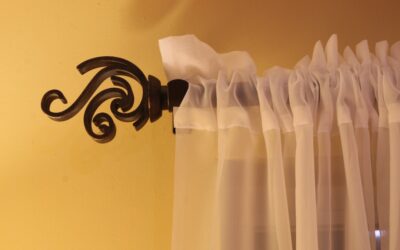
Layered window treatments look effortless when they are done right and cluttered when they are not, and the difference usually comes down to the hardware. Double curtain brackets hold two rods on one mounting plate: a back rod for sheers and a front rod for heavier drapes. Choose brackets with enough projection for both layers to slide freely, space them so the drapes clear the sheers and the window trim, and fasten them into studs or rated anchors so the weight of two fabrics does not pull them out of the drywall.
Most problems people run into with layered curtains trace back to three mistakes: brackets that sit too close to the wall so fabric drags on the trim, rods of mismatched diameter that do not fit the bracket cradles, and too few supports on a wide window, which lets the front rod sag in the middle. Each is easy to avoid if you plan before you drill.
Below you will find how to size and pick the hardware, where to place it, and a step-by-step for double curtain rod installation that ends with a level, solid result.
Choosing Double Curtain Brackets: Projection and Rod Diameter
Projection is the distance from the wall to the center of each rod cradle. On a double bracket, the inner cradle typically projects about 2 to 3.5 inches from the wall, and the outer cradle sits another 2 to 3 inches beyond that. Those numbers matter more than style.
Match projection to your trim and fabric
Measure how far your window casing or sill stands proud of the wall. The inner rod needs to clear that trim plus the thickness of the sheer panel, with about an inch of breathing room. If you have deep sills, blinds mounted inside the frame, or a window crank handle, choose brackets with a longer or adjustable inner projection. The outer rod then needs to clear the sheer’s gathered fullness; lightweight voile needs less space than a pinch-pleat sheer with lots of folds.
Match the cradles to your rods
Double brackets are sold for specific rod diameters, and the two cradles often differ. A common pairing is a 1-inch or 1 1/8-inch front rod with a slimmer 5/8-inch or 3/4-inch back rod. Heavier blackout or lined drapes deserve the thicker front rod, while sheers are light enough for a thin one. If you are reusing an existing rod, measure its outside diameter with a tape and buy brackets to fit, rather than forcing a rod into a loose or tight cradle.
Consider the style of the ends
If you plan to use traverse or ring-mounted panels across the full width, look for “return” or “wraparound” options on the back rod, which curve to the wall and block light leaks at the sides. Decorative finials usually go only on the front rod.
Tools and Materials
- Double curtain rod brackets (end brackets plus any center supports)
- Front and back curtain rods sized to the bracket cradles
- Tape measure and pencil
- Level (a 24-inch level or a laser level for wide windows)
- Stud finder
- Drill-driver with bits sized for your screws and anchors
- Screws long enough to reach 1 inch or more into framing, or heavy-duty drywall anchors rated for the load
- Painter’s tape for marking
- Stepladder in good condition
- Safety glasses and a dust mask when drilling
Where to Place the Brackets
Good placement makes a window look taller and wider and lets the drapes stack off the glass when open.
Height
Mount the brackets 4 to 8 inches above the top of the window casing, or halfway between the casing and the ceiling if you have plenty of room. Hanging high draws the eye up. Just make sure your drapes are long enough; measure from the planned rod height to where you want the hem (just kissing the floor or with a half-inch float) before you buy panels.
Width
Extend the rod 4 to 10 inches past each side of the casing. This lets open drapes stack against the wall instead of covering the glass. Place the end brackets 2 to 3 inches inside the rod ends so finials and the last few rings have room.
Center supports
Add a center double bracket on any rod longer than about 60 inches, and more supports every 4 to 5 feet on very wide windows. Two layers of fabric put real weight on the front rod, and a sagging rod is the most visible flaw in a layered treatment. For sheers that must slide past a center bracket, use C-rings or passing rings designed for that.
How to Hang Double Curtains: Step-by-Step Installation
- Mark the height. Measure up from the top of the casing on each side and make a light pencil mark at your chosen height. Measure to the ceiling as well if the ceiling is visibly level; older homes often are not.
- Level the line. Hold your level (or project a laser line) between the two marks. Adjust until the bubble centers. On a wide window, run a strip of painter’s tape along the level line to keep marks consistent.
- Mark bracket positions. Measure out from each side of the casing to the end-bracket location, then find the midpoint for any center support.
- Locate studs. Run a stud finder along the tape. The header above most windows is solid framing, and a king stud or jack stud often sits right beside the casing. Hitting wood at each bracket is ideal.
- Hold a bracket and mark holes. Align the bracket’s top edge with your level line and mark each screw hole. Repeat for all brackets.
- Drill pilot holes or anchor holes. Into wood, drill a pilot slightly narrower than the screw. Where there is no stud, drill for a heavy-duty anchor such as a toggle, a self-drilling metal anchor, or a winged anchor rated well beyond the combined weight of both panels and rods.
- Mount the brackets. Drive the screws until the bracket is snug and flush. Check level across the brackets once more before hanging anything.
- Hang the back rod first. Slide the sheer panels onto the slimmer rod, then set it into the inner cradles and tighten any set screws.
- Hang the front rod. Load the drape panels, add finials, and set the rod into the outer cradles. Tighten set screws so the rod cannot roll or lift out.
- Dress the panels. Pull the sheers closed and the drapes open to check that the front layer clears the back layer without catching. Steam out creases and train folds by tying panels loosely for a day or two.
Ladder Safety and Older Walls
Most curtain work happens at the top of a stepladder with your arms overhead, which is exactly when people lose balance. Set the ladder fully open with the spreaders locked on a firm, level floor, keep your hips between the rails, and do not stand on the top step or top cap. Move the ladder rather than leaning out to reach the far bracket. Have a helper hand up rods and hold the level on wide windows. For tall windows in a two-story foyer or stairwell, where you would need an extension ladder or scaffold, hiring a professional installer is the safer choice.
If your home was built before 1978, the paint on the window trim and wall may contain lead. Drilling creates fine dust, so test the paint with an EPA-recognized lead test kit or have it tested before you drill, and follow lead-safe practices if it is positive: mist the area, catch dust with a damp cloth or a vacuum with a HEPA filter, and avoid dry sanding. In pre-1980s homes, textured plaster or wall compound can occasionally contain asbestos; if you are unsure, have a sample tested before disturbing it.
Troubleshooting Common Problems
- Front rod sags in the middle: Add a center bracket, or step up to a thicker front rod. Heavy lined drapes on a thin rod will bow over time.
- Drapes rub on the sheers: Your outer projection is too shallow for the sheer’s fullness. Switch to brackets with more spacing between cradles or use an adjustable-projection model.
- Sheers catch on the window trim: Increase the inner projection so the back rod clears the casing by at least an inch.
- Bracket pulls out of the wall: The anchor was under-rated or the drywall crumbled. Move the bracket slightly to hit a stud, or patch and use a toggle-style anchor.
- Rod looks crooked even though it is level: The ceiling or casing is out of level. In that case, split the difference so the rod looks right to the eye, since that is what people notice.
- Rings will not pass a center support: Use C-rings, passing rings, or a traverse system on the back rod.
Cost Ranges
Basic double curtain rod brackets in steel or painted metal are inexpensive, often sold in pairs for a modest amount. Designer finishes, adjustable projection, and heavy-duty brackets for wide windows cost more. A complete double rod set with brackets, both rods, and finials ranges from budget kits to premium hardware several times the price. Custom-length rods for bay windows or very wide openings sit at the upper end. Hiring a handyman to install one window is usually a short, minimum-charge visit, with a lower per-window rate when you have several windows done at once.
When to Call a Pro
Call an installer or handyman if you are mounting on plaster and lath that cracks when drilled, on tile or stone surrounds, into metal studs, or at heights that require an extension ladder. Motorized drapery tracks, bay-window configurations with angled connectors, and very heavy custom drapes also benefit from professional installation. For corded traverse systems in a child’s room, choose cordless or motorized options and keep any cords well out of reach.
For a standard window with accessible framing, though, a double curtain rod installation is a solid afternoon project that gives you daytime privacy, nighttime darkness, and a finished, layered look from one set of double curtain brackets.
Frequently Asked Questions
How far apart should double curtain brackets hold the two rods?
Most double brackets space the rods 2 to 3 inches apart. That is enough for light sheers behind standard drapes; very full sheers or pinch-pleat panels may need 3 to 4 inches.
Which curtain goes on the front rod?
Heavier drapes or blackout panels usually go on the front rod, and sheers go on the back rod near the glass. This lets the sheers filter light during the day while the drapes close over them at night.
Can I install double curtain brackets without studs?
Yes, if you use heavy-duty drywall anchors rated well above the combined weight of both rods and panels. Toggle bolts or self-drilling metal anchors hold far better than basic plastic plugs.
How many double brackets do I need?
Use two end brackets for rods up to about 60 inches, then add a center bracket. For very wide windows, add a support every 4 to 5 feet so the front rod does not sag.
Can I add a second rod to an existing single bracket?
Some manufacturers sell add-on double adapters that clip to a single bracket. They work for light sheers, but a true double bracket is sturdier for heavier layered treatments.