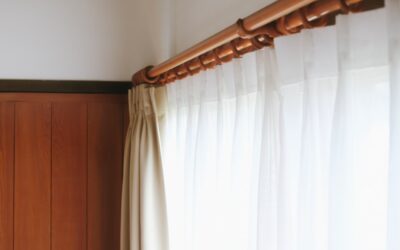
Double curtain rods hold two layers of window treatments at once, usually a sheer panel on the inner rod for daytime light and a heavier drape on the outer rod for privacy and blackout at night. That layering is the whole point: with one bracket system you get filtered light when you want it and full coverage when you don’t. Choosing double curtain rods correctly comes down to projection, weight rating, and matching the finials to your room.
- Why Layer Two Curtains
- Anatomy of a Double Rod
- Getting the Size Right
- Weight Ratings and Rod Diameter
- Installation Step by Step
- Choosing a Style That Fits the Room
- Adjustable vs Fixed-Length Rods
- Fabric Pairings That Work
- How Much Fabric You Need
- Choosing the Right Bracket System
- Where Double Rods Work Best
- Common Mistakes to Avoid
Why Layer Two Curtains
A single curtain forces a compromise. Sheers alone give you privacy loss after dark; blackout drapes alone leave a room cave-dark all day. Double rods solve both:
- Inner rod: lightweight sheers or linen that soften daylight and blur the view in without blocking the room.
- Outer rod: heavier lined or blackout panels you close at night or for a nap, and that add insulation against drafts.
The result is flexible light control from one window, plus a fuller, more finished look that designers use to make windows feel larger.
Anatomy of a Double Rod
A double rod system has two parallel rods held by a bracket with two mounting points, front and back. Key parts:
- Front rod: carries the decorative drape and usually has a larger diameter, ¾ to 1 inch.
- Back rod: carries the sheer, often a slimmer ⅝ inch, mounted closer to the glass.
- Brackets: the L-shaped or double-arm supports that set how far each rod projects from the wall.
- Finials: the decorative end caps, which show on the front rod.
- Center support: required on spans over 48 inches to stop sagging.
Getting the Size Right
Sizing is where most people go wrong. Two measurements matter: width and projection.
Width: extend the rod 8 to 12 inches past each side of the window frame so open curtains clear the glass and let in full light. For a 36-inch window, buy a rod that adjusts to about 52 to 60 inches. Mount the brackets 4 to 6 inches above the frame, or higher toward the ceiling to make the window feel taller.
Projection: this is the distance each rod stands off the wall, and it is critical for double rods. The back rod needs enough clearance from the wall so the sheer hangs free, and the front rod needs to clear the back rod plus the sheer fabric. Look for brackets offering roughly 3 inches of projection on the back rod and 5.5 to 6.5 inches on the front. If your outer panels are thick or you have a deep windowsill, choose adjustable-projection brackets.
Weight Ratings and Rod Diameter
Heavy blackout drapes with lining can weigh several pounds per panel. A thin ½-inch rod will bow under them. Match diameter to load:
- ⅝ to ¾ inch: fine for sheers and light-to-medium drapes on windows up to 48 inches.
- 1 inch: best for heavy lined or blackout panels, and for spans over 60 inches.
- Add a center support bracket for any rod over 48 inches carrying heavy fabric.
Steel rods hold more weight than hollow aluminum; check the product’s stated capacity, often listed as pounds per linear foot.
Installation Step by Step
- Mark your bracket height, typically 4 to 6 inches above the window frame, and level a line across both sides.
- Set bracket width so finials will clear the wall and the rod extends past the frame.
- Drill into studs where possible. For drywall spans, use toggle bolts or heavy-duty anchors rated for 20-plus pounds, since a loaded double rod pulls hard on the wall.
- Mount the brackets and confirm they are level before fully tightening.
- Hang the back rod with the sheer first, then the front rod with the drape.
- Add the center support for wide spans and attach finials last.
Choosing a Style That Fits the Room
Because only the front finials show, pick a finish that reads with your hardware, matte black, brushed nickel, antique brass, or oil-rubbed bronze. Keep the two rods within the same finish family so the layered look stays cohesive. For a soft, modern feel, run the front rod nearly to the ceiling and let panels puddle slightly at the floor. For a tailored look, hem drapes to break just at the floor.
Adjustable vs Fixed-Length Rods
Most double curtain rods are telescoping and adjust across a range like 28 to 48 or 48 to 84 inches. Adjustable rods are convenient and cheap, $20 to $45, but the overlapping tube can look slightly thicker at the join and may sag more when loaded. For very wide or very heavy installations, a fixed-length or wrap-around rod cut to size holds its shape better. Wrap-around styles curve back to the wall at the ends, which helps blackout panels seal light gaps along the edges.
Fabric Pairings That Work
The layered look succeeds or fails on the fabric combination. Proven pairings:
- Sheer voile + lined cotton drape: the everyday classic, soft daytime light with full evening privacy.
- Linen sheer + blackout panel: best for bedrooms, where you want airy daylight and total darkness for sleep.
- Patterned sheer + solid drape: the sheer adds interest by day, the solid grounds the window by night.
Keep the two layers in the same color family or a deliberate contrast, and hang both from the ceiling-high position so the window reads tall. As a rule, the sheer should be lighter in both weight and color than the outer drape, so the layers stay visually distinct rather than muddying together.
How Much Fabric You Need
For curtains to look full rather than skimpy, the combined panel width should be about two to two-and-a-half times the rod length. A 60-inch rod wants roughly 120 to 150 inches of total fabric across its panels so they gather into soft folds when closed. Skimping here is the most common reason store-bought curtains look flat and cheap. Because a double rod carries two full sets of panels, budget for that fabric on both layers. Sheers can run a bit fuller since they are lightweight, while heavy blackout panels at 2x fullness already add real weight the rod must support.
Choosing the Right Bracket System
Double rod brackets come in a few styles, and the right one depends on your wall and window:
- Fixed-projection double brackets: simplest and cheapest, with set distances for each rod. Fine when your fabrics are standard weight.
- Adjustable-projection brackets: let you dial in how far each rod stands off the wall, essential for thick drapes, deep sills, or when the sheer needs extra clearance.
- Ceiling-mount brackets: hang the whole system from the ceiling for a dramatic floor-to-ceiling look, useful when there is no wall space above the window.
Whichever you choose, confirm the bracket’s stated projection actually clears your fabric depth before drilling.
Where Double Rods Work Best
Layered treatments earn their keep in specific rooms. In bedrooms, sheers soften morning light while blackout drapes deliver darkness for sleep, and the double rod lets you switch between them without touching the hardware. In living rooms and dining rooms, the layered look adds depth and a finished, designer feel that a single panel can’t match. Street-facing rooms benefit most: the sheer preserves daytime privacy without blocking light, and the drape closes for full privacy after dark. Home offices gain glare control for screens by day and blackout for video calls or evening focus. Skip double rods on tiny windows where two layers would overwhelm the wall, and on windows where a simple single treatment suits the room’s scale better.
Common Mistakes to Avoid
- Too little projection: the front drape rubs the sheer and won’t glide. Measure your fabric thickness first.
- Anchoring only in drywall: heavy panels rip out weak anchors. Hit studs or use toggles.
- Rod too narrow in width: curtains can’t clear the glass, so the room stays dim even when open.
- Mismatched finials: clashing finishes cheapen the whole window.
Get the projection and weight rating right and double curtain rods transform a plain window into a layered, light-flexible focal point. Budget $20 to $60 for the hardware, choose a diameter that matches your heaviest panel, and anchor into structure so the system stays straight for years.