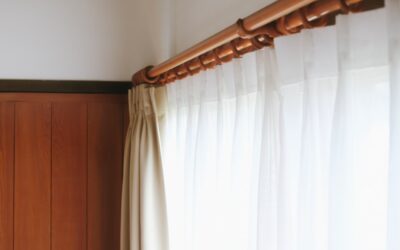
Warm, timeless, and endlessly versatile, bronze hardware anchors a room without shouting for attention. Bronze curtain rods pair beautifully with traditional, farmhouse, transitional, and even industrial interiors, and their darker finish hides fingerprints and dust better than shiny metals. This guide covers the finish options, sizing, styling, weight capacity, costs, and installation.
- Why Choose Bronze
- Understanding Bronze Finishes
- Matching Bronze to Your Decor
- Choosing the Right Finials
- Sizing the Rod Length
- Choosing the Right Diameter
- Mounting Height for the Best Look
- Weight Capacity and Support
- Single vs Double Bronze Rods
- What They Cost
- Installation: Step by Step
- Caring for Bronze Rods
- Common Mistakes to Avoid
- Coordinating with Curtain Fabric Colors
- Curtain Header Styles for Bronze Rods
- Solid Bronze vs Bronze-Finish Rods
- Layering Bronze with Blinds or Shades
- Final Thoughts
Why Choose Bronze
Bronze occupies a sweet spot among curtain-rod finishes. It’s dark enough to add contrast and definition around a window, but warm enough to feel inviting rather than stark like matte black. It coordinates with the oil-rubbed bronze door hardware, faucets, and light fixtures common in many American homes, creating a cohesive look for very little money.
Practically, the dark finish is forgiving. It doesn’t show water spots or fingerprints the way polished brass and chrome do, and small scuffs blend in rather than standing out.
Understanding Bronze Finishes
Bronze is a finish family more than a single color, and the variations matter.
- Oil-rubbed bronze: The most popular, a deep near-black brown with warm coppery highlights on the raised edges. Rich and traditional.
- Antique bronze: Lighter and browner, with a weathered, aged look that suits vintage and rustic rooms.
- Bronze (satin or brushed): A smoother medium-brown metallic with a subtle sheen, leaning transitional.
- Venetian or dark bronze: The darkest variant, nearly black with brown undertones for a dramatic frame.
Note that most affordable rods are steel or aluminum with a bronze-tone finish rather than solid bronze metal, which keeps them light and affordable while still looking the part.
Matching Bronze to Your Decor
Bronze is a chameleon that works across many styles.
- Traditional and classic: Oil-rubbed bronze with urn or ball finials complements rich woods and formal drapery.
- Farmhouse and rustic: Antique bronze with simple finials pairs with linen and cotton panels.
- Transitional: Satin bronze with clean-lined finials bridges classic and modern.
- Industrial: Dark bronze with cage or minimal end caps suits exposed brick and metal accents.
For a pulled-together room, echo the bronze in at least one other element, such as cabinet pulls, a light fixture, or picture frames.
Choosing the Right Finials
Finials, the decorative rod ends, define the rod’s personality. Popular bronze finial shapes include:
- Ball and sphere: Universally flattering and understated.
- Urn and finial-classic: Formal and traditional.
- Leaf and scroll: Ornate options for classic and Old World rooms.
- Square and geometric: Cleaner shapes for transitional spaces.
Because finials extend past the brackets by 2 to 4 inches on each side, always measure your wall clearance before buying.
Sizing the Rod Length
Correct length makes windows look intentional and larger.
- Measure the width of the window frame.
- Extend the rod 8 to 12 inches beyond each side so open curtains clear the glass and let in full light.
- Account for finial length when checking clearance to adjacent walls.
- For spans over about 60 inches, plan for a center support bracket to prevent sagging.
Many bronze rods are telescoping and adjust across a range like 48 to 84 inches or 66 to 120 inches, so pick the range that brackets your target length.
Choosing the Right Diameter
Diameter should match window scale and curtain weight.
- 3/4 inch: Sheers and small windows.
- 1 inch: The versatile default for standard windows and medium drapes.
- 1-1/4 to 1-3/8 inch: Larger windows and heavier panels where a substantial rod looks right.
Heavier drapes on a too-thin rod will bow in the middle, so size up for weight.
Mounting Height for the Best Look
Designers mount rods high and wide to make windows and ceilings feel taller. Place the rod 4 to 6 inches above the window frame, and in rooms with high ceilings you can go higher still, even close to the ceiling line. Curtains should reach the floor, either just kissing it or breaking slightly. This high-and-wide approach is the single biggest factor in whether curtains look custom or cheap.
Weight Capacity and Support
Bronze-finished steel rods handle heavier drapes better than aluminum. For blackout, velvet, or lined panels, choose a sturdy rod and add a center support bracket on wide windows, which roughly doubles the safe span. Anchor brackets into wall studs whenever possible; when studs aren’t available, use drywall anchors rated well above the curtain weight to handle sudden loads from tugging or wind.
Single vs Double Bronze Rods
A double bronze rod holds two layers, typically sheers in front for daytime light and heavier drapes behind for privacy and insulation. Matching bronze finials on both rods keeps the look cohesive. If you want flexible light control and a layered, high-end appearance, a double rod is worth the modest premium.
What They Cost
Bronze rods are budget-friendly. Basic telescoping bronze-finish rods with simple finials run $15 to $40. Mid-range sets with quality oil-rubbed finishes and detailed finials land at $40 to $90. Heavier-gauge or double-rod sets, and longer rods for wide windows, reach $90 to $200. Solid or designer bronze can climb higher, but most homeowners are well served in the mid-range.
Installation: Step by Step
- Mark the mounting height 4 to 6 inches above the frame and level across both sides.
- Use a stud finder to locate studs; anchor into studs where possible.
- Measure bracket positions equally on each side, allowing for finial clearance.
- Drill pilot holes, insert wall anchors where there’s no stud, and screw in the brackets.
- Thread curtains onto the rod, set it in the brackets, and attach the finials.
- For wide windows, install the center support first and feed curtains on both sides of it.
Most installs take 20 to 40 minutes with a drill, level, and screwdriver.
Caring for Bronze Rods
Bronze finishes are low-maintenance. Dust the rod and finials periodically with a soft dry cloth. For smudges, wipe with a barely damp cloth and dry immediately; avoid abrasive cleaners and harsh chemicals that can strip the finish. On genuine oil-rubbed bronze, the finish naturally develops a lived-in patina over time, which many owners consider part of its charm.
Common Mistakes to Avoid
- Mounting the rod too low and narrow, shrinking the window’s apparent size.
- Mixing clashing metal tones in the same room instead of coordinating with the bronze.
- Skipping the center support on wide windows, causing a visible sag.
- Ignoring finial clearance and crowding adjacent walls.
- Relying only on drywall anchors for heavy drapes rather than hitting studs.
Coordinating with Curtain Fabric Colors
Bronze pairs beautifully with a wide range of fabric tones, which is part of its versatility. Warm neutrals like cream, beige, taupe, and greige let the bronze read as a subtle accent. Deep jewel tones such as navy, emerald, and burgundy create rich, traditional contrast against the dark metal. Even crisp white curtains gain definition from a bronze rod, which frames them with a warm outline. If your drapery has metallic threads or patterns, echoing a bronze or gold tone in the fabric ties the whole treatment together.
Curtain Header Styles for Bronze Rods
To showcase a bronze rod, choose a header that keeps it visible. Grommet-top panels with bronze-toned grommets create even folds and let the rod show between pleats, a natural match. Rod-and-ring setups using bronze rings display the rod fully and add classic elegance. Tab-top and pinch-pleat headers also leave the rod exposed. Avoid rod-pocket panels if you want the bronze finish to be a feature, since they slide over and conceal the rod entirely.
Solid Bronze vs Bronze-Finish Rods
It’s worth knowing what you’re buying. Most affordable bronze curtain rods are steel or aluminum tubes coated in a bronze-tone finish, which keeps them lightweight and inexpensive while looking the part. True solid-bronze or wrought-iron rods are heavier, more durable, and considerably more expensive, and they develop a genuine living patina over time. For most homes a quality bronze-finish steel rod offers the look and adequate strength at a fraction of the cost; reserve solid metal for heirloom-quality or very heavy-drape applications.
Layering Bronze with Blinds or Shades
Bronze rods layer handsomely over hard window treatments. Mounting bronze-rod drapery outside a window fitted with wood blinds, roller shades, or cellular shades adds softness, insulation, and a finished frame around the functional layer. The drapery provides warmth and can be closed for extra light control, while the shade beneath handles daytime privacy and glare. Coordinate the bronze rod with any visible hardware on the shade for a cohesive, layered look that reads as intentional and upscale.
Final Thoughts
Warm, forgiving, and versatile, bronze curtain rods frame windows beautifully while coordinating effortlessly with the bronze hardware and fixtures already in many homes. Pick the finish that suits your style, size the rod wide and mount it high, choose a diameter that matches your curtain weight, and anchor the brackets securely. The payoff is polished, cohesive windows that look far more expensive than the modest price of the rod.