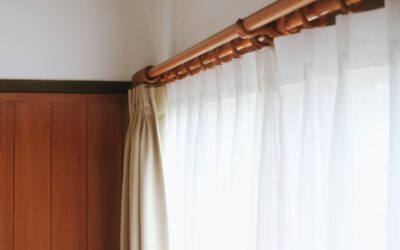
Finials for curtain rods are the decorative end caps that finish each end of a drapery rod, and they do far more than look pretty. They physically stop rings and panels from sliding off the end, and they set the entire style tone of a window treatment. Swap a plain cap for a faceted crystal ball and a builder-grade rod suddenly reads custom.
The strongest advice is simple: buy the rod and finials as a matched set when you can, and confirm the thread or fit size before anything else. A gorgeous finial that will not seat on your rod is just an expensive paperweight.
What a Finial Actually Does
Beyond decoration, a finial serves two jobs. First, it acts as a stop so gravity and a breeze from an open window cannot walk your panels off the rod. Second, it adds visual weight to the ends, framing the window the way a picture frame frames art. Skip finials entirely and drapery looks unfinished, like a shirt missing its cuffs.
Most finials attach one of two ways: a threaded stud that screws into the hollow rod end, or a friction-fit collar that slides over the rod and locks with a small set screw. Threaded is more secure for heavy drapes; set-screw styles are more forgiving across slightly different rod diameters.
Popular Finial Styles
Style is where personality enters. Match the finial’s mood to the room rather than chasing a trend, and it will still look right in ten years.
- Ball: The workhorse. A simple sphere reads clean and transitional, at home in nearly any room. Sizes usually run 1.5 to 2.5 inches in diameter.
- Spear or finial point: A tapered, arrow-like tip that adds height and formality. Strong in traditional dining rooms and studies.
- Urn: A curved, vase-shaped profile with classic proportions. This is the go-to for traditional and transitional decor.
- Crystal or glass: Faceted acrylic or real glass that catches light. Perfect for bedrooms, formal living rooms, and any space that wants a touch of glam.
- Industrial cap: A flat or slightly domed end cap, often in matte black or raw steel. It suits modern, farmhouse, and loft interiors where less is more.
One useful design rule: bigger windows and taller ceilings can carry larger, more sculptural finials. On a narrow 24-inch window, an oversized urn looks top-heavy, so scale down to a 1.5-inch ball.
Sizing and Rod Diameter Fit
This is the section that saves returns. Finials are sized to the rod’s diameter, and the two most common residential sizes are 1 inch and 1-1/8 inch. Heavier decorative rods jump to 1-1/4, 1-3/8, or even 2 inches. A 1-inch finial simply will not thread onto a 1-3/8-inch rod, and forcing it strips the fitting.
Before you buy finials for curtain rods you already own, do this:
- Measure the rod’s outer diameter with calipers or a tape wrapped around it, then divide the circumference by 3.14 if you only have a tape.
- Check whether the existing finial threads in or slides on. Look for internal threads inside the rod end.
- Confirm the brand. Rod and finial threads are not universal; a Kirsch finial may not seat on an Umbra rod even at the same nominal diameter.
When in doubt, buy the finial from the same product line as the rod. Mixing brands works only when both use a standard 1/4-inch or similar stud, and that is never guaranteed.
Matching Finials to Your Decor
The fastest way to make finials look purchased-together rather than random is to echo a finish already in the room. If your door hardware and light fixtures are oil-rubbed bronze, a bronze finial ties the window into that metal story instantly. Brushed nickel cabinet pulls in a kitchen pair naturally with a satin-nickel ball finial on the sink window.
Style should follow the room’s era, not fight it. A few reliable pairings:
- Traditional or formal: Urn or spear finials in aged brass or bronze, matched to lined drapery.
- Modern or minimalist: Flat industrial caps or small spheres in matte black or brushed steel.
- Glam or bedroom: Faceted crystal or mercury-glass balls that catch lamplight.
- Farmhouse or transitional: A simple ball or a rustic cap in a warm bronze or hand-forged iron.
When a room already has a lot going on, restraint wins. Busy wallpaper and patterned drapery call for a quiet ball finial, letting the fabric be the star.
Materials and Where They Shine
Material affects both look and weight, and weight affects how securely the finial holds.
- Solid metal (steel, brass, iron): Heaviest and most durable, ideal for heavy velvet or lined drapes. Expect a satisfying heft and a higher price.
- Resin or composite: Molded to mimic wood, stone, or ornate metal at a fraction of the cost and weight. Great value, though it can chip if dropped.
- Wood: Warm and traditional, often stained or painted to match trim. Best in dry interior rooms, not steamy bathrooms.
- Glass and crystal: Beautiful light play but fragile; keep them out of high-traffic doorways where a swinging door could clip them.
Projection, Clearance, and Install
Projection is how far the rod sits off the wall, set by the brackets, not the finial. But the finial’s own length adds to the total footprint at the ends, so leave clearance for door casings and adjacent walls. Give a finial at least 2 to 3 inches of open space beyond the last bracket so it is not jammed into a corner.
Installing or swapping finials is a five-minute job:
- Slide your curtain rings or grommet panels onto the rod first. Finials go on last, or the panels cannot get past them.
- For threaded finials, hand-tighten the stud into the rod end until snug. Do not overtighten resin threads.
- For set-screw finials, slide the collar over the rod end and tighten the small screw with a hex key until it grips.
- Seat the rod in the brackets and confirm both finials clear the wall and any trim.
Common Mistakes to Avoid
A handful of errors account for most finial returns, and all of them are easy to sidestep.
- Assuming brands mix: A finial from one manufacturer rarely threads into another’s rod even at the same diameter. Buy the matched set or verify the stud size in person.
- Forgetting clearance: Ordering a long spear finial for a window that ends 1 inch from a wall corner leaves no room, and the finial ends up jammed or crooked.
- Ignoring weight: A heavy iron finial on a flimsy tension rod can pull the whole thing loose. Match finial heft to rod strength.
- Scaling wrong: An oversized decorative finial on a tiny window looks comical. Keep the finial proportional to both the rod diameter and the window width.
Measure twice, confirm the fit system, and you will avoid the frustrating cycle of ordering, unboxing, and shipping finials back.
What Finials Cost
Pricing spans a wide range. Simple resin ball or cap finials sold as a pair run $8 to $20. Mid-tier metal urn or spear styles land around $20 to $45 a pair. Genuine crystal, hand-finished brass, or designer lines can reach $50 to $120 or more per pair. Because you typically need only two per window, upgrading finials is one of the cheapest ways to elevate a room.
Finials and Center Supports on Wide Rods
On wide windows and patio doors, finials interact with the rest of the hardware in ways worth planning. A rod spanning more than about 8 feet needs a center support bracket, and that bracket determines whether your rings can travel the full width. It has nothing to do with the finials themselves, but the two get confused because both live at the ends of the system. Keep them straight: finials stop the panels at the ends, center supports keep the rod from sagging in the middle.
Heavy finials can also add a small cantilever load at each end of a long rod. Solid brass or iron finials weighing half a pound apiece are no problem on a robust 1-3/8-inch steel rod, but the same pair on a lightweight adjustable rod can accelerate sag. When in doubt on a wide run, choose a lighter resin or hollow-metal finial and let the rod’s diameter and supports carry the drapery weight.
Choose finials for curtain rods the way you would choose cabinet hardware: confirm the fit first, match the material to the drapery weight, then let style do the talking. Get those three right and the ends of your rods will look intentional rather than an afterthought.