
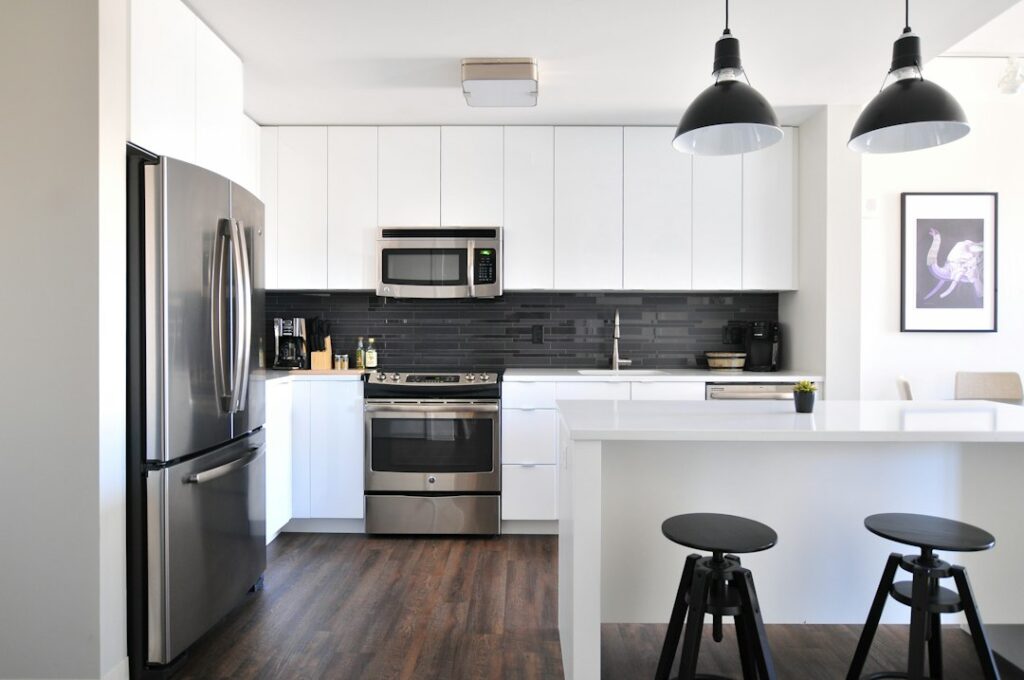
Most people pick nickel cabinet pulls from a single photo on a screen, then discover in the kitchen that “nickel” covers four very different looks. Satin and brushed read soft and silvery, polished throws back light like a mirror, and weathered nickel lands somewhere between pewter and old silverware. The finish you choose decides how often you wipe fingerprints, how well the pulls match your faucet, and whether the hardware looks warm or cool against your cabinet paint.
Part of our Kitchen Remodeling guide — explore the full guide →
The short answer: choose satin or brushed nickel for busy family kitchens because they hide smudges and water spots, choose polished nickel when you want a dressy, reflective accent and do not mind wiping it often, and choose weathered nickel for farmhouse, rustic or transitional rooms where a darker, aged tone suits the cabinetry. Match the finish name and sheen to your faucet when the two sit close together, and buy one sample pull before ordering a whole house of hardware.
- Nickel Cabinet Pulls Finish Comparison
- Satin vs Brushed Nickel: Close Cousins
- Polished and Weathered Nickel: The Two Statement Options
- Choosing Pull Sizes and Styles
- Tools and Materials for Installing Nickel Pulls
- How to Install Nickel Cabinet Pulls Step by Step
- Cleaning and Caring for Nickel Finishes
- Troubleshooting Common Hardware Problems
- Nickel Cabinet Pulls Cost Ranges
- When to Call a Pro
- Frequently Asked Questions
Nickel Cabinet Pulls Finish Comparison
Finish names are not standardized, so one maker’s satin looks a lot like another maker’s brushed. Use this table as a practical guide to how each finish behaves in daily use, then confirm with a physical sample under your own lighting.
| Finish | Tone and sheen | Fingerprints and water spots | Best faucet match | Typical style |
|---|---|---|---|---|
| Satin nickel | Soft silver, low sheen, smooth | Hides them well | Satin or brushed nickel faucets | Transitional, modern, most kitchens |
| Brushed nickel | Silver with visible fine lines, low to medium sheen | Hides them very well | Brushed nickel or stainless faucets | Transitional, modern, rental-friendly |
| Polished nickel | Warm silver, mirror-like, high sheen | Shows them clearly | Polished nickel faucets (warmer than chrome) | Traditional, glam, classic baths |
| Weathered nickel | Darker gray-silver, aged look, low sheen | Hides them well | Matte or aged nickel, some oil-rubbed looks | Farmhouse, rustic, cottage |
| Pearl or satin nickel variants | Very light, almost champagne silver | Hides them moderately | Same-brand satin faucets | Light, airy kitchens |
Two practical rules come out of that table. The lower the sheen, the less maintenance. And the closer a pull sits to the sink, the more it matters that its finish and sheen match the faucet.
Satin vs Brushed Nickel: Close Cousins
Satin nickel and brushed nickel are the two finishes most shoppers end up choosing between, and in many product lines they are nearly interchangeable. Satin usually means a uniform, softly diffused surface. Brushed usually means the same base color with fine directional scratch lines, which add texture and break up reflections even more.
For satin nickel cabinet pulls and satin nickel drawer pulls, expect a calm, even glow that pairs easily with white, gray, navy, sage and wood cabinets. Brushed versions handle heavy use slightly better, because the grain pattern hides tiny scratches from rings and keys. Both finishes sit comfortably next to stainless appliances, which is a big reason they dominate builder-grade and mid-range kitchens.
If your faucet is already brushed nickel, you do not need a perfect match on every drawer across the room. Cabinet hardware a few feet away from the sink can be satin while the faucet is brushed, and almost nobody will notice. Problems show up only when two different silvers sit side by side under strong light.
Polished and Weathered Nickel: The Two Statement Options
Polished nickel
Polished nickel is not chrome. It has a slightly warmer, yellower cast, which is why it looks rich beside cream cabinets, marble and warm white paint. That warmth also means it can clash with a chrome faucet, so if your plumbing fixtures are chrome, either match chrome or choose a low-sheen nickel instead. Expect to wipe polished pulls more often, especially on the drawers you open with wet or greasy hands.
Weathered nickel
Weathered nickel cabinet pulls carry a darker, aged gray tone with subtle variation, a little like old pewter. The finish suits shaker doors in muted greens and blues, knotty or rustic wood, and farmhouse kitchens with black accents. Because the color varies by design, two batches can differ slightly, so order every pull for a room at the same time. It is the least fussy finish to keep clean, but it can look muddy against very cool gray paint.
Choosing Pull Sizes and Styles
Finish is half the decision. Size and proportion are the other half, and they affect both looks and comfort. Cabinet pulls are measured center-to-center, meaning the distance between the two screw holes, not the overall length.
- 3 inches or 96 mm: standard for older cabinets and small drawers.
- 128 mm (about 5 inches): the most common modern size for doors and medium drawers.
- 160 mm (about 6-5/16 inches): good for wide drawers and larger doors.
- Appliance and long pulls (8 to 18 inches or more): pantry doors, panel-ready fridges and very wide drawers.
A quick proportion rule many designers use is roughly one-third of the drawer width for drawer pulls, then round to the nearest standard size. Keep door pulls consistent across the run, and use the same finish on knobs if you mix knobs and pulls. Nickel drawer pulls in a bar style read modern, cup pulls read traditional or farmhouse, and edge pulls nearly disappear on slab doors.
Tools and Materials for Installing Nickel Pulls
Swapping hardware is one of the easiest kitchen upgrades, but drilling new holes is permanent, so set up properly before you start.
- Tape measure and pencil
- Cabinet hardware jig or a homemade template from scrap wood
- Drill with a 3/16-inch bit (confirm the bit size the pull’s instructions call for)
- Painter’s tape to mark positions and reduce chip-out
- Screwdriver, ideally manual for the final tightening
- Correct screw lengths: about 1 inch for typical 3/4-inch doors, longer for drawer fronts with a false front
- Microfiber cloths for wiping fingerprints and polishing residue off the new hardware
How to Install Nickel Cabinet Pulls Step by Step
- Buy one sample first. Hold it against a cabinet door and the faucet in daylight and at night. Confirm the finish and center-to-center size before ordering the full set.
- Count every door and drawer. Add one or two spares, since finishes vary between production runs.
- Remove old hardware. If the new pulls share the old hole spacing, you may not need to drill at all. Check that the old holes line up exactly.
- Mark positions with a jig. On doors, a common placement is vertical pulls 2 to 3 inches from the bottom corner of upper doors and the top corner of base doors. Center drawer pulls on the drawer front or on the top rail for tall drawers.
- Tape and drill. Put painter’s tape over the spot, drill straight with steady pressure, and back the hole with a scrap block inside the door to prevent blowout.
- Attach the pull. Start both screws by hand, then tighten gently. Overtightening can strip threads or crack the finish around the screw boss.
- Wipe and check alignment. Close every door and drawer and sight down the row. Adjust while it is easy.
Cleaning and Caring for Nickel Finishes
Nickel finishes are durable, but harsh products are the fastest way to dull or discolor them. Wipe pulls with a soft, damp microfiber cloth and a drop of mild dish soap, then dry them right away. Polished nickel looks best when buffed dry with a clean cloth after cleaning.
Avoid abrasive pads, scouring powder, bleach and strong ammonia cleaners. On weathered or aged finishes, never use metal polish: it can strip the darker patina and leave shiny bright spots that do not match the rest of the set. For greasy kitchen pulls near the range, a little warm soapy water on the cloth does more than any specialty product.
Troubleshooting Common Hardware Problems
- Pulls look mismatched: they likely came from different batches or brands. Group matching pulls on the same wall, or reorder from one lot.
- Pull spins or loosens: the screw is too short or the hole is stripped. Use a longer screw, or fill the hole with wood glue and toothpicks, let it dry and redrill.
- Screws poke through: the screw is too long. Snap-off screws or a shorter length fix this.
- Old holes show: choose a pull with a backplate or a longer center-to-center size, or fill and touch up the holes before painting.
- Finish wearing at the grip: common on low-cost plated hardware in heavy-use spots. Replace with a higher-grade solid pull for the busiest drawers.
Nickel Cabinet Pulls Cost Ranges
Prices vary with material, finish and size. As a general guide, basic builder-grade nickel pulls run roughly $2 to $6 each, mid-range solid zinc or brass pulls about $6 to $20 each, and designer or solid brass pulls with specialty finishes $20 to $50 or more each. Multipacks of 10 or 25 often drop the per-pull cost substantially.
A typical kitchen needs 25 to 45 pieces, so the hardware budget can run from under $150 to well over $1,000. Long appliance pulls cost more than standard sizes. Weathered and polished nickel often cost a little more than satin or brushed because of the extra finishing steps.
When to Call a Pro
Most homeowners can install nickel cabinet pulls in an afternoon. Call a cabinet installer or handyman if you are drilling new holes into expensive custom or painted cabinetry and are not confident about alignment, if you need to fill and refinish old holes, or if doors are sagging and need hinge adjustment first. A pro with a jig and experience can hang hardware on a full kitchen quickly and avoid costly mistakes on doors that cannot be replaced easily.
Frequently Asked Questions
Is satin nickel the same as brushed nickel?
They are very similar. Satin nickel is usually a smooth, softly diffused finish, while brushed nickel has fine directional lines. Both hide fingerprints well and pair with stainless appliances, but compare samples, because names vary by manufacturer.
Should cabinet pulls match the faucet?
Matching is smart when the pulls sit close to the sink or in the same sightline. Across a large kitchen, a slightly different nickel is fine as long as the sheen level is similar. Avoid placing polished nickel right beside a chrome faucet.
Do polished nickel pulls show fingerprints?
Yes. The mirror-like surface shows fingerprints and water spots clearly. Expect to wipe them more often than satin, brushed or weathered nickel, especially on drawers you open with wet hands.
What does weathered nickel look like?
Weathered nickel is a darker, aged gray-silver with a low sheen and some variation, similar to old pewter. It suits farmhouse and rustic kitchens and hides smudges well, but it can look dull next to very cool gray paint.
What size cabinet pulls should I use?
Many kitchens use 128 mm (about 5-inch) pulls on doors and medium drawers, with 160 mm or longer pulls on wide drawers. A common rule is roughly one-third of the drawer width, rounded to a standard center-to-center size.
How do I clean nickel drawer pulls?
Use a soft microfiber cloth with warm water and a drop of mild dish soap, then dry immediately. Skip abrasive pads, bleach and metal polish, which can dull plated finishes or strip the darker tone from weathered nickel.


