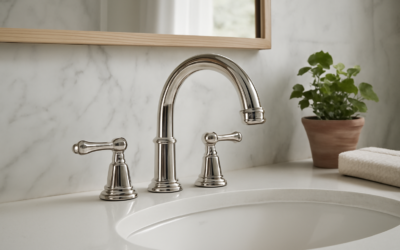
Hold a piece of polished nickel next to chrome and the difference is immediate: chrome throws a cold, blue-white glare, while polished nickel glows with a soft, warm champagne undertone. That subtle warmth is why polished nickel cabinet hardware keeps showing up in high-end kitchens and baths that want shine without the sterile edge of chrome. It’s a finish with real staying power, gracing everything from classic prewar apartments to transitional new builds. If you’re weighing knobs and pulls for a cabinet refresh, here’s why polished nickel earns its premium and how to keep it looking its best.
Part of our Kitchen Remodeling guide — explore the full guide →
- What Polished Nickel Actually Is
- Polished Nickel vs Chrome vs Brushed Nickel
- Where Polished Nickel Works Best
- Choosing Knobs and Pulls
- Caring for the Finish
- What It Costs
- Installation Tips
- Coordinating With Faucets and Fixtures
- Polished Nickel Cabinet Handles, Drawer Pulls and Knobs: Planning a Full Kitchen Set
- Is Polished Nickel Worth It?
What Polished Nickel Actually Is
Polished nickel is a plating: a layer of nickel electroplated over a solid brass or zinc base, then buffed to a high mirror shine. Unlike paint or a thin coating, quality nickel plating bonds to the metal and resists wear for decades. The finish has a slightly warmer, deeper reflection than chrome because nickel naturally carries a faint golden cast. In good light it reads as a rich, liquid silver rather than a flat mirror.
Polished Nickel vs Chrome vs Brushed Nickel
These three finishes get confused constantly, but they look and behave differently. Knowing the distinctions saves you from a mismatch.
- Polished nickel: Warm, mirror-bright silver with a champagne undertone. The most luxurious and the priciest of the three.
- Chrome: Cool, bright, blue-white mirror. More affordable and slightly harder, but reads colder.
- Brushed (satin) nickel: The same warm tone as polished but with a matte, directional grain that hides fingerprints. More casual and forgiving.
Choose polished nickel when you want reflective glamour and a warm tone, chrome for a crisp modern look on a budget, and brushed nickel when low maintenance matters more than shine.
Where Polished Nickel Works Best
This finish suits rooms where its warmth and shine get to perform. It looks stunning against darker cabinet colors, deep green, navy, charcoal, and black, where the mirror finish pops. It also flatters white and cream shaker cabinets in a classic, timeless kitchen. In bathrooms, polished nickel pairs naturally with marble and white subway tile for that enduring prewar-luxury feel.
Because it carries a warm undertone, polished nickel coordinates well with brass and gold accents in a mixed-metal scheme, something cold chrome struggles to do. That flexibility makes it a smart choice if you like to layer metals rather than match everything.
Choosing Knobs and Pulls
Hardware selection is part function, part proportion. As a rule, use knobs on doors and pulls on drawers, though large drawers can take pulls or oversized knobs. For sizing, pick pulls that span roughly one-third the width of the drawer front, and don’t undersize; a too-small pull on a wide drawer looks stingy. Common center-to-center pull sizes run 3, 4, and 5 inches for standard cabinets, with 8- to 12-inch appliance pulls for pantries and fridge panels.
Match the style of the piece to the room. Simple bar and cup pulls read transitional and traditional, while sleek T-bars lean modern. Whatever you choose, buy a single sample first and hold it against your cabinet before ordering a full set.
Caring for the Finish
Polished nickel’s one drawback is that its mirror surface shows water spots and fingerprints more than a brushed finish. The upkeep is easy, though, as long as you’re gentle.
- Wipe with a soft, damp microfiber cloth and buff dry to prevent spotting.
- For grime, use a drop of mild dish soap in warm water, then dry immediately.
- Never use abrasive cleaners, scouring pads, or ammonia-based glass cleaners, which can dull or micro-scratch the plating.
- In humid bathrooms, an occasional buff keeps water minerals from building a haze.
Treated this way, polished nickel holds its shine for the life of the cabinets. Avoid letting cleaning chemicals pool on the hardware, and it will never need replating.
What It Costs
Expect to pay a premium over chrome and zinc-based finishes. Solid-brass-based polished nickel knobs typically run $6 to $15 each, and pulls $8 to $25 depending on size and brand. A full kitchen of 30 to 40 pieces can reach $300 to $700 in quality hardware. Cheaper polished-nickel-look pieces on plated zinc exist for less, but the plating is thinner and more prone to wearing at the fingertips over years of use, so solid brass bases are the better long-term buy.
Installation Tips
Swapping hardware is one of the easiest cabinet updates, but consistency is everything. Use a hardware installation template or a jig to drill perfectly aligned holes, since even a sixteenth of an inch off shows across a run of drawers. If you’re upgrading from knobs to pulls, you may need to fill and redrill the old single hole; wood filler and touch-up paint handle it on painted cabinets. Snug the machine screws firmly but don’t overtighten, which can strip the threads or crack a thin drawer front.
Coordinating With Faucets and Fixtures
Cabinet hardware rarely lives in isolation, so plan how the polished nickel plays with the other metals in the room. The cleanest look ties the hardware to the faucet and the light fixtures in the same finish, so a polished nickel faucet and matching sconces echo the knobs and pulls. Because polished nickel carries a warm undertone, it also mixes gracefully with brass and gold in a deliberate two-metal scheme, something that reads as designed rather than accidental when you repeat each metal at least twice.
Where people go wrong is pairing polished nickel with cold chrome in the same sightline; the warm and cool tones clash subtly and make one look off. If your existing faucet is chrome and you’re not ready to replace it, lean toward brushed nickel hardware instead, which splits the difference. When in doubt, bring home samples and view them together in the room’s actual light, since showroom lighting flatters everything equally and hides these undertone mismatches.
Polished Nickel Cabinet Handles, Drawer Pulls and Knobs: Planning a Full Kitchen Set
A complete set of polished nickel kitchen hardware usually combines three pieces: cabinet handles on doors or tall panels, drawer pulls on every drawer, and polished nickel cabinet knobs where a small footprint looks neater. Buying all three from the same maker and the same collection is the simplest way to keep the tone consistent, because plating depth and polish vary from one brand to the next. Count every location before ordering so the whole kitchen comes from one production run.
Hardware Plan by Cabinet Type
| Location | Usual choice | Typical center-to-center | Notes |
|---|---|---|---|
| Upper doors | Knobs or short handles | Knob, or 3 to 4 in pull | Knobs keep glass-front uppers uncluttered |
| Base doors | Cabinet handles | 3 to 5 in | Mount vertically on the stile opposite the hinge |
| Standard drawers | Drawer pulls | 3 to 5 in | Size to about one-third of the drawer width |
| Wide pot drawers | Long pulls or two pulls | Longer bar, or a pair | Two grip points help with heavy loads |
| Pantry and panel appliances | Appliance pulls | 8 to 12 in | Use pulls rated for appliance doors |
Choosing Handles and Pulls That Match
Polished nickel drawer pulls and door handles look most cohesive when they share a profile, for example all round bars, all flat bars or all cup pulls on drawers with matching knobs on doors. Mixing a bar handle from one maker with a cup pull from another often shows a slight shift in color, since some polished nickel reads warmer and some reads closer to chrome. Order one sample of each piece and lay them side by side on a cabinet before buying the full count.
Lacquered or Unlacquered Polished Nickel
Some polished nickel hardware is sealed with a clear coat, while other pieces are left bare so they slowly soften to a warmer, slightly hazy tone with handling. Sealed hardware keeps its mirror look longer but can show worn spots if the coating is scratched. Bare nickel can be brought back with a gentle metal polish. Product listings do not always say which one you are getting, so ask or check the maker’s spec sheet.
Extending the Finish Beyond Knobs and Pulls
- Visible hinges, latches and cup pulls on pantry doors can carry the same polished nickel.
- A polished nickel faucet and pot filler tie the sink wall to the cabinet hardware.
- Order a few spare knobs and drawer pulls so a future repair or added drawer still matches.
Is Polished Nickel Worth It?
Polished nickel cabinet hardware delivers warm, mirror-bright luxury that outshines cold chrome and pairs effortlessly with dark cabinets, marble, and mixed metals. Choose solid-brass-based pieces for lasting plating, size pulls to about a third of the drawer width, and keep the finish spotless with nothing more than a soft damp cloth. It costs more than the alternatives, but on the hardware you touch every day, that warm, timeless shine is money well spent.