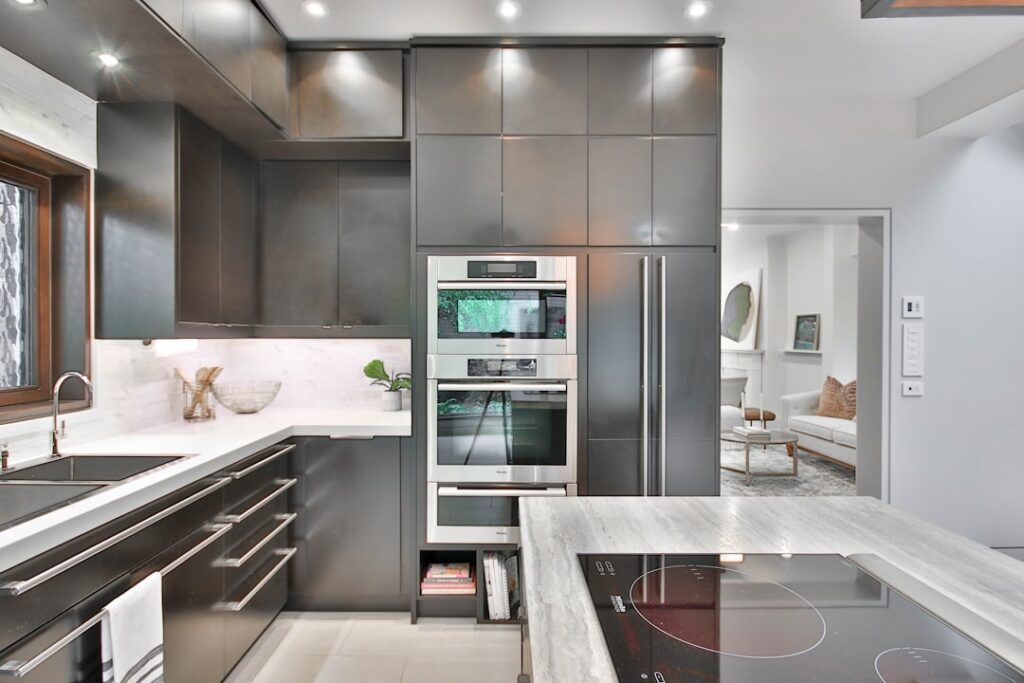
When gold and matte black hardware trends cool off, the kitchens that still look fresh are almost always the ones wearing a clean silver metal. Silver kitchen cabinet handles are the neutral that never really goes out of style, pairing effortlessly with stainless appliances, white shaker doors, and just about any countertop. But “silver” covers several distinct finishes that behave very differently in daily use, and choosing the right one — plus sizing and placing it correctly — is what separates a polished kitchen from a fussy one.
Part of our Kitchen Remodeling guide — explore the full guide →
- Why Silver Kitchen Cabinet Handles Stay Popular
- Chrome, Nickel, or Stainless: Know the Difference
- Matching Silver Hardware to Appliances and Fixtures
- Handles Versus Knobs Versus Pulls
- Getting the Size Right
- Placement and Installation Tips
- Keeping Silver Hardware Looking New
- Coordinating With Countertops and Backsplash
- An Affordable, Low-Risk Upgrade
- Silver Versus Trendier Finishes
Why Silver Kitchen Cabinet Handles Stay Popular
The enduring appeal of silver kitchen cabinet handles comes down to versatility and coordination. Most kitchens already have silver-toned metal in the form of a stainless refrigerator, range, and sink, so silver hardware ties the room together without fighting for attention. It reads as clean and contemporary in a modern kitchen and as crisp and classic in a traditional one, which is why builders and designers reach for it as the safe, resale-friendly default.
There is a practical angle too. Cooler silver tones tend to hide light scratches and everyday wear better than warm brass, and brushed versions in particular are forgiving of fingerprints — a real advantage on the pulls your family touches all day. When you want hardware that disappears into a cohesive design rather than making a bold statement, silver is the answer.
Chrome, Nickel, or Stainless: Know the Difference
Not all silver is the same. The three most common families each have a distinct undertone and personality:
- Polished chrome: bright, mirror-like, slightly blue-cool. Modern and reflective, but shows water spots and fingerprints fast.
- Brushed/satin nickel: a warmer, muted silver with a soft grain. The most popular choice; hides fingerprints and pairs with nearly everything.
- Polished nickel: shinier than satin with a faint warm glow; a step more upscale than chrome.
- Stainless steel: a flat, industrial silver, often brushed. Extremely durable and a natural match for stainless appliances.
For most homeowners, brushed or satin nickel is the sweet spot — warm enough to feel inviting, durable enough for daily abuse, and coordinated with the widest range of finishes. Save polished chrome for a sleek, high-gloss modern kitchen where you do not mind wiping the occasional smudge.
Matching Silver Hardware to Appliances and Fixtures
The most common coordination question is whether silver handles must exactly match the appliances. They should be in the same family, but they do not have to be identical. A brushed stainless appliance suite looks great with satin nickel or brushed stainless pulls; the slight variation actually reads more natural than a forced perfect match. What you want to avoid is mixing a very cool polished chrome against a warm satin nickel faucet in the same sight line, where the mismatch looks accidental rather than intentional.
Pick your faucet and sink finish first, since those anchor the room, then choose cabinet hardware in the same undertone. If your appliances are stainless and your faucet is satin nickel, brushed nickel or brushed stainless pulls will bridge the two cleanly.
Handles Versus Knobs Versus Pulls
Silver hardware comes in every form, and the choice sets the tone. Bar pulls give a clean, modern line and are the easiest to grip; cup or bin pulls in polished nickel lend a classic, transitional feel to drawers; simple round or square knobs suit door fronts. A common and reliable formula is knobs on upper doors and pulls on lower drawers, which balances proportion and function.
For heavily loaded drawers — pots, pans, dishes — choose a two-post pull rather than a single knob. A single fastener on a heavy drawer loosens over time and eventually tears out of the drawer face.
Getting the Size Right
Proportion makes or breaks a hardware install. A pull that is too small looks like an afterthought; one that is too large overwhelms the door. A dependable guideline is to size the pull to about one-third of the drawer width. Use these starting points, measured center-to-center between the mounting screws:
- Small drawers (up to 12 in): 3 to 4-inch pulls
- Standard drawers (12 to 24 in): 4 to 6-inch pulls
- Wide drawers (24 to 36 in): 8 to 12-inch pulls or a pair of pulls
- Doors: 1 to 1.25-inch knobs, or a 3 to 5-inch pull
When replacing existing hardware, measure the center-to-center distance of the old holes precisely so new pulls reuse them without patching and re-drilling.
Placement and Installation Tips
Consistent placement is what makes a hardware job look professional. Standard practice puts door knobs 2.5 to 3 inches from the corner, and drawer pulls centered both horizontally and vertically on the drawer face. On tall pantry doors, aligning the pull with the middle rail looks more deliberate than centering it on the full height.
Use a drilling jig or template so every hole lands in exactly the same spot across all 30 to 50 openings. Clamp a scrap block behind the door face before drilling to prevent the drill bit from splintering the finished surface as it exits. Snug the mounting screws firmly, but stop before you strip the threads or crack the finish — hand-tight plus a small turn is plenty.
Keeping Silver Hardware Looking New
One of silver’s practical advantages is easy upkeep, but the right method depends on the finish. Brushed and satin nickel and stainless clean up with a damp microfiber cloth and a drop of dish soap; wipe along the grain, not across it, so you do not leave visible swirls. For stubborn grease near the range, a little rubbing alcohol on a cloth cuts it without harming the finish.
Polished chrome shows water spots and fingerprints the fastest, so a quick buff with a dry cloth after cleaning keeps it mirror-bright. Avoid abrasive pads, scouring powders, and ammonia-heavy glass cleaners on any plated finish, since they can dull or scratch the surface over time. Tighten the mounting screws once or twice a year, because daily pulling gradually loosens hardware on the drawers you use most.
Coordinating With Countertops and Backsplash
Silver hardware is a team player, which is why it works across so many countertop and backsplash choices. Against a white quartz counter and a subway-tile backsplash, brushed nickel reads crisp and classic. On a darker granite or a bold marble, polished nickel or chrome adds a bright note that keeps the scheme from feeling heavy. Stainless pulls tie directly into a stainless appliance suite for a seamless, professional-kitchen look.
If your kitchen already has warm elements — wood open shelving, brass lighting, or a warm-toned backsplash — a slightly warmer silver like satin nickel bridges the temperature better than icy chrome. When in doubt, bring a single sample pull home and hold it against your counter, cabinet, and backsplash in your kitchen’s actual light before committing to 40 pieces; showroom lighting can mislead you on undertone.
An Affordable, Low-Risk Upgrade
Swapping cabinet hardware is one of the highest-impact, lowest-cost kitchen refreshes available. Quality silver pulls run roughly $3 to $15 each, so outfitting an entire kitchen typically costs $150 to $600 — a fraction of a remodel, installed in an afternoon with a drill and a jig. Because silver is such a safe, coordinated neutral, it is also the least likely finish to look dated when you eventually sell.
Choose a durable brushed nickel or stainless finish, size it to your doors and drawers, and place it with a jig for a consistent, professional result. Well-chosen silver kitchen cabinet handles quietly elevate the whole room and keep it looking current for years — the definition of a smart, timeless upgrade.
Silver Versus Trendier Finishes
It is worth understanding why silver outlasts the trend cycle. Matte black and warm brass have both surged in popularity, and both look striking, but they read as of-the-moment in a way silver does not. When you sell, a buyer walking through sees black or gold hardware and immediately dates the renovation to a specific era; silver reads as neutral and classic, giving them nothing to mentally “update.” That resale neutrality is a real, if intangible, value.
None of this means you cannot enjoy a trend. If you love matte black, use it — hardware is cheap and quick to swap, so you are not committing for life. But if you want a finish you can install once and forget, that coordinates with the stainless appliances nearly every kitchen already has, and that will not look dated when tastes shift again, silver is the low-regret choice. Pairing a timeless silver on the cabinets with a bolder accent elsewhere, like a colored faucet or statement lighting, lets you have both stability and personality.