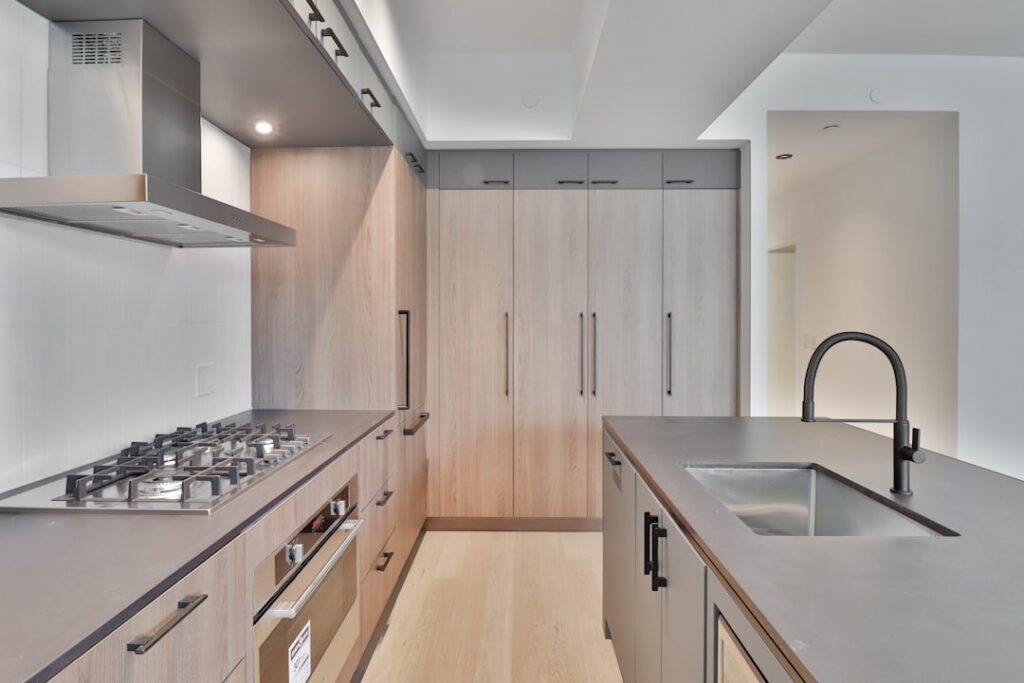
Designers call cabinet hardware the jewelry of the kitchen, and nothing dates or elevates a space faster than the pulls you grip a dozen times a day. Luxury kitchen cabinet handles are where a modest budget can buy an outsized upgrade, or where a big budget quietly disappears into 40 pieces of solid brass. The difference between hardware that feels rich and hardware that feels cheap comes down to material weight, finish quality, and getting the sizing and placement exactly right.
Part of our Kitchen Remodeling guide — explore the full guide →
- What Makes Kitchen Cabinet Handles Feel Luxurious
- Premium Materials Worth the Money
- Finishes and How to Coordinate Them
- Handles Versus Knobs Versus Pulls
- Sizing Handles Correctly
- Placement Rules That Look Custom
- Mixing Metals Without Looking Chaotic
- Caring for Premium Hardware
- Making the Investment Count
- Where to Splurge and Where to Save
What Makes Kitchen Cabinet Handles Feel Luxurious
The first thing you notice about genuinely luxury kitchen cabinet handles is weight. Solid brass, stainless steel, and bronze have a heft that hollow zinc-alloy and plated plastic simply cannot fake. Pick up a $3 pull and a $25 pull side by side and your hand knows the difference instantly. Weight signals a solid core, a substantial mounting post, and a finish that will not flake at the screw holes within a year.
The second marker is finish depth. Cheap hardware wears a thin sprayed coat that scratches to reveal a different color underneath. Premium hardware uses living finishes — unlacquered brass that patinas, oil-rubbed bronze that highlights over time, or PVD (physical vapor deposition) coatings that are bonded at a molecular level and resist scratching for decades.
Premium Materials Worth the Money
Material is where luxury starts. Each has a distinct look, feel, and price point:
- Solid brass: $12 to $40 per pull — warm, timeless, patinas beautifully if unlacquered
- Stainless steel: $8 to $30 — modern, fingerprint-resistant in brushed finishes, extremely durable
- Bronze: $15 to $45 — deep, traditional character with hand-rubbed highlights
- Crystal and glass: $10 to $50 — glamorous accents, best on furniture-style cabinetry
- Leather-wrapped or exotic: $30 to $120 — bespoke touches for a designer kitchen
For a whole kitchen with 30 to 50 openings, quality hardware is a real line item — $500 to $2,000 is common, and a fully bespoke brass or bronze package can exceed $3,000. That still reads as a bargain compared with recabinetry, which is why hardware is the smart place to spend when you want impact.
Finishes and How to Coordinate Them
Finish choice ties the hardware to your faucet, lighting, and appliances. The current trend has moved past matching everything to safe polished chrome. Instead, designers pick a metal story and repeat it:
- Unlacquered/living brass: warm and evolving; pairs with warm woods and marble
- Matte black: graphic and modern; grounds a white or light kitchen
- Champagne bronze/satin gold: softer than brass, hides fingerprints well
- Polished nickel: a cooler, richer alternative to chrome with subtle warmth
- Oil-rubbed bronze: traditional depth for shaker and inset doors
A pro tip: coordinate the hardware finish with your faucet and pot filler first, since those are the visual anchors, then let the lighting and appliance pulls follow. You do not need a perfect match — a deliberate mix of two metals often reads more custom than everything identical.
Handles Versus Knobs Versus Pulls
Luxury kitchens tend to follow a loose convention: knobs on doors, pulls on drawers, though breaking that rule intentionally can look great. Bar pulls and appliance-style pulls give a clean, modern line; cup (bin) pulls suggest traditional or transitional style; edge and finger pulls disappear for a minimalist look. Longer pulls read as more high-end on wide drawers because they stay in proportion.
For heavy pot-and-pan drawers, choose a pull rated for the weight and mounted on two posts rather than one — a single-post knob on a loaded drawer works loose and tears out over time.
Sizing Handles Correctly
Nothing undermines expensive hardware like the wrong size. Proportion is everything. As a rule, a pull should span roughly one-third the width or height of the drawer or door it sits on. Here is a working guide:
- Small drawers (up to 12 in): 3 to 4-inch pulls (center-to-center)
- Standard drawers (12 to 24 in): 4 to 6-inch pulls
- Wide drawers (24 to 36 in): 8 to 12-inch pulls, or two pulls
- Tall pantry or appliance doors: 12 to 18-inch pulls for grip and proportion
The center-to-center measurement — the distance between the mounting screws — is the spec you order by, so measure it precisely when replacing existing hardware to reuse the drilled holes.
Placement Rules That Look Custom
Where you mount the hardware separates a professional install from a DIY guess. Standard placement puts door knobs 2.5 to 3 inches from the corner of the door, and drawer pulls centered horizontally and vertically on the drawer face. On very tall doors, mounting the knob in line with the middle rail looks more intentional than dead-center.
Use a hardware jig — a $15 to $30 template like the True Position or a shop-made board — to guarantee every hole lands identically. A pull that sits even an eighth of an inch off from its neighbors catches the eye immediately and cheapens the whole run. Measure twice, drill once, and back the door with a scrap block to prevent tear-out on the finished face.
Mixing Metals Without Looking Chaotic
The old rule that everything metal in a kitchen had to match is gone, and a deliberate mix now reads as more collected and custom. The trick is intention. Choose a dominant metal for about 70 percent of the elements — say, unlacquered brass on the cabinet hardware and faucet — then introduce a secondary metal as an accent, like matte black on the range and pendant lights. Two metals is comfortable; three starts to feel busy unless you have a designer’s eye.
Keep warm with warm and cool with cool when you want harmony, or contrast a warm brass against a cool black for deliberate tension. The island is a natural place to break from the perimeter — different hardware or a contrasting metal there signals that it is a separate, furniture-like piece. What you want to avoid is an accidental mismatch, like one warm gold pull among a run of cool nickel, which looks like an ordering error rather than a choice.
Caring for Premium Hardware
Luxury hardware rewards a little care, and the maintenance depends on the finish. Lacquered and PVD finishes need nothing more than a wipe with a damp microfiber cloth and mild soap; avoid abrasive cleaners and ammonia, which cut through protective coatings. Living finishes like unlacquered brass and oil-rubbed bronze are meant to evolve — they darken and highlight with the oils from your hands, and that patina is the point, not a flaw.
If you prefer to keep unlacquered brass bright, an occasional polish with a dedicated brass cleaner restores the shine, though most owners come to love the aged look and stop fighting it. For any finish, tighten the mounting screws once or twice a year, since the constant pulling on drawers slowly works fasteners loose. A pull that wobbles is not a hardware defect — it is a screw that needs a quarter turn.
Making the Investment Count
Because hardware is one of the few kitchen elements you can swap in an afternoon, it is the lowest-risk luxury upgrade in the house. You can transform dated builder cabinets for $500 to $1,500 in a weekend — no demolition, no dust, no contractor. Choose solid materials with real finishes, size them to the doors and drawers, and place them with a jig.
Buy the best luxury kitchen cabinet handles your budget allows, because these are the pieces you touch every single day, and quality that you feel in the hand is quality that lasts in the room. When the rest of the kitchen is neutral and timeless, the hardware is what people will remember.
Where to Splurge and Where to Save
If a whole kitchen of solid-brass hardware stretches the budget, be strategic rather than uniform. Put the money where hands and eyes land most: the island, the range wall, and the primary work zone. Those are the pulls guests notice and you touch constantly, so a heavier solid-brass or bronze pull there earns its cost. On a back pantry or a rarely used upper cabinet, a well-made but less expensive pull in the same finish carries the look without the premium.
Another money-smart move is to buy fewer, larger statement pieces rather than many small ones. A run of appliance-style pulls on the main drawers reads more custom than an abundance of tiny knobs, and it can actually cost less per opening. Watch for trade discounts and sales at plumbing-and-hardware showrooms, and buy a single sample of your top choice to hold in your own kitchen before ordering the full set — the weight, finish, and scale always read differently at home than under showroom lights.