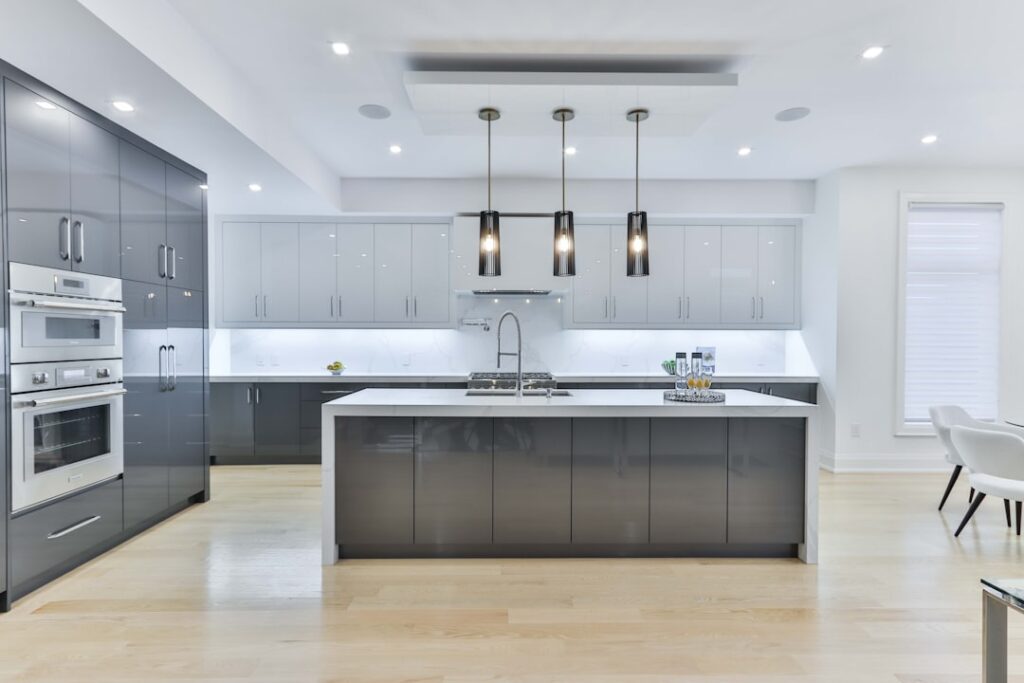
Swapping knobs and pulls is the cheapest change with the biggest visual payoff in any kitchen or bath. Unique cabinet hardware turns builder-grade cabinetry into something that looks designed, and it costs a fraction of new doors. Most decorative knobs run $4 to $25 each and pulls $8 to $40, so even a full kitchen usually stays under $400.
- Why Hardware Is the Jewelry of the Kitchen
- Materials That Stand Out
- Statement Finishes
- Knobs vs. Pulls — and Where Each Goes
- Mixing Metals the Right Way
- Sizing Hardware Correctly
- Placement Rules
- Where to Find Unique Hardware
- Matching Hardware to Cabinet Style
- Where to Splurge and Where to Save
- Installing New Hardware Yourself
- Cost and Payoff
Why Hardware Is the Jewelry of the Kitchen
Designers call hardware the jewelry of a room for good reason — it’s the detail your hand touches every day and your eye catches from across the kitchen. Plain cabinets with striking hardware read as intentional; beautiful cabinets with cheap builder knobs fall flat. Because it’s inexpensive and reversible, hardware is also the safest place to take a design risk.
Materials That Stand Out
Moving beyond stamped metal is the fastest route to a unique look:
- Unlacquered brass — develops a living patina over years, so each piece becomes one of a kind. The current designer favorite.
- Leather and leather-wrapped pulls — warm, tactile, and unexpected; great on a modern or Scandinavian kitchen.
- Hand-cast bronze and iron — forged, hammered, or rope-textured for a rustic or Old-World feel.
- Natural stone, marble, and agate — knobs cut from real stone add subtle luxury on bath vanities.
- Ceramic and hand-painted porcelain — colorful, artisan, perfect for cottage and eclectic kitchens.
- Lucite and glass — crystal-clear or smoked knobs that catch light and lighten a dark cabinet.
Statement Finishes
Finish sets the mood as much as shape. Matte black brings crisp modern contrast and hides fingerprints. Satin or aged brass warms the whole room. Polished nickel reads classic and clean. Oil-rubbed and antique bronze suit traditional and craftsman kitchens. For something truly different, look at burnished copper, gunmetal, champagne bronze, or a two-tone knob that blends brass with black. Pick a finish that either matches or deliberately contrasts your faucet and lighting — accidental near-matches look like mistakes.
Knobs vs. Pulls — and Where Each Goes
A common designer formula uses knobs on doors and pulls on drawers, which reads as tailored and makes heavy drawers easier to open. But mixing it up is where uniqueness comes in: long appliance pulls on the pantry, a cup or bin pull on smaller drawers, and edge or tab pulls for a minimalist run. Cup pulls (half-moon shaped) instantly give a cabinet a vintage, English-kitchen character. Finger-edge and recessed pulls create the ultra-clean handleless look popular in contemporary kitchens.
Mixing Metals the Right Way
Mixing finishes looks intentional when you follow a couple of rules. Pick a dominant metal (say, brass on the cabinets) and a secondary accent (black on the range hood and lighting) rather than scattering three metals evenly. Keep the same finish within a single zone — don’t mix knobs on one cabinet. Repeat each metal at least twice so it looks planned, not leftover. Warm-and-cool pairings like brass with matte black or bronze with polished nickel are reliable combinations.
Sizing Hardware Correctly
Even the most beautiful pull looks wrong at the wrong scale. Use these guidelines:
- Knobs: 1″ to 1.5″ diameter for standard doors; go 1.5″+ on large or tall doors.
- Drawer pulls: roughly one-third the drawer width. A 30″ drawer looks best with a 12″+ pull or two smaller pulls.
- Appliance pulls: 12″ to 18″ for panel-ready fridges and pantries.
- Center-to-center: measure the hole spacing on existing pulls before ordering so you can reuse the drilled holes.
Buy one or two samples first and hold them on the actual cabinet — scale reads very differently in hand than on a screen.
Placement Rules
Consistent placement makes hardware look custom. On upper cabinets, mount knobs on the bottom corner of the door’s stile; on lowers, mount them on the top corner. Drawer pulls go centered horizontally, either dead-center vertically or slightly high on tall drawers. A cheap plastic hardware jig from the hardware store keeps every hole aligned and saves you from crooked, miscounted drilling across 20 doors.
Where to Find Unique Hardware
Big-box stores carry the basics; the interesting pieces live elsewhere. Etsy is full of small metalsmiths casting brass, bronze, and leather pulls to order. Specialty houses like Rejuvenation, Schoolhouse, Anthropologie, Rocky Mountain Hardware, and House of Antique Hardware carry statement and reproduction pieces. Architectural salvage yards and antique malls turn up genuine vintage knobs with real patina. For custom, a local blacksmith or ceramicist can produce a set no one else will have.
Matching Hardware to Cabinet Style
Unique doesn’t mean random — the hardware should have a conversation with your cabinet style. Shaker and transitional cabinets take almost anything, which is why they’re the easiest canvas for a statement pull. Flat-slab modern cabinets look best with clean bar pulls, edge pulls, or a handleless tab; ornate knobs fight the minimalism. Traditional raised-panel and inset cabinets suit cup pulls, bin pulls, and cast bronze or aged brass with visible texture. Farmhouse kitchens love oversized black iron and rope-textured pieces. For a cottage or eclectic look, hand-painted ceramic and glass knobs bring color and whimsy. Pick hardware that amplifies the door style rather than working against it, and even an inexpensive knob looks custom.
Where to Splurge and Where to Save
You rarely need to spend heavily on every piece. A smart approach is to invest in a few statement pieces where hands and eyes land most — the long appliance pulls on a panel-ready fridge, the island drawer pulls, the pantry handle — and use simpler, budget knobs on the upper cabinets that read from a distance. Buying in bulk sets from the same line keeps the look consistent while controlling cost, and mixing one or two artisan showpieces among plainer stock hardware gives you uniqueness without a $1,000 bill. If your budget is tight, put the money into one bold, memorable finish or shape rather than spreading it thin across forgettable pieces.
Installing New Hardware Yourself
Swapping hardware is one of the most beginner-friendly upgrades in the house, but a few steps separate a clean result from a crooked one. Start by removing the old hardware and noting the existing hole spacing — if your new pulls match the center-to-center measurement, you reuse the holes and the job is trivial. If the spacing differs, you’ll fill the old holes with wood filler, sand, and touch up before drilling new ones. Use a hardware installation jig, a cheap template that clamps to the door or drawer and guides your drill bit to a consistent spot every time; this is the single tool that prevents crooked, mismatched placement across a whole kitchen. Drill from the front with a backer block behind to prevent blow-out, then hand-tighten the screws. Work through one cabinet fully before committing to all of them, so you can confirm the placement and scale look right in the actual room. A full kitchen takes an afternoon.
Cost and Payoff
- Decorative knobs: $4 to $25 each
- Drawer and door pulls: $8 to $40 each
- Artisan or solid-bronze pieces: $30 to $90 each
- Full 30-piece kitchen set: $150 to $600
For the price of a nice dinner out, unique cabinet hardware reshapes how a whole kitchen feels. Buy samples, match your finishes with intent, size pieces to the cabinet, and use a drilling jig — the upgrade takes an afternoon and looks like a remodel. It’s also one of the few changes that’s fully reversible: if you tire of a finish or move to a new style, swapping hardware again costs little and undoes nothing. That low risk is exactly why hardware is the best place to be bold. Pick pieces that make you smile when you open a drawer, keep the finishes coordinated, and you’ll get a custom-feeling kitchen for a fraction of what new doors or counters would cost.