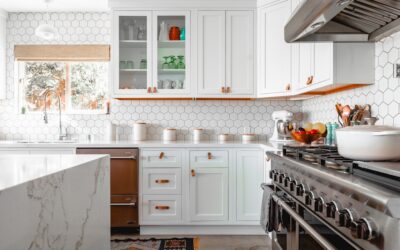
Cabinet hardware is often called the jewelry of the kitchen, and like jewelry, the wrong choice can undercut an otherwise beautiful room. Learning how to choose cabinet hardware means balancing style, size, finish, and function so knobs and pulls feel intentional rather than an afterthought. It is one of the highest-impact, lowest-cost updates you can make — swapping dated hardware for the right pieces can refresh a whole kitchen for a couple hundred dollars. This guide walks through knobs versus pulls, sizing rules, finishes, placement, and budgeting so you land on hardware that looks and feels right.
Part of our Kitchen Remodeling guide — explore the full guide →
- Knobs Versus Pulls: Where Each Belongs
- Getting the Size Right
- Choosing a Finish That Ties the Room Together
- Matching Hardware to Your Cabinet Style
- Placement and Installation
- Budgeting and Buying Smart
- Understanding Center-to-Center and Mounting Specs
- Where to Buy and How to Compare
- Mixing Metals Without Making It Look Accidental
- Comfort, Function, and Final Tips
Knobs Versus Pulls: Where Each Belongs
The first decision is the type of hardware, and each has a natural home. Knowing where knobs and pulls each work best is the foundation of how to choose cabinet hardware that functions well day to day:
- Knobs: Traditionally used on cabinet doors, easy to grab, and lower cost. A classic single-point choice for uppers and doors.
- Pulls: Better for drawers, especially heavy pot-and-pan drawers, because the wider grip spreads the load and is easier on your fingers.
- Mixed approach: Many designers use knobs on doors and pulls on drawers for a balanced, functional look that has become the modern default.
There is no hard rule — some homeowners use pulls everywhere for a sleek, uniform look. But putting pulls on heavy drawers is a comfort choice you will appreciate every time you open a loaded drawer.
Getting the Size Right
Nothing looks more off than undersized hardware on a big drawer or a chunky pull on a delicate door. Scale matters. For knobs, 1 to 1.5 inches in diameter suits most cabinet doors. For pulls, the general guideline is to choose a pull roughly one-third the width of the drawer front — so a 30-inch-wide drawer looks balanced with a 10- to 12-inch pull or two smaller pulls. On standard drawers, a 3- to 5-inch pull (measured center-to-center between the screws) is the common range. Oversized appliance-style pulls suit large pantry and refrigerator panels. When in doubt, hold samples up to the cabinet before committing — proportion is easier to judge in place than in a catalog.
Choosing a Finish That Ties the Room Together
Finish is where hardware either harmonizes with the kitchen or clashes. The goal is to relate the hardware to the other metals in the room — the faucet, the lighting, and appliance handles — without necessarily matching everything perfectly. Popular finishes each carry a mood: matte black reads modern and graphic, brushed or satin nickel is a safe, timeless neutral, warm brass and champagne bronze feel current and inviting, oil-rubbed bronze leans traditional, and polished chrome gives a crisp, classic shine. You do not have to match your faucet exactly, but keeping the metals within a compatible family — all warm or all cool tones — keeps the space from feeling chaotic.
Matching Hardware to Your Cabinet Style
The cabinets themselves suggest which hardware will look natural. Shaker cabinets are wonderfully versatile and pair with almost anything from simple bar pulls to traditional knobs. Flat-panel or slab modern cabinets call for clean, minimal hardware like edge pulls or slim bar pulls, or sometimes no visible hardware at all. Ornate raised-panel doors suit more detailed, traditional knobs and cup pulls. Cup or bin pulls bring a farmhouse and vintage character that works beautifully on drawers in transitional kitchens. Let the cabinet door style lead, and choose hardware that either quietly complements it or provides a deliberate, well-considered contrast.
Placement and Installation
Even perfect hardware looks wrong if it is drilled in the wrong spot, and holes are permanent. Standard placement puts door knobs 2.5 to 3 inches from the bottom corner of an upper cabinet door and the top corner of a lower cabinet door. Drawer pulls typically center horizontally on the drawer face, either centered vertically or set toward the top on very tall drawers. Use a hardware jig — a $15 to $25 template tool — to guarantee consistent, level holes across dozens of cabinets. Measure twice and drill from the front with a backer block behind the hole to prevent splintering. Consistency across the whole kitchen is what makes the result look professionally installed.
Budgeting and Buying Smart
Hardware costs add up fast when you multiply per-piece prices across an entire kitchen. Plan before you buy:
- Count every door and drawer, then add a few spares for mistakes or future additions.
- Basic knobs run $2 to $6 each; quality pulls range $4 to $15; designer pieces climb past $20.
- A full kitchen of 30 to 40 pieces can total anywhere from $150 to $600 or more.
- Order one or two samples first to check the finish and feel in your actual light.
- Buy all your hardware in a single order or batch to ensure the finish matches across the run.
Finishes can vary slightly between production lots, so purchasing everything at once avoids subtle color mismatches that show up under kitchen lighting.
Understanding Center-to-Center and Mounting Specs
The single measurement that trips up most first-time buyers is center-to-center, the distance between the two mounting screws on a pull. Order a 5-inch pull for holes drilled at 3 inches on center and it simply will not fit. Standard center-to-center sizes run 3 inch, 3.75 inch, 4 inch, 5 inch, 6.25 inch, and 8 inch, and the appliance-style pulls jump to 12 or 18 inches. If you are replacing existing pulls, measure your current center-to-center first and match it to skip re-drilling entirely. Knobs mount with a single screw, almost always an 8-32 machine screw, and cabinet doors typically need a 1-inch screw while thicker drawer fronts want 1.25 inch. Buy a variety pack of screw lengths for a few dollars, because manufacturers rarely include enough length for face-frame cabinets or doubled-up panels. Confirm whether your pulls use standard 8-32 threads before assuming the included screws will work.
Where to Buy and How to Compare
Sourcing hardware smartly can cut the bill in half without sacrificing looks. Big-box stores carry reliable mid-range knobs and pulls in the $3 to $10 range and let you handle samples in person, which matters for judging weight and finish. Online specialty retailers and direct-from-manufacturer sites offer volume discounts once you cross 25 or 50 pieces, and that is where a full kitchen order pays off. Watch for bulk or contractor packs — a 10-pack of pulls often costs 20 to 30 percent less per piece than singles. When comparing options, weigh the piece in your hand if you can; a pull that feels hollow and light is usually thin-walled zinc that bends, while a solid, cool, heavy piece signals forged brass or stainless that will outlast the cabinets. Read return policies too, since ordering a single sample to test in your kitchen is smart only if you can return the rest if the finish disappoints.
Mixing Metals Without Making It Look Accidental
Two-tone kitchens are popular, and mixing metals can look intentional if you follow a simple rule: let one finish dominate and use the second as a deliberate accent. A common approach pairs matte black hardware on a large island with warm brass on the perimeter cabinets, or keeps the faucet in polished nickel while the cabinet pulls go unlacquered brass. The trick is repetition — if brass appears only on a single cabinet, it reads as a mistake, but brass on the pendant lights, the pot filler, and a run of drawers reads as a designed choice. Stay within a temperature family when in doubt; warm brass, champagne bronze, and aged gold sit together comfortably, while cool chrome, nickel, and stainless form their own group. Cross the two only with confidence and clear repetition, and never introduce more than two metal finishes in a single sightline.
Comfort, Function, and Final Tips
Beyond looks, hardware is something your hands touch dozens of times a day, so how it feels matters. Grip a sample and make sure the edges are comfortable and the shape is easy to pull, especially if anyone in the home has arthritis or limited hand strength — larger pulls and D-shaped handles are far kinder than tiny knobs in that case. Consider maintenance too; matte and brushed finishes hide fingerprints better than shiny polished ones. Take your time, order samples, and view them in your own kitchen at different times of day before committing. Master how to choose cabinet hardware with this deliberate approach, and a modest investment will make your cabinets look custom and feel effortless to use for years to come.