An outdoor shower used to mean a garden hose and a showerhead zip-tied to a fence post. Today, a luxury outdoor shower can rival a spa bathroom, with thermostatic valves, rain heads, teak floors, and stone walls open to the sky. Resort designers have long known that showering under open air is one of the most memorable amenities a property can offer. Getting it right at home comes down to smart choices about location, materials, plumbing, drainage, and privacy. This guide walks through each decision with realistic costs.
Part of our Bathroom Remodeling & Flooring guide — explore the full guide →
- What Makes a Luxury Outdoor Shower Different
- Choosing the Right Location
- Premium Materials for Walls and Floors
- Fixtures and Plumbing for a Spa Experience
- Drainage: The Detail Most Builds Get Wrong
- Privacy, Lighting, and Comfort Features
- Design Styles That Feel Like a Resort
- Cost Breakdown and Budget Planning
- Maintenance to Keep It Looking Luxurious
What Makes a Luxury Outdoor Shower Different
The gap between a basic rinse station and a high-end build is not only about price; it is about comfort and permanence. A luxury outdoor shower usually includes:
- Hot and cold water through a pressure-balancing or thermostatic valve, not a single cold spigot
- A defined enclosure with privacy walls, a door or gate, and often a separate changing or drying area
- Premium surfaces such as teak, ipe, cedar, natural stone, or porcelain tile
- Multiple water sources like a rain head plus a handheld wand or body sprays
- Thoughtful lighting and storage for evening use, towels, and toiletries
- Engineered drainage so water never pools against the foundation
Most homeowners spend somewhere between $4,000 and $15,000 for a well-built enclosure with hot water, and custom stone or architect-designed builds can exceed $25,000. The biggest cost drivers are plumbing distance from the house, enclosure materials, and site prep.
Choosing the Right Location
Placement determines cost, comfort, and how often the shower gets used. The cheapest and most practical spot is usually on an exterior wall that backs up to an existing bathroom, laundry room, or kitchen, because supply lines are only a few feet away.
Consider these factors before you commit:
- Sun exposure: morning sun dries wood and stone quickly and discourages mildew; full shade stays damp
- Wind: a sheltered corner makes early-season showers far more pleasant
- Sight lines: check views from neighboring windows and second stories, not just the street
- Access: near a pool, beach path, or garden gate so people rinse before entering the house
- Distance from the foundation: the floor should slope away from the house, and drainage should discharge well clear of footings
A freestanding shower in the middle of the yard feels dramatic, but trenching supply and drain lines 30 or 50 feet can add $1,500 to $5,000 or more to the budget.
Premium Materials for Walls and Floors
Outdoor showers are wet much of the time, so materials must resist rot, UV, and mildew. The best options balance natural beauty with durability.
| Material | Best Use | Notes |
|---|---|---|
| Teak | Floor mats, benches, slat walls | Naturally oily, weathers to silver-gray |
| Ipe and other tropical hardwoods | Decking, walls | Extremely dense; predrill every fastener |
| Western red cedar | Walls, screens | Lighter, aromatic, more affordable |
| Natural stone or porcelain tile | Floors, feature walls | Choose slip-resistant, freeze-rated products |
| Copper or stainless steel | Fixtures, trim | Copper patinas; use marine-grade 316 stainless near salt air |
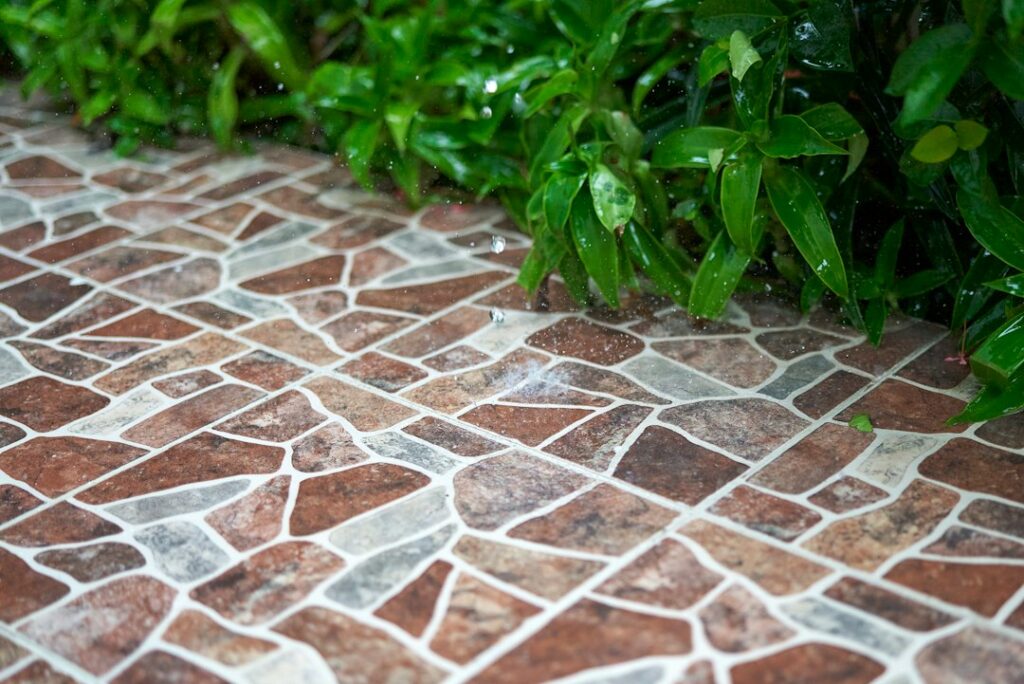
For flooring, slatted hardwood decking with 1/4-inch gaps drains instantly and feels warm underfoot. Stone or tile floors need a proper slope of about 1/4 inch per foot toward a drain, plus a textured finish for traction. River rock set in mortar makes a beautiful floor, but it is harder to clean than smooth pavers.
Use stainless steel screws and hardware throughout. Galvanized fasteners stain cedar and oak black, and plain steel rusts quickly in constant moisture.
Fixtures and Plumbing for a Spa Experience
Fixtures are where a luxury outdoor shower earns its name. Outdoor-rated shower systems in solid brass or stainless steel generally run $400 to $2,500, with custom exposed-pipe copper systems sometimes going higher.
Fixture options
- Rain shower head (10-16 inches): mounted overhead on an arm or pergola beam
- Handheld wand: for rinsing feet, kids, dogs, and beach gear
- Thermostatic valve: holds a set temperature even when someone runs a tap indoors
- Foot wash spigot: a low tap near the entrance for sandy feet
Hot water supply
Most homes tap into the existing water heater. If the shower sits far from it, you may wait a long time for hot water; a dedicated point-of-use electric tankless heater or recirculation setup can help. Whatever the source, install scald protection with a valve limited to around 120°F.
Freeze protection
In any climate with freezing winters, plan how the system will drain. Install frost-free sillcock-style supply valves or dedicated shutoffs inside the heated house, with drain-down valves so lines can be emptied each fall. Remove handheld hoses and store them indoors. Exposed copper pipe that freezes once with water inside can split along its length.
Drainage: The Detail Most Builds Get Wrong
A shower can easily put out 2 gallons per minute, which means a 10-minute shower sends about 20 gallons onto the ground. Poor drainage leads to muddy soil, mosquitoes, a soggy foundation, and a smell that ruins the experience.
Common drainage approaches include:
- Gravel dry well: a pit 2 to 3 feet deep filled with clean crushed stone, sometimes with a perforated basin, beneath a slatted floor
- Surface drain to a landscaped area: sloped floor directing water into a rain garden or planting bed
- Connection to the house drain system: required in some jurisdictions, especially if you use soap, and it needs a trap and proper venting
Rules on where shower water can go vary widely by state and municipality. Some treat it as graywater that must follow specific regulations; others require a sewer or septic connection. Check with your local building department before you dig, and use biodegradable soaps if water drains into soil.
Privacy, Lighting, and Comfort Features
Luxury is about feeling relaxed, and that requires privacy. Horizontal slat walls with 1/2-inch to 3/4-inch gaps block sight lines while allowing airflow. Solid walls feel more enclosed but trap moisture; if you use them, leave a gap at the bottom and top for ventilation. Living screens, such as tall bamboo in root-barrier planters or clumping grasses, soften the enclosure.
Add comfort upgrades that make the space usable morning and night:
- Low-voltage LED lighting rated for wet locations, on a dimmer or timer
- A teak bench for shaving legs or sitting kids down
- Recessed niches or stainless shelves for bottles
- Robe hooks and a covered towel cabinet outside the spray zone
- A small changing area with its own door, separated from the wet zone
- A pergola or partial roof for shade and light rain, leaving part of the ceiling open to sky
All outdoor electrical work must use wet-location-rated fixtures and GFCI protection. Hire a licensed electrician for any line-voltage wiring, and keep fixtures and outlets well away from the direct spray.
Design Styles That Feel Like a Resort
Settling on a style early keeps material and fixture choices consistent, which is what separates a cohesive luxury outdoor shower from a collection of nice parts. Four looks dominate high-end residential projects.
Coastal cottage
White-painted or natural cedar board-and-batten walls, a simple Z-brace door, a teak slat floor, and a brushed nickel or marine-grade stainless rain head. This style suits beach houses and pairs well with shingle siding. Hooks for wet suits and a low foot-wash spigot add practical coastal touches.
Modern minimalist
Horizontal ipe or thermally modified wood slats, a matte black shower column, concrete or large-format porcelain pavers, and hidden LED strip lighting tucked under a bench. Clean lines and a restrained palette make a small footprint feel larger.
Tropical spa
Natural stone walls, a pebble or split-face stone floor zone, exposed copper plumbing that ages to a green patina, and dense planting of ferns, palms, or bamboo. Partial roofing with thatch-look panels or a timber pergola completes the look.
Rustic mountain
Rough-sawn cedar or reclaimed timber, a fieldstone backdrop, oil-rubbed or aged brass fixtures, and a heavy timber frame. In cooler climates, this style is often paired with a heated indoor changing room so the shower gets used well into fall.
Whatever direction you choose, repeat one or two materials from the house itself, such as the siding color, trim profile, or patio stone, so the shower looks like it was part of the original design rather than an add-on.
Cost Breakdown and Budget Planning
Here is how a typical project divides up:
- Plumbing (hot/cold supply, valve, drain): $1,000-$4,500
- Fixtures and shower system: $400-$2,500
- Enclosure framing and walls: $1,500-$8,000 depending on wood species or stone
- Flooring and drainage: $500-$3,000
- Lighting and electrical: $300-$1,500
- Permits and design fees: $0-$2,000 depending on jurisdiction
A skilled DIYer can save on the enclosure and flooring, but supply and drain plumbing, gas or electric water heating, and electrical connections should be handled by licensed plumbers and electricians, and many areas require permits for this work.
Maintenance to Keep It Looking Luxurious
An outdoor shower sees sun, water, and temperature swings every day it is in use. A little care keeps it looking like a resort instead of a neglected shed.
- Scrub wood surfaces with a soft brush and an oxygen bleach cleaner each spring
- Oil teak and ipe once or twice a year if you want to keep the warm color, or let it weather naturally
- Reseal stone and grout annually with a penetrating sealer
- Clean shower heads to remove mineral buildup, especially in hard-water regions
- Winterize before the first hard freeze and inspect for leaks when you turn water back on
- Check for loose boards, popped screws, and slippery algae on floors
Planned with the right location, durable materials, and proper drainage, a luxury outdoor shower becomes one of the most-used features of your home each summer and can add real appeal when it is time to sell, especially in beach, lake, and pool communities.