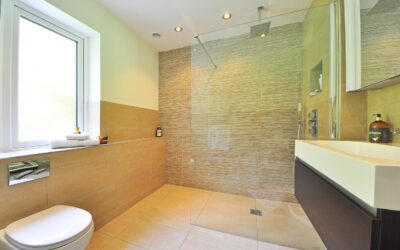
A spa does not feel luxurious because it cost a fortune. It feels luxurious because every detail, from the softness of the towels to the warmth of the light, was chosen to help you relax. That is great news for your wallet, because you can copy most of those cues for a few hundred dollars instead of a full renovation. These spa-like bathroom ideas on a budget focus on the senses spas actually manipulate, texture, light, scent, and simplicity, so you get the calm without gutting the room or hiring a contractor.
Part of our Bathroom Remodeling & Flooring guide — explore the full guide →
Start With a Deep Declutter and a Clean Palette
Nothing kills a spa vibe faster than a countertop buried in toothpaste tubes and half-empty bottles. Before you spend a dime, clear every surface down to a few intentional items. Spas feel serene because they are visually quiet, and clutter is the enemy of that stillness.
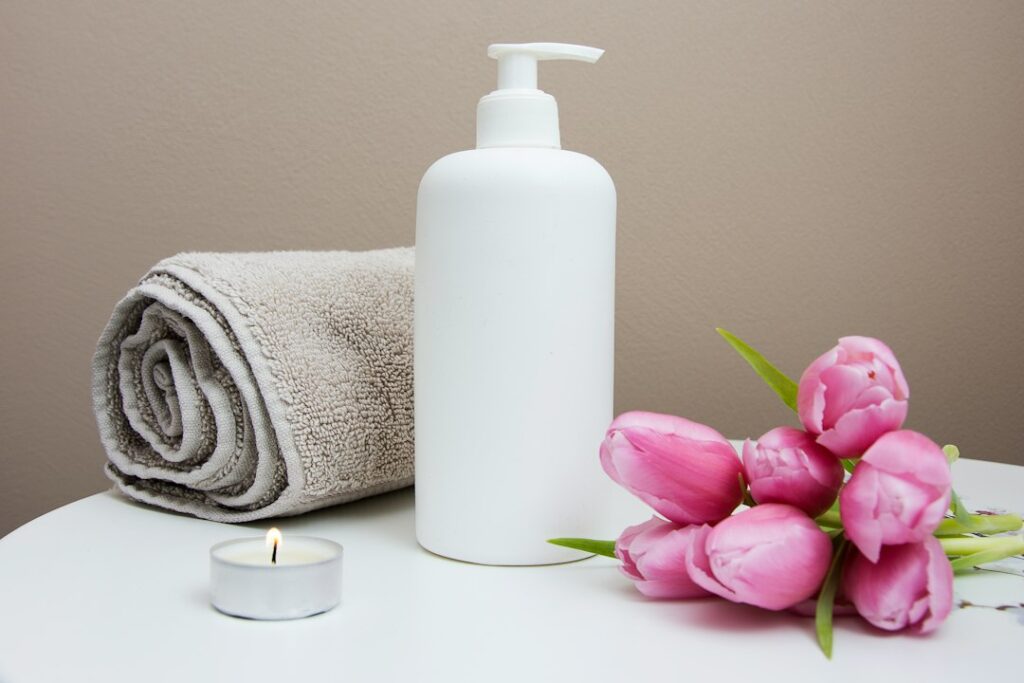
Decant your daily products into a few matching amber or frosted-glass pump bottles, which cost about $12 to $20 for a set and instantly upgrade the look. Hide everything else in baskets or a small cabinet. Then commit to a calm, cohesive color palette, soft whites, warm grays, sage green, or sandy beige. If your walls are a dated or jarring color, a single gallon of paint at $30 to $50 is the highest-impact dollar you will spend in the entire room.
Upgrade the Shower Experience
The shower is the heart of a home spa, and you can transform it without touching the plumbing behind the wall. A rainfall showerhead is the classic move, delivering that soft, drenching flow that store showers use to sell relaxation. Quality models that thread onto your existing arm run $30 to $80, and installation takes ten minutes with plumber’s tape and a wrench.
Add a handheld sprayer on a slide bar for flexibility, and consider a shower filter, around $25 to $40, if you have hard water that leaves your skin dry. Small extras multiply the effect:
- A eucalyptus or fresh herb bundle tied to the showerhead releases scent in the steam.
- A slim teak or bamboo bath mat and corner shelf add natural texture for $20 to $50.
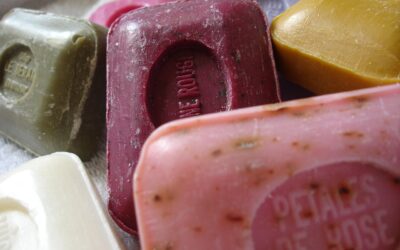
- A bar of quality soap in a stone dish beats a plastic bottle for the spa feel.
Get the Lighting Right
Harsh, cool-white overhead light is the single most spa-destroying feature in the average bathroom. Spas use warm, layered, dimmable lighting, and you can replicate it cheaply. Swap your bulbs for warm-white LEDs in the 2700K to 3000K range, which cast a soft golden glow rather than a clinical blue-white. A four-pack costs about $10 to $15.
If your fixture is on a standard switch, a plug-in or in-wall dimmer, roughly $15 to $25, lets you dial the mood down for a bath. Layer in a second light source, a small lamp on the vanity or a string of warm LED candles, so the light does not all come from a single glaring point above the mirror. Real or battery-operated candles at the tub edge finish the effect for a few dollars.
Invest in Plush Towels and Soft Textures
Texture is what your skin registers first, and it is where cheap bathrooms give themselves away. Thin, scratchy towels feel like a gym locker room. Splurging here delivers outsized returns. Look for towels rated 600 GSM or higher, which feel dense and absorbent; a matching set of bath towels, hand towels, and a bath mat in one calming color runs about $40 to $80.
Stick to a single color family so the stacked towels read as a curated display rather than a jumble. Roll a few and tuck them in a basket or on a wall ledge the way spas do. Add a plush cotton or memory-foam bath mat underfoot, and if you have room, a small wooden stool doubles as a table for a cup of tea or a folded towel. These soft-goods swaps cost little and are the details guests actually notice.
Bring in Nature and Scent
Spas lean heavily on natural elements because greenery and organic materials read as calm. You do not need a landscaper. A single low-light plant, snake plant, pothos, or a small fern, thrives in bathroom humidity and costs $10 to $25. Even a eucalyptus stem in a simple vase adds life to the space.
Scent is the fastest shortcut to relaxation because smell ties directly to memory and mood. A reed diffuser or a small essential-oil diffuser, $15 to $35, with lavender, eucalyptus, or cedar keeps the room smelling like an escape rather than a cleaning closet. Keep the fragrance subtle; a spa whispers, it does not shout. Natural materials like the teak mat, a stone soap dish, and a woven basket reinforce the earthy, grounded feeling.
Small Fixture Swaps With Big Impact
A handful of quick hardware updates make an older bathroom feel intentional and current. None require a plumber, and most take a screwdriver and an afternoon:
- Faucet: A single-hole matte black or brushed brass faucet, $60 to $120, modernizes the vanity instantly.
- Cabinet pulls and towel bars: Coordinating hardware in one finish costs $30 to $70 and ties the room together.
- Mirror: Replacing a builder-grade frameless mirror with a framed or round one, $40 to $150, is a dramatic focal-point upgrade.
- New shower curtain and liner: A hotel-style white waffle-weave curtain reads as luxury for under $30.
Refresh Surfaces Without Retiling
You do not need to demo tile to make dated surfaces feel fresh, and demolition is exactly where bathroom budgets explode. Grubby, discolored grout is often the culprit behind a tired-looking bathroom, and a grout pen, about $8, or a weekend spent regrouting for under $30 makes old tile look nearly new. For a caulk line that has gone gray or moldy at the tub, stripping it out and running a fresh bead of white silicone costs under $10 and reads as instant cleanliness.
If the tile itself is dated, epoxy tile paint lets you refinish a shower surround or floor for $50 to $100 in materials rather than thousands in replacement. Peel-and-stick tile panels are another low-commitment option for a backsplash behind the vanity. Even a new coat of grout sealer and a deep scrub of the existing surfaces will sharpen the whole room, because in a small bathroom, cleanliness reads as luxury more than any single expensive finish.
Add a Few Resort-Style Details
The finishing touches are what push a nice bathroom into spa territory, and they are almost all inexpensive. A heated towel option feels indulgent; a plug-in towel warmer runs $80 to $150, or a warming towel rack bar is even less. A small wooden bath caddy that stretches across the tub, around $25 to $40, holds a book, a candle, and a drink, turning an ordinary tub into a destination.
Other easy resort cues include a bamboo or teak bath tray, a stack of rolled washcloths in a basket, a wall hook for a plush robe, and a Bluetooth speaker for quiet music. Keep a few of these staged and ready so the room invites you to slow down. None of them cost more than a dinner out, yet together they signal the same intentional comfort a hotel spa spends thousands to create.
Putting It All Together
You do not need to do everything at once. Start with the declutter and paint, then add warm lighting and plush towels, and layer in scent, greenery, and fixture swaps as your budget allows. A committed weekend and a budget of $300 to $600 is enough to turn a tired, cluttered bathroom into a genuinely restful retreat. The secret spas never advertise is that relaxation is built from small, deliberate choices, and every one of them is well within reach without a renovation loan.