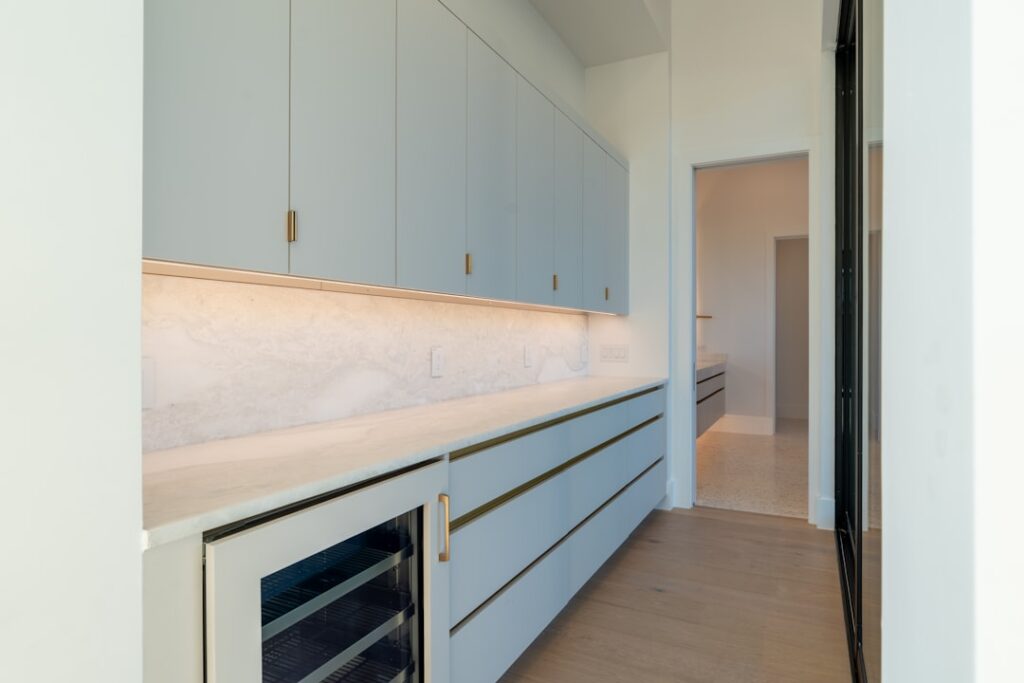
Warm, rich, and full of character, copper is having a moment in kitchens and baths that want to break away from cool chrome and stark black. Copper cabinet hardware—knobs, pulls, and handles in solid or plated copper—adds an inviting glow and even offers natural antimicrobial properties. This guide covers finishes, sizing, patina, care, and how to choose pieces that look right and last.
Part of our Kitchen Remodeling guide — explore the full guide →
- Why Choose Copper Hardware?
- Solid Copper vs. Copper-Plated
- Finish Options: Polished, Brushed, and Patina
- Understanding Patina
- Knobs vs. Pulls in Copper
- Sizing Guidelines
- What Copper Hardware Costs
- Coordinating Copper With Your Kitchen
- Installation Tips
- Cleaning and Caring for Copper
- Common Mistakes to Avoid
- Frequently Asked Questions
- Copper Hardware Placement Guidelines
- Mixing Copper With Other Metals
- Copper in Bathrooms vs. Kitchens
- Restoring and Refreshing Copper
- The Bottom Line
Why Choose Copper Hardware?
Copper brings a warmth that few metals match, pairing beautifully with wood tones, white cabinets, deep greens, and navy. It works across styles—from rustic farmhouse to industrial to warm-modern. Copper is also naturally antimicrobial: studies show its surface kills many bacteria over hours of contact, a subtle bonus on a handle touched dozens of times a day. And because copper develops a living patina, hardware can evolve gracefully over time rather than simply wearing out.
Solid Copper vs. Copper-Plated
Not all “copper” hardware is the same:
- Solid copper: made from the metal throughout. It’s heavier, more durable, and its color goes all the way through, so scratches don’t reveal a different base metal. It’s also pricier.
- Copper-plated: a thin copper layer over a base metal like zinc or steel. More affordable, but the plating can wear through at high-touch points over years.
For pieces you’ll touch constantly, solid copper or thick PVD copper finishes hold up best.
Finish Options: Polished, Brushed, and Patina
Copper hardware comes in several looks:
- Polished copper: bright, shiny, and bold—shows fingerprints and needs polishing to stay mirror-like.
- Brushed/satin copper: a softer matte sheen that hides prints and daily wear.
- Antique or aged copper: a deliberately darkened, weathered finish with rustic depth.
- Living finish (unlacquered): raw copper that patinas naturally over time as it’s handled.
Understanding Patina
Copper is a “living” metal—exposed to air, moisture, and oils from your hands, it darkens and develops a patina ranging from warm brown to green-blue verdigris. Some homeowners love this evolving character; others want to keep the bright look. The key distinction is lacquer:
- Lacquered/sealed copper keeps its original color and resists patina.
- Unlacquered (living) copper ages and darkens naturally, and can be polished back to bright if desired.
Decide which experience you want before buying, since it changes the whole ownership.
Knobs vs. Pulls in Copper
The usual conventions apply: knobs on doors, pulls on drawers, with plenty of room to mix. Copper cup pulls look especially handsome on drawers, echoing traditional and farmhouse styles, while sleek copper bar pulls suit modern kitchens. Round copper knobs on upper doors paired with cup pulls below is a classic, cohesive combination.
Sizing Guidelines
Proportion matters regardless of finish:
- Knobs: 1 to 1.5 inches in diameter.
- Door pulls: 3 to 4 inches center-to-center.
- Drawer pulls: about one-third the drawer width—4 to 5 inches for standard drawers, 8 to 12 inches for wide pot drawers.
Always confirm the center-to-center measurement (distance between mounting holes) before ordering to match existing drilled holes.
What Copper Hardware Costs
Copper sits at the mid-to-premium end of decorative hardware. Expect:
- Copper-plated knobs: $6 to $15 each.
- Solid copper knobs and small pulls: $15 to $40 each.
- Large solid-copper appliance and pot-drawer pulls: $40 to $90-plus each.
A typical kitchen using 25 to 40 pieces might run $400 to $1,500 depending on solid vs. plated and piece size.
Coordinating Copper With Your Kitchen
Copper pairs naturally with warm palettes—wood cabinets, cream and white paint, sage or forest green, and deep navy. It also complements copper or matte-black faucets and warm-toned pendant lighting. Avoid clashing with strongly cool-toned chrome fixtures; if your faucet is chrome, a mixed-metal look can still work if it’s intentional and balanced. Copper against dark cabinets creates a striking, jewel-like contrast.
Installation Tips
- Use a drilling jig to mark consistent hole placement across all doors and drawers.
- Drill from the front with a backer board behind to prevent splintering.
- Choose the correct machine-screw length for your door and drawer-front thickness; thick Shaker fronts often need 1.25-inch or longer screws.
- Hand-tighten to avoid over-torquing and marring the soft copper finish.
Cleaning and Caring for Copper
Care depends on the finish. For lacquered copper, simply wipe with a soft cloth and mild soap—never use abrasives or acidic cleaners that can damage the seal. For unlacquered living copper, embrace the patina, or restore shine with a copper polish or a homemade paste of salt and lemon or vinegar, rinsed and dried thoroughly. To slow patina on raw copper, apply a thin coat of carnauba wax or clear lacquer periodically.
Common Mistakes to Avoid
- Assuming all copper hardware patinas—lacquered pieces stay bright, so buy the right type for your goal.
- Using abrasive pads or acidic cleaners on lacquered finishes, which strips the seal.
- Ordering pulls without checking center-to-center spacing.
- Expecting cheap plated copper to survive years of heavy handling without wearing through.
- Over-tightening screws and denting the soft metal.
Frequently Asked Questions
Will copper hardware turn green? Only unlacquered copper patinas, and full verdigris takes years indoors; lacquered pieces keep their color.
Is copper hardware durable? Solid copper is very durable and its color runs throughout; plated copper can wear at touch points over time.
Does it really fight germs? Copper has documented antimicrobial properties, killing many bacteria on contact over hours—a modest but real benefit.
Copper Hardware Placement Guidelines
Because copper draws the eye, placement precision matters even more than with neutral finishes. Use a drilling jig to keep every knob and pull perfectly aligned. Standard placement puts knobs about 2.5 to 3 inches from the corner of doors—bottom corner on uppers, top corner on lowers—and pulls centered on drawer fronts. On a run of copper cup pulls, even a slight variation in height is noticeable because the warm metal reflects light. Take your time marking, and dry-fit the whole set before drilling to confirm the spacing looks balanced across the kitchen.
Mixing Copper With Other Metals
A designed mixed-metal look can be stunning, but it needs intention. Copper pairs naturally with other warm metals like brass and bronze, and with matte black for contrast. If your faucet is a cooler finish like stainless or chrome, limit copper to the cabinet hardware and repeat it elsewhere—say, in pendant lights or a pot rack—so it reads as a deliberate accent rather than a mismatch. The rule of thumb is to repeat any metal at least twice in a space so it looks planned, and to let one finish dominate while others accent.
Copper in Bathrooms vs. Kitchens
Copper works beautifully in both rooms, but the environments differ. Bathrooms have higher, more constant humidity, which accelerates patina on unlacquered copper—lovely if you want that aged look, but something to plan for if you don’t. In kitchens, copper hardware near the range and sink encounters grease, food acids, and frequent cleaning. In both cases, a quality lacquered or PVD finish resists these forces best if you want to preserve the original color, while living-finish fans will enjoy watching the metal develop character faster in the bath.
Restoring and Refreshing Copper
One of copper’s charms is renewability. If lacquered hardware’s seal eventually wears and the metal begins to spot, you can strip the old lacquer, polish the copper back to bright with a dedicated copper cleaner or a salt-and-vinegar paste, and reseal with fresh lacquer or wax. Living-finish copper that has gone darker than you like can be polished back to a warm glow anytime. This ability to refresh rather than replace means a good set of solid copper hardware can look its best for the entire life of your cabinets.
The Bottom Line
Warm, characterful, and even antimicrobial, copper cabinet hardware is a distinctive way to add personality to a kitchen or bath. Decide whether you want a bright lacquered finish or an evolving living patina, choose solid copper for high-touch pieces, size knobs and pulls in proportion, and care for them according to their finish—and your copper hardware will glow warmly for many years.