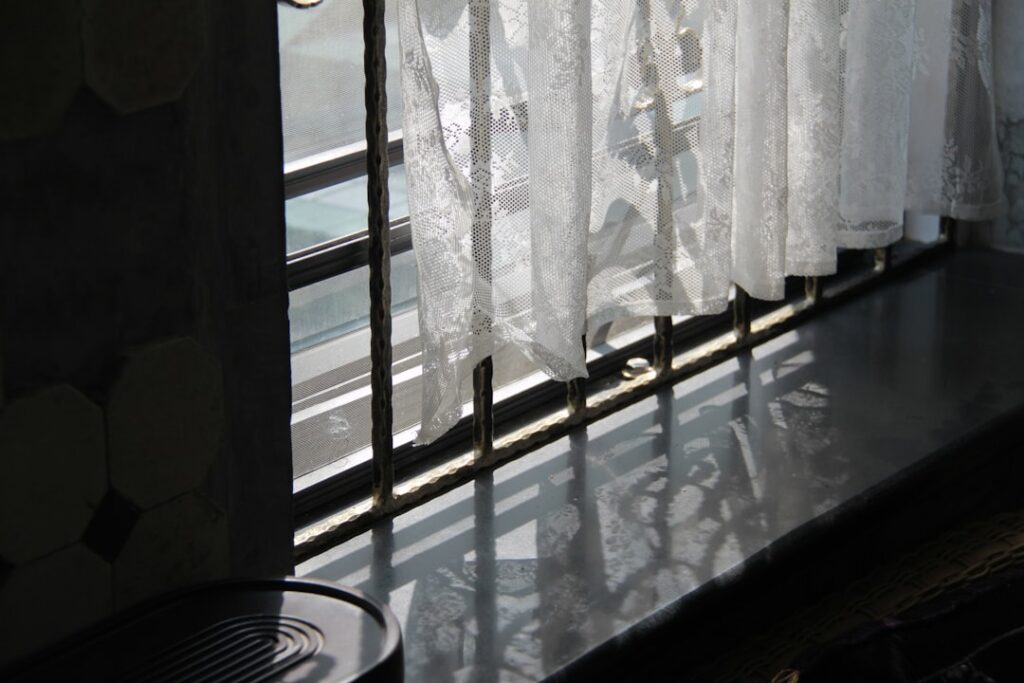
Cafe curtain rods are the small, slim rods used to hang a half-height curtain across the lower or middle portion of a window — the classic look you see in kitchens, bathrooms, and cozy breakfast nooks. They deliver privacy where you need it while keeping the top of the window open for daylight. If you want a quick, low-commitment window treatment, cafe curtain rods are one of the easiest upgrades you can make.
- What Makes a Cafe Rod Different
- Where Cafe Curtains Work Best
- Three Main Mounting Styles
- Measuring for Cafe Rods
- Installing a Tension Cafe Rod
- Installing a Fixed Sash Rod
- Best Curtains for Cafe Rods
- Styling Ideas
- Choosing the Right Rod Finish and Diameter
- Two-Tier Cafe Curtain Setups
- Fitting Cafe Rods in Bay and Divided Windows
- Common Mistakes
- Bottom Line
What Makes a Cafe Rod Different
A cafe rod is defined by where and how it mounts, not just its size. Instead of spanning the full window from wall to wall above the frame, it mounts inside the window recess (or on the frame itself), usually at the midpoint or lower third of the glass. The curtain hangs only from that point down, covering the bottom sash for privacy while leaving the upper glass clear.
Because they carry lightweight, short curtains over a narrow span, cafe rods are typically thin — often 1/2 in to 3/4 in in diameter — and short, in the 18 in to 48 in range, with adjustable versions extending further.
Where Cafe Curtains Work Best
- Kitchens — privacy over a sink window without blocking daylight for plants or dishwashing.
- Bathrooms — screen the lower window while letting light flood the top.
- Street-facing rooms — block sightlines from the sidewalk while keeping a bright, open feel.
- Dining nooks and bay windows — a charming, informal touch that suits cottage and farmhouse styles.
Three Main Mounting Styles
Cafe curtain rods come in three fundamental types, and the right one depends on whether you can drill into the frame.
- Tension rods. A spring-loaded rod that wedges inside the window recess with no screws, no drilling, and no visible brackets. Ideal for renters and for painted or tiled frames you don’t want to pierce. Best for lightweight curtains up to a few pounds.
- Fixed sash rods. Small brackets screw into the window frame or wall, holding a slim rod firmly. These handle slightly heavier fabric and won’t slip like a tension rod can, but they require drilling.
- Wraparound and decorative rods. Slim rods with small finials and low-profile brackets that mount on the frame face for a more finished, styled look.
Measuring for Cafe Rods
Cafe curtains usually mount inside the window recess, so measurement is about the opening, not the wall.
- Measure the inside width of the window recess at the height where the rod will sit. Windows are rarely perfectly square, so measure top, middle, and bottom and use the smallest number.
- Choose rod height. The traditional cafe look places the rod at the midpoint of the window or at the meeting rail where the two sashes overlap.
- For tension rods, pick a size range that fits your inside width with a few inches of compression to spare so the spring grips firmly.
- For fixed rods, the rod length equals the recess width, with brackets mounting to the side jambs or just outside the frame.
Installing a Tension Cafe Rod
This is the fastest window treatment there is — no tools required.
- Twist the two halves of the rod to roughly the recess width plus a little extra.
- Slide your curtain onto the rod first (rod pockets and clip rings both work).
- Position the rod at the desired height inside the recess, compress it, and let the spring expand into both side jambs.
- Check that it sits level and grips firmly — a well-set tension rod won’t budge with a gentle tug.
If a tension rod keeps slipping, the recess is too smooth or too wide for the spring. Add a small rubber tension-rod cup on each end for grip, or switch to a fixed sash rod.
Installing a Fixed Sash Rod
- Hold a bracket at the chosen height on one side jamb and mark the screw holes with a pencil.
- Use a small level to mark the matching bracket at the same height on the opposite side.
- Pre-drill pilot holes — especially in hardwood or a metal-clad frame — then screw the brackets in. Small anchors help in hollow vinyl frames.
- Thread the curtain onto the rod, seat the rod in the brackets, and secure any set screws.
Because sash rods carry so little weight, you rarely need heavy anchors, but do avoid overtightening screws in soft pine or hollow vinyl, which can strip.
Best Curtains for Cafe Rods
Keep it light. Cafe rods are slim and, in tension form, rely on friction, so heavy blackout panels are a poor match. Good choices include:
- Sheer or semi-sheer cotton and linen — soft privacy with daylight glowing through.
- Lightweight printed cotton — the classic gingham or floral kitchen look.
- Rod-pocket panels that gather nicely on a thin rod, or clip-ring panels for a tailored hang.
Aim for fabric about 1.5 to 2 times the window width for gentle fullness. Since the curtain is short, you’ll use far less material than a full-length panel, making cafe curtains an inexpensive way to refresh a room.
Styling Ideas
- Pair a lower cafe curtain with a matching valance at the top for a coordinated two-tier look that still leaves the middle glass open.
- Use clip rings so you can swap seasonal fabrics in seconds.
- In a bay or over a deep sink, run separate short tension rods across each pane for a tidy, custom fit.
Choosing the Right Rod Finish and Diameter
Because cafe rods are slim and short, diameter is more about looks than structure. Common sizes run 3/8 in to 5/8 in, thin enough to feel delicate and unobtrusive. Finishes track kitchen and bath fixtures — brushed nickel, matte black, oil-rubbed bronze, and brass all coordinate with faucets and cabinet hardware. Small finials like simple balls or caps keep the look tidy in a compact opening; skip oversized decorative ends that would overwhelm a short rod. If your window sits in a moisture-prone bathroom, choose a rust-resistant metal or a coated rod so it doesn’t corrode over time.
Two-Tier Cafe Curtain Setups
The classic cafe look is actually a two-tier system: a lower cafe curtain for privacy and an upper valance or short top curtain for softening the frame, with the middle glass left open for light. To build it, mount one rod at the sill-to-midpoint line and a second slim rod at the top of the recess. Match the fabric or use complementary patterns — a solid bottom with a printed top, for instance. This arrangement is especially charming over a kitchen sink, where you get privacy from the street below while sunlight still pours through the open center band.
Fitting Cafe Rods in Bay and Divided Windows
Bay windows and windows with multiple panes call for a slightly different approach. Rather than forcing one long rod around angles, run a separate short tension or sash rod across each individual pane or bay section. This keeps each curtain flat and tailored to its opening and lets you tilt privacy pane by pane — closing the street-facing panes while leaving side panes open. For divided-light or grid windows, mounting the rod at the horizontal muntin line hides the hardware against the existing frame lines for a clean, built-in appearance.
Common Mistakes
- Buying a tension rod whose range is too close to the exact recess width — you need compression room to grip.
- Hanging heavy fabric that drags a tension rod down within days.
- Mounting the rod too high, which defeats the open-top-light purpose of a cafe curtain.
- Skipping the level on a fixed rod, leaving the short curtain visibly tilted in a small opening.
Bottom Line
Cafe curtain rods are the simplest path to charming, functional half-window privacy. Pick a tension rod for a no-drill install in rentals and delicate frames, or a fixed sash rod when you want a rock-solid mount for slightly heavier fabric. Measure the recess at its narrowest point, keep the curtains light, and you’ll have a bright, private window in under ten minutes.