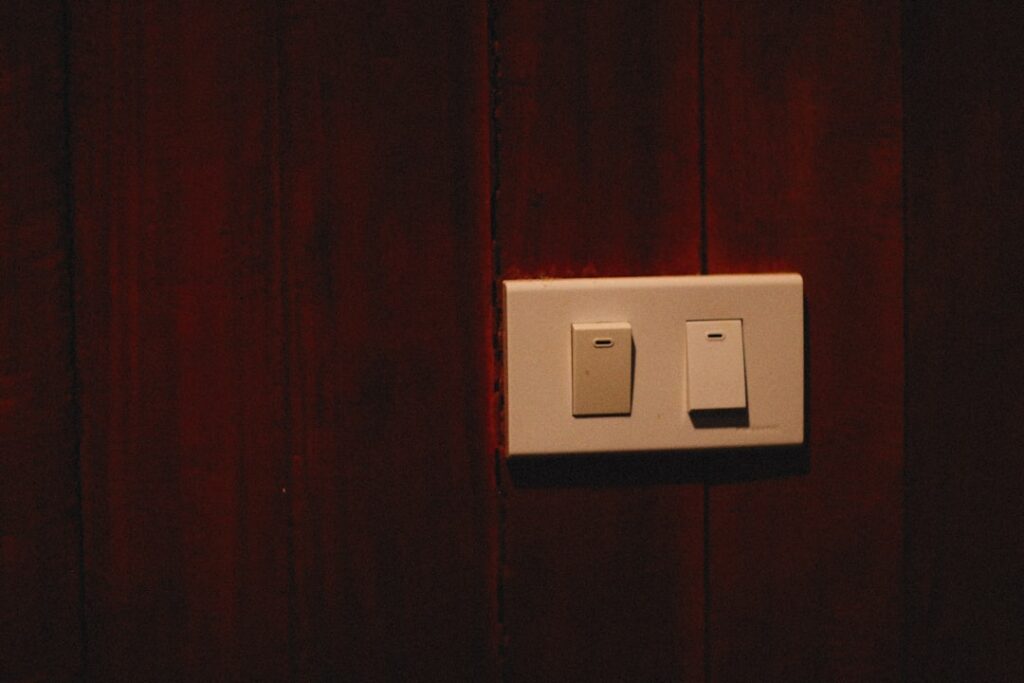
A double light switch lets you control two separate lights or fixtures from a single wall location, packing two switches into the space of one. Also called a double switch, dual switch, or stacked switch, it is a common and space-saving solution in kitchens, bathrooms, hallways, and rooms where a light and an exhaust fan or two different light zones share one wall box. Understanding how it wires up demystifies a project many homeowners assume requires an electrician.
This guide explains what a double switch is, the types available, how the wiring works, a step-by-step installation, common problems, and when to call a pro. Electrical work carries real risk, so this is background knowledge to work safely, not a license to skip permits or ignore local code.
What a Double Light Switch Is
A double switch is two individual switches built into one device that fits a single-gang electrical box and occupies one slot on a standard cover plate. Each half operates independently, so one toggle might control the overhead lights while the other runs the vanity lights or an exhaust fan. This differs from a double-gang box, which holds two separate switch devices side by side. The double switch is the answer when you need two controls but have room for only one device, a frequent situation in older homes with limited box space.
Common Uses Around the Home
Double switches show up wherever two things need controlling from one spot.
- Bathrooms: One switch for the light, one for the exhaust fan.
- Kitchens: Separate control of overhead cans and under-cabinet or sink lighting.
- Hallways and stairs: Two different fixtures on one plate.
- Garages and basements: An interior light and an exterior porch or floodlight together.
Types of Double Switches
There are a few varieties to match your needs. A standard single-pole double switch is the basic type, where each half turns its circuit on or off from one location. A combination device pairs a switch with an outlet or a switch with a pilot light. There are also combination units that include a switch and a dimmer. If either light needs to be controlled from two locations, such as both ends of a hallway, you need three-way switches instead, which is a different and more complex wiring scheme than a simple double switch.
How the Wiring Works
The key to a double switch is understanding power sharing. A single-pole double switch has a line terminal (or a shared jumper) that feeds power to both switch halves, plus two load terminals, one for each light. Incoming hot power connects to the common feed, and each switched hot wire runs out to its own fixture. The neutral wires from the fixtures and the source are joined together in the box and do not connect to a standard switch, and the ground wires bond to the box and the device’s green screw.
Some double switches have a metal tab or shared brass link that automatically feeds both halves from one hot wire, which is the usual residential setup. Others let you break that tab to feed each half from a different circuit, an advanced configuration used when the two lights are on separate breakers.
Installing a Double Light Switch
Replacing a single switch or an old double switch is a moderate DIY task. Safety first: electricity can kill, so treat every step seriously.
- Turn off the breaker for the circuit and confirm the wires are dead with a non-contact voltage tester before touching anything.
- Remove the cover plate and unscrew the old switch, noting or photographing which wire lands on which terminal.
- Identify the incoming hot (line) wire, the two switched-hot (load) wires to each fixture, the neutrals, and the ground.
- Connect the hot feed to the double switch’s common or line terminal, and each load wire to its own terminal.
- Join the neutrals with a wire nut, connect the ground to the green screw, and tuck everything neatly into the box.
- Screw in the switch, install the plate, restore power, and test each half.
If you open the box and find a tangle of wires you cannot clearly identify, especially in older homes or where three-way switching or shared neutrals are involved, stop and call a licensed electrician.
Common Problems and Fixes
A few issues come up repeatedly with double switches. If only one half works, the load wire on the dead half is likely loose or on the wrong terminal. If both lights turn on and off together when they should be independent, the shared tab that should have been broken is still connecting the halves, or the two loads are wired to one terminal. If a breaker trips when you flip a switch, there is likely a short or a crossed hot and neutral, and you should shut off power and recheck the connections. A switch that buzzes or feels warm signals a loose connection or an overloaded switch and needs immediate attention.
Load Ratings and Safety
Every switch has an amperage and voltage rating, commonly 15 amps at 120 volts for residential use. The combined load of both fixtures on a double switch must stay within that rating and within the circuit breaker’s capacity. Controlling large loads like multiple high-wattage fixtures or a motor may require a heavier-rated device. Always match the switch rating to the circuit, use the correct wire gauge, and follow the National Electrical Code and any stricter local rules. When a combination switch includes an outlet, that receptacle adds to the circuit load too.
What It Costs
The device itself is cheap, typically $5 to $15 for a standard double switch and $15 to $30 for a combination or dimmer version. A DIY swap costs only the part and an hour of your time. Hiring an electrician for a straightforward replacement usually runs $100 to $250 with a minimum service charge, more if new wiring or a box upgrade is needed. Given the low part cost, the main decision is whether you are comfortable and qualified to do the wiring safely.
Double Switch vs. Double-Gang and Three-Way
Homeowners often confuse a double switch with related devices, so it helps to draw the lines clearly. A double switch, the subject here, packs two independent single-pole switches into one device that fills a single-gang box, controlling two things from one spot with one cover plate. A double-gang setup is different: it is two separate switch devices installed side by side in a wider two-gang box, used when there is room and you simply want two full-size switches. A three-way switch is different again: it is used in pairs to control one light from two locations, such as the top and bottom of a staircase, and it uses a special traveler-wire scheme.
Knowing which you actually need prevents buying the wrong device. If your goal is controlling two lights from one location in a tight single-gang box, the double switch is the answer. If you want to control one light from two locations, you need three-way switches, not a double switch. And if you have plenty of box space, two standard switches in a double-gang box may be simpler to wire than a compact double switch.
Upgrading to Dimmers and Smart Controls
Once you understand the basic double switch, you may want more than simple on-off control. Combination devices pair a switch with a dimmer, letting one half dim a light while the other simply toggles a fan or second fixture. Make sure any dimmer is rated for the bulb type it controls, since LED-compatible dimmers are required to avoid flicker and buzzing with modern bulbs.
Smart switches add another layer, allowing schedules, remote control, and voice assistants. Many smart switches require a neutral wire in the box, which older homes sometimes lack, so check for a bundle of white neutrals before buying. Fitting two smart controls where a double switch sat can be tricky because smart switches are bulkier, and a crowded box may not have room. In tight boxes, a smart relay module wired behind a standard switch is sometimes the better path. Plan the upgrade around your box capacity and whether a neutral is present.
Working Safely
A double light switch is an efficient way to control two fixtures from one tidy location, and swapping one is within reach of a careful DIYer who respects electrical safety. Always kill the breaker, verify dead with a tester, photograph the original wiring, and match terminals correctly. When the wiring is unclear or involves shared neutrals or three-way circuits, hire a licensed electrician. Done right, a double switch gives you clean, independent control that makes everyday rooms more convenient.