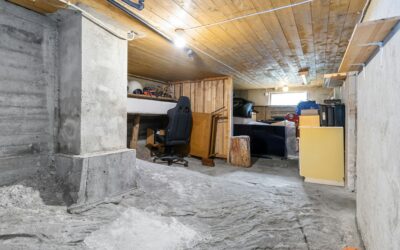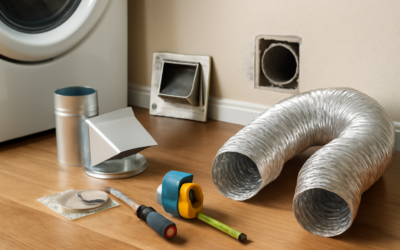
When your dryer sits on a main level or over a basement, routing the exhaust downward is often the shortest, cleanest path outside. But a dryer vent through floor and into a crawlspace or basement carries real fire and moisture risks if it is done wrong. Lint is highly flammable, and a poorly designed run traps it, restricts airflow, and can dump warm humid air where it causes rot and mold. Done correctly, though, a downward vent is safe, efficient, and easy to service. Here is how to get it right.
Why Rigid Metal Is the Only Right Choice
The single most important rule is the duct material. Use rigid metal duct, typically 4-inch galvanized or aluminum, for the run through the floor and crawlspace. Never use the white vinyl or thin foil accordion hose for concealed runs. Those flexible products sag, collect lint in their ridges, crush easily, and are a documented fire hazard.
Rigid metal has smooth interior walls that let lint pass through instead of catching, and it cannot melt or ignite the way plastic can. Where you need a short flexible connection right at the dryer, use semi-rigid aluminum, never foil or vinyl. This is not an area to cut corners.
Length and Bend Limits Matter
Airflow is everything with a dryer. A restricted dryer vent through floor makes the machine run hot, dry slowly, and pack lint into the duct. Codes and manufacturers set clear limits you should respect:
- Keep total duct length within the manufacturer’s spec, commonly a 35-foot maximum for the smooth rigid run.
- Subtract for every elbow: each 90-degree bend counts as roughly 5 equivalent feet, and each 45-degree bend about 2.5 feet.
- Minimize turns. A run with three or four sharp elbows can exceed the limit even if the straight distance is short.
- Check your dryer’s manual, because high-efficiency and gas models often have specific maximums.
Fewer bends and shorter runs mean faster drying, lower energy bills, and dramatically less lint accumulation.
Slope and Drainage Considerations
Warm, moist air travels down the duct and can condense, especially in a cold crawlspace. To keep water from pooling inside the metal, pitch the horizontal portions with a slight downward slope toward the exterior termination so any condensation drains outside rather than sitting in a low spot. Avoid dips and belly sags where water and lint collect together.
The vent must terminate outdoors through a proper wall or rim-joist hood with a backdraft damper, never into the crawlspace, basement, or under the house. Venting into an enclosed space pumps gallons of moisture into your foundation area and invites mold, wood rot, and pest problems.
Lint and Fire Safety
Clothes dryers are a leading cause of house fires, and clogged vents are the usual culprit. A downward run through the floor demands the same vigilance as any other, plus a little extra because you cannot see it. Protect yourself with these habits:
- Clean the lint trap before every load, without exception.
- Inspect and clean the full duct run at least once a year, more often for large households.
- Use foil tape on joints, never sheet-metal screws that project inward and snag lint.
- Watch for warning signs: long drying times, a hot dryer exterior, or a musty smell.
Screws inside the duct are a classic mistake. Their protruding tips catch lint and build a clog from the inside out. Tape the seams instead so the interior stays smooth.
Build in Cleaning Access
Because the duct disappears through the floor, plan for how you will clean it before you close everything up. Position elbows and connections so a rotary brush kit can reach the run from the dryer end or from the crawlspace. Where the vent turns beneath the floor, an accessible cleanout or a takedown joint secured with foil tape lets you open the run for servicing without tearing anything apart.
A long flexible dryer-vent brush on a drill, fed from both the interior and exterior ends, clears most residential runs. If your layout has many turns or you cannot reach the whole length, hire a professional duct cleaner annually.
Sealing the Floor Penetration
Cutting a hole through the floor creates a path for conditioned air, pests, and moisture if you leave it raw. Once the rigid duct passes through the subfloor, seal the gap around it properly. Use a fire-rated or high-temperature sealant appropriate for dryer exhaust, not ordinary spray foam that can degrade near warm duct, and fit an escutcheon or floor plate for a clean, finished look inside.
In the crawlspace, support the duct every few feet with metal strapping so it cannot sag into a low belly where lint and condensation collect. Keep it away from insulation that could trap heat, and make sure the run stays above any standing-water areas. A well-supported, sealed penetration keeps critters out of your home and keeps the duct running at its designed slope.
Gas Dryers Add Extra Stakes
If your dryer runs on gas, the venting job carries higher stakes because the exhaust also carries combustion byproducts. A blocked or leaking vent on a gas dryer can allow carbon monoxide to accumulate, which is a serious health hazard, not just a lint concern. Never vent a gas dryer into a crawlspace or basement under any circumstances.
For gas models, follow the manufacturer’s maximum duct length precisely, keep joints sealed with foil tape, and consider a carbon monoxide detector in the laundry area. When in doubt about clearances, combustion air, or code compliance for a gas appliance, have a licensed technician verify the installation.
When to Call a Pro
Watch for the warning signs of a failing downward vent, since the concealed run means you cannot simply see a problem. Clothes that come out still damp after a full cycle, a dryer cabinet that feels unusually hot, a burning or musty smell, and lint appearing around the vent hood outside all point to a restricted or clogged duct. Address these promptly rather than running load after load, because a packed duct is both an energy drain and a genuine fire risk.
Cutting a hole through a floor and framing, sealing a crawlspace penetration, and hitting the length and slope targets are within reach for a confident DIYer. But if you have a gas dryer, a long complex path, or any doubt about clearances and code, bring in a licensed installer. A correctly built dryer vent through the floor is safe for decades. A rushed one is a slow-drying, lint-packed fire risk hidden where you will never notice until it is too late.
Prefer to explore on your own?
See how new flooring looks in your actual room in seconds — free, no signup.
Try the free Floor Studio →