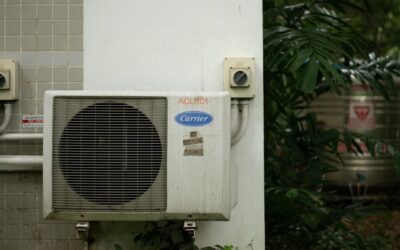
Adding central air to a house that never had ductwork can cost $10,000 or more just to install the ducts, which is why so many homeowners never bother cooling that hot upstairs bedroom, converted garage, or new addition. A ductless wall mounted air conditioner, also called a mini split, sidesteps that entire problem by mounting a sleek indoor unit high on the wall and connecting it to an outdoor compressor through a small 3-inch hole, no ducts required. The result is quiet, efficient, room-by-room cooling that installs in a day and lets you condition exactly the spaces you use.
How a Ductless System Works
The system splits into two parts, which is where the name mini split comes from. An outdoor condenser unit houses the compressor, and one or more indoor air handlers mount on interior walls. Between them runs a slim conduit carrying refrigerant lines, a power cable, and a condensate drain, all passing through a small hole in the wall.
The indoor unit pulls warm room air across a cold evaporator coil, cooling and dehumidifying it, then blows it back into the room. Refrigerant carries the absorbed heat outside where the condenser releases it. Because there are no ducts, you avoid the 20 to 30 percent energy loss that leaky ductwork typically causes, making the system inherently more efficient. That duct loss is not a minor detail. In a conventional central system, a significant share of the cooled air you pay for leaks into attics and crawlspaces through gaps in the ductwork before it ever reaches a room. A ductless system delivers conditioned air directly into the space, so nearly everything you pay to cool actually cools you.
Single-Zone vs Multi-Zone
How many rooms you want to cool determines the configuration.
- Single-zone: One outdoor unit paired with one indoor head, perfect for a single room, addition, or garage. The simplest and cheapest option.
- Multi-zone: One outdoor condenser connected to two to five indoor heads, each controlled independently. Ideal for cooling several rooms while running just one outdoor unit.
Multi-zone systems let each room set its own temperature, so you are not paying to cool empty spaces. A guest room can stay off until needed while the living room runs, a flexibility central air cannot match.
Sizing: Getting the BTUs Right
Correct sizing is the single most important decision, and bigger is not better. Air conditioners are rated in BTUs, and an oversized unit short-cycles, turning on and off rapidly without properly dehumidifying, while an undersized one runs constantly and never keeps up.
A rough guideline is 20 BTUs per square foot, so a 400-square-foot room needs roughly an 8,000 to 9,000 BTU unit, though ceiling height, sun exposure, insulation, and climate all adjust that figure. Common residential sizes run from 9,000 BTU for a bedroom up to 24,000 BTU or more for a large open living area. When in doubt, have an HVAC pro run a Manual J load calculation for an accurate number.
Efficiency and Operating Costs
Ductless systems are among the most efficient cooling options available, and the ratings tell the story. Look at SEER2 for cooling efficiency, where quality mini splits reach 18 to 30-plus, far above the 13 to 16 of older central systems. Higher SEER2 means lower electric bills.
Inverter-driven compressors are the reason. Instead of cycling fully on and off, an inverter varies compressor speed to match the exact cooling demand, running steadily at low power rather than blasting and stopping. That eliminates the energy spikes of conventional units and holds room temperature within a degree or two, using less electricity for more comfort.
Cost Breakdown
Budget depends on capacity, zones, and whether you hire out the install. Here is what to expect:
- Single-zone system: $1,500 to $4,000 installed for a typical room.
- Multi-zone system: $4,000 to $10,000 installed depending on the number of heads.
- Equipment only: A single-zone 12,000 BTU unit runs $700 to $2,000 for the hardware.
- Professional install: Typically $500 to $2,000 in labor, since refrigerant lines require proper handling.
Federal and utility rebates for high-efficiency heat pump models can offset a meaningful share of the cost, so check current incentives before buying.
Cooling and Heating in One
Most ductless wall units are actually heat pumps, meaning they both cool and heat. In heating mode the refrigerant cycle reverses, pulling heat from outdoor air, even in cold weather, and delivering it inside. Modern cold-climate models keep producing usable heat down to 5°F or even lower.
That dual function makes a ductless system a true year-round solution, replacing both a window AC in summer and a space heater in winter for that room. For additions, sunrooms, and finished basements without existing HVAC, one wall unit handles both seasons efficiently.
Installation and Maintenance
While handy owners can install DIY-ready kits with pre-charged lines, most systems require a licensed technician to handle refrigerant, evacuate the lines, and ensure a leak-free connection. A typical single-zone install takes a professional a half to full day.
Ongoing Maintenance
Maintenance is minimal but matters. Clean or rinse the indoor unit’s washable filters every month during heavy use to keep airflow and efficiency up. Keep the outdoor condenser clear of leaves and debris, and have a technician check the refrigerant charge and clean the coils every year or two. Neglected filters are the top cause of weak cooling and higher bills.
Placement and Aesthetics
Where you mount the indoor head shapes both comfort and how the room looks, so it deserves thought before installation day. The unit performs best mounted high on the wall, typically 7 feet or more off the floor, where it can throw cool air across the room and let it settle naturally. Avoid placing it directly above a seating area where a cold draft will fall on people, and steer clear of walls facing direct afternoon sun that add heat load.
Think about the line-set path too. The indoor head connects to the outdoor unit through refrigerant lines, and the shorter and straighter that run, the better the efficiency and the tidier the install. Positioning the head on an exterior wall near where the condenser will sit minimizes the line length and the amount of line-hide cover running down your siding.
Some homeowners dislike the look of a wall cassette, and there are alternatives. Ceiling cassettes recess into a drop ceiling for a nearly flush appearance, floor-mounted consoles sit low like a radiator, and slim ducted units hide in a soffit to feed a couple of rooms through short duct runs. Each costs more than a basic wall head, but for a living room or main space where appearance matters, the options are worth discussing with your installer.
Leading Brands and What to Look For
The ductless market is crowded, but a few names dominate on reliability and parts availability. Mitsubishi Electric and Daikin sit at the premium end, prized for quiet operation, deep cold-climate performance, and long compressor warranties, with single-zone systems often running $2,500 to $4,500 installed. Fujitsu and LG occupy a strong mid-tier, while value brands like Mr. Cool, Pioneer, and Senville offer DIY-friendly kits with pre-charged line sets for $900 to $2,000 in equipment, letting handy owners skip much of the labor cost.
Whatever the badge, a few specifications matter more than marketing. Check the SEER2 rating for cooling efficiency and the HSPF2 rating for heating, look for a low-temperature heating spec if you live where winters drop below 20°F, and confirm the compressor carries at least a 5 to 10 year warranty. Also weigh the sound rating, measured in decibels, since a good indoor head runs around 19 to 30 dB on low, quiet enough for a bedroom. Buying an established brand also means replacement boards, sensors, and remotes stay available years down the road, which matters for a system you expect to run for two decades.
Is a Ductless Wall Unit Right for You?
For cooling and heating rooms that lack ductwork, additions, garages, bonus rooms, or a stuffy upstairs, a ductless wall mounted air conditioner is often the smartest, most efficient choice. You get quiet, targeted comfort, SEER2 ratings that slash energy bills, and year-round heating and cooling from a single unit, all without tearing open walls for ducts. Size it correctly with a load calculation, consider a heat pump model for four-season use, keep the filters clean, and a mini split will deliver comfortable, low-cost climate control for 15 to 20 years.