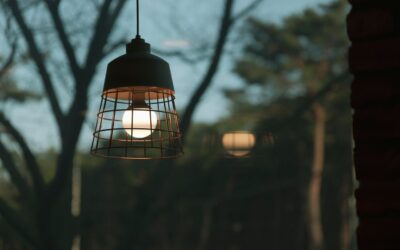
The best outdoor security lighting does two jobs at once: it keeps a low, welcoming glow all night so nobody trips on the steps, then blasts full brightness the instant someone approaches. Dusk to dawn motion sensor outdoor lighting combines a photocell that turns the fixture on automatically at sunset with a motion detector that ramps it to full output when movement is sensed. You get the deterrence of a motion light and the convenience of an all-night fixture without wasting energy running at full blast for twelve hours. Getting the mode and placement right is what separates a useful setup from one that annoys the whole neighborhood.
Part of our Windows & Doors guide — explore the full guide →
- How the Two Sensors Work Together
- The Three Operating Modes
- Adjustable Settings to Dial In
- Placement That Actually Works
- Choosing Brightness and Color
- Hardwired Versus Solar Versus Plug-In
- Installing a Hardwired Fixture
- Troubleshooting Common Problems
- Cost and Value
- Where to Place Lights Around the House
- Energy Savings and Bulb Life
- Being a Good Neighbor With Light
How the Two Sensors Work Together
Understanding the two components clears up most of the confusion. The photocell, or dusk-to-dawn sensor, reads ambient light and switches the fixture on at dark and off at dawn, no timer or switch needed. The passive infrared (PIR) motion sensor detects the heat signature of a person or vehicle moving across its field. Combine them and you get a fixture that behaves intelligently across the whole night, rather than either flooding light constantly or only flashing on with motion.
The Three Operating Modes
Most quality combination fixtures offer selectable modes, usually set with a small dial or switch on the housing. Knowing what each does lets you tune the light to the spot.
- Dusk-to-dawn only: steady light all night at full brightness; best for a main entry you always want lit
- Motion-only: off until motion, then on for a set time; classic security floodlight behavior for side yards
- Dual mode (dim-to-bright): the smart option; low-level glow all night that jumps to full brightness on motion, then dims back down after a delay
Dual mode is the one most people want and often do not realize exists. It uses a fraction of the energy of full-bright all night while still delivering the sudden brightness that startles an intruder and lights your path when you come home.
Adjustable Settings to Dial In
Beyond mode, three settings decide how well the light behaves, and factory defaults are rarely ideal for your specific spot.
- Sensitivity: how much movement triggers full brightness; turn it down if passing cars or swaying branches set it off
- Time delay: how long the light stays bright after motion stops, adjustable from about 30 seconds to 10 minutes
- Range: how far the motion sensor reaches, often 30 to 70 feet; aim it at the walkway, not the street
Placement That Actually Works
Where you mount the fixture matters more than how bright it is. PIR sensors detect motion best when a person moves across the beam rather than straight toward it, so aim the sensor so foot traffic crosses its field sideways. Mount fixtures 6 to 10 feet high; too low and the range is short and easily blocked, too high and the sensor looks over people’s heads. Keep the sensor pointed away from heat sources like HVAC units, pool heaters, and reflective surfaces that can cause false triggers, and away from the street so passing traffic does not light your yard every few seconds.
Choosing Brightness and Color
Brightness is measured in lumens. For a security floodlight you want real output; a pathway sconce needs far less.
- Entry and path sconces: 400 to 800 lumens, plenty for welcoming light
- Security floods: 1,500 to 4,000 lumens to light a driveway or backyard
Color temperature shapes the mood and function. Warm white around 3000K feels residential and inviting for entries; cooler 4000K to 5000K reads as bright, alert security light for floods and back corners. A good split is warm white at the front door and cooler white on the utilitarian side yard. Look for LED fixtures, which now dominate the category, last 25,000-plus hours, and sip power compared to the old halogen floods.
Hardwired Versus Solar Versus Plug-In
You have three ways to power these lights, each with trade-offs.
Hardwired
Wired to your home’s electricity through an existing or new fixture box. The most reliable and brightest, ideal for primary security lights. Requires an electrical box and, for a new location, running cable.
Solar
A built-in panel charges a battery by day and runs the light at night. No wiring, mount anywhere with sun exposure, but output is lower and cold cloudy stretches can leave the battery short. Great for sheds, fences, and far corners with no power nearby. Batteries last two to three years.
Plug-In and Battery
Convenient for a quick add near an outdoor outlet, though cords limit placement and look less finished.
Installing a Hardwired Fixture
Swapping an existing fixture is a solid DIY job; a brand-new location usually means an electrician.
- Shut off the circuit at the breaker and confirm it is dead with a tester
- Remove the old fixture and match the wiring: black to black, white to white, ground to ground
- Seal the base to the wall with the included gasket and a bead of exterior silicone to keep water out of the box
- Mount the fixture, aim the sensor head at the traffic path, and restore power
- Set the mode, then test after dark and fine-tune sensitivity, range, and delay
Confirm any outdoor fixture is damp- or wet-rated for its location, and that the box is weatherproof. Water in an outdoor box is the most common cause of premature failure and nuisance tripping.
Troubleshooting Common Problems
If a light won’t shut off during the day, the photocell is blocked by another light source, such as a nearby lamp shining on it; reposition or shield it. If it flicks on constantly at night, dial down sensitivity or re-aim away from a heat source or busy street. If it never triggers, the range may be too short or the sensor aimed wrong; remember that motion crossing the beam works far better than motion heading straight at it. And if a light stays dead, check the mode switch first, since many arrive set to motion-only and users expect dusk-to-dawn behavior.
Cost and Value
- Combination sconce (dusk-to-dawn + motion): $30 to $80
- LED security floodlight, dual sensor: $40 to $120
- Solar motion + dusk-to-dawn units: $25 to $70
- Electrician install for a new location: $150 to $350
Where to Place Lights Around the House
A whole-home plan covers the spots intruders actually use and the paths you walk at night. Think through each zone rather than lighting only the front.
- Front entry: a warm dusk-to-dawn sconce or two flanking the door for welcome and visibility
- Garage and driveway: a bright dual-mode flood that lights the approach when you pull in
- Back door and patio: motion-priority lighting since this is a common break-in point that is out of neighbors’ sight
- Side yards and gates: narrow, dark passages where a motion light is a strong deterrent
- Detached shed or garage: a solar dusk-to-dawn unit where running wire is impractical
Intruders favor dark, concealed approaches, so the back and sides of a house matter more for security than the well-lit front. Prioritize those hidden zones when you budget your fixtures.
Energy Savings and Bulb Life
The dual-mode approach is genuinely easier on your power bill than it sounds. An old 150-watt halogen flood left on all night burns roughly 1.8 kilowatt-hours over twelve hours; a modern LED dual-mode fixture idling at low output and only spiking to full brightness on motion might use a fifth of that. Over a year across several fixtures, the difference adds up to real money, and LEDs last 25,000 hours or more versus 2,000 for halogen, so you are not up on a ladder replacing bulbs every season. If you run several security lights, switching the whole exterior to LED dual-mode fixtures often pays for itself within a couple of years in energy and bulb savings alone.
Being a Good Neighbor With Light
Effective security lighting does not have to blast the whole block. Aim fixtures down and toward your own property, not across the fence into a neighbor’s bedroom window, which causes complaints and, in some towns, violates dark-sky or light-trespass ordinances. Use shielded or full-cutoff fixtures that direct light where you need it rather than scattering glare sideways. Dual-mode lighting helps here too, since a low nighttime glow that only jumps bright on motion is far less intrusive than a floodlight blazing at full power all night. Thoughtful aiming keeps your yard secure without turning you into the house everyone on the street resents.
For the price of a nice dinner out, dusk to dawn motion sensor outdoor lighting adds real security, saves energy over an always-on floodlight, and takes the guesswork out of your exterior lights forever. Pick dual mode for the best of both behaviors, aim the sensor across the walkway rather than at the street, match brightness and color to the spot, and set the delay and sensitivity to your yard. Done right, your lights simply take care of themselves every single night.