Shoppers searching for Emerson tile are usually chasing a specific look: patterned, encaustic-style porcelain with bold geometric or vintage motifs that dress up a floor without the fuss of true cement tile. The Emerson name gets attached to collections of these patterned porcelains by various makers, and the appeal is consistent across all of them: the character of old-world encaustic cement, delivered in a modern, low-maintenance porcelain body.
- What Encaustic-Look Porcelain Tile Is
- Signature Features to Look For
- Colors and Patterns
- Best Places to Use Emerson-Style Tile
- Entryways and Mudrooms
- Kitchen Floors and Backsplashes
- Bathrooms and Powder Rooms
- Laundry Rooms and Accent Zones
- Installing Patterned Tile the Right Way
- Grout, Sealing, and Maintenance
- Cost Expectations
- Final Thoughts on Emerson Tile
This guide treats Emerson tile as a style category so you can shop it confidently. We will cover what encaustic-look porcelain actually is, its colors and patterns, where it performs best, how patterned tile gets installed, whether it needs sealing, and what you can expect to pay.
What Encaustic-Look Porcelain Tile Is
Traditional encaustic tile is made from cement, with the pattern formed by different colors of pigmented clay pressed into the body so the design runs deep rather than sitting on the surface. It is gorgeous but demanding: porous, prone to staining, requiring repeated sealing, and vulnerable to acids and moisture.
Encaustic-look porcelain, the family Emerson-style tile belongs to, reproduces that pattern with high-definition inkjet printing on a dense, vitrified porcelain body. You get the vintage graphic look while gaining the toughness porcelain is known for: very low water absorption, high stain resistance, frost tolerance, and no need for the constant sealing real cement tile demands. For the vast majority of homeowners, this is the smarter way to get the encaustic look.
Signature Features to Look For
When evaluating any Emerson-style patterned porcelain, a few characteristics separate a good tile from a mediocre one.
- Print resolution: Crisp, high-definition patterns with multiple pattern variations per box look more authentic and less repetitive across a floor.
- Rectified edges: Machine-ground edges allow tight grout lines and a seamless pattern flow, which is essential for geometric designs.
- PEI rating: For floors, look for a PEI 4 or 5 wear rating so the printed surface stands up to foot traffic.
- Finish: Matte is most common and most authentic to cement tile; a satin finish adds subtle depth.
- Format: The 8×8-inch square is the classic encaustic size, but you will also find these patterns in larger squares and even plank shapes.
Colors and Patterns
The whole point of this tile is the pattern, and the palette runs from restrained to boldly graphic. Classic combinations pair a soft neutral background with a contrasting motif: navy and white, charcoal and cream, terracotta and sand, sage green and ivory, or gray-on-gray for a quieter effect. Motifs range from Moroccan and Mediterranean geometrics to Victorian florals, star-and-cross Spanish patterns, and simple modern lattice designs.
For a subtle result, choose a low-contrast pattern in tonal neutrals that reads as texture from across the room. For a statement, pick a high-contrast pattern and let it carry the space with everything else kept plain. Many collections mix several coordinating patterns in one box so the floor looks like a hand-laid patchwork rather than a single repeating stamp.
Best Places to Use Emerson-Style Tile
Patterned porcelain shines where you want a defined, characterful surface. Because porcelain is so durable and water-resistant, you have wide latitude.
Entryways and Mudrooms
A patterned floor at the entry sets the tone for the whole home and hides tracked-in dirt between cleanings. Durability and easy maintenance make it ideal here.
Kitchen Floors and Backsplashes
These patterns bring life to a kitchen floor or a feature backsplash behind a range. Stain-resistant porcelain wipes clean of grease and spills that would trouble real cement tile.
Bathrooms and Powder Rooms
A small powder room is the perfect low-risk place to go bold. Because encaustic-look porcelain resists moisture, it works on bathroom floors and shower walls where genuine cement tile would struggle.
Laundry Rooms and Accent Zones
Utility spaces benefit from a floor that is both practical and interesting. A patterned “rug” of tile set into plain field tile also makes a striking accent in an open living area.
Installing Patterned Tile the Right Way
Patterned porcelain follows standard tile installation, but the pattern raises the stakes on precision. A misaligned geometric design is far more obvious than a misaligned plain tile.
- Plan the layout carefully: Dry-lay several boxes first to understand how the patterns repeat and to distribute the pattern variations randomly for a natural look.
- Mind tile direction: Many patterns have an orientation. Check each tile so the design flows correctly and does not end up rotated.
- Keep grout lines consistent: Use quality spacers and rectified tile so the pattern connects seamlessly across joints. Uneven grout lines break the geometry.
- Start from a focal point: Center the pattern on the room or the main sightline, and balance cut tiles at opposite walls so the design looks intentional.
- Use the right thinset and back-butter: A flat, fully supported bed prevents lippage that would disrupt a continuous pattern.
Because the visual tolerance is tight, this is a project where hiring an experienced tile setter pays off, especially over large areas.
Grout, Sealing, and Maintenance
One of the biggest advantages of Emerson-style porcelain over real encaustic is maintenance. The tile body itself does not need sealing, because vitrified porcelain absorbs almost no water and resists staining. That alone saves the repeated sealing schedule genuine cement tile requires.
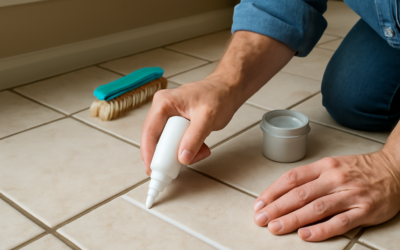
You do still need to seal the grout if it is cement-based, since grout remains porous and can stain or discolor. Choose a grout color that complements the pattern; a mid-tone gray often disappears nicely and hides dirt, while a matching background color makes the pattern read as continuous. After installation, clean routinely with a pH-neutral cleaner and avoid harsh acids or abrasive pads that could dull a matte finish over many years. That simple routine keeps a patterned porcelain floor looking sharp for decades.
Cost Expectations
Encaustic-look porcelain sits in the mid-range of tile pricing, well below true handmade cement tile. Material commonly runs $4 to $12 per sq ft, with designer and higher-resolution collections reaching $15 or more. By comparison, authentic cement encaustic tile often costs $15 to $30 per sq ft and adds ongoing sealing costs, so the porcelain version delivers most of the look for less money and far less upkeep.
Professional installation typically adds $8 to $15 per sq ft, and patterned tile can push labor to the higher end because of the extra layout time and precision required. For a small powder room floor of roughly 40 sq ft, a realistic all-in figure often lands in the $700 to $1,200 range. Order 10 to 15 percent extra to cover cuts, and keep a few spares for future repairs since patterns and dye lots change over time.
Final Thoughts on Emerson Tile
For homeowners who love the vintage, hand-painted character of encaustic cement but not its fragility, Emerson tile and the broader family of encaustic-look patterned porcelain hit a genuine sweet spot. You get bold geometric or vintage patterns, a huge range of colors, and true porcelain durability with almost no maintenance beyond sealing the grout. Shop for high print resolution, rectified edges, and a floor-rated PEI, plan the layout with real care so the pattern flows cleanly, and you will end up with a surface that looks custom and characterful yet shrugs off the daily wear of a busy home. It is one of the most rewarding upgrades a floor or feature wall can get.
Prefer to explore on your own?
See how new flooring looks in your actual room in seconds — free, no signup.
Try the free Floor Studio →