Your front entry sees 80% of the dirt that enters your house and roughly 100% of the rock salt your boots track in every January. Picking the wrong surface here means scratched hardwood, popped grout, or a slick patch that sends grandma flying. The right entrance flooring stops grit at the door, drains snowmelt without warping, and looks intentional rather than utilitarian. This guide breaks down the materials that actually survive a decade of foot traffic.
- What an Entry Floor Has to Survive
- Porcelain Tile: The Workhorse
- Luxury Vinyl Plank for Mudrooms
- Natural Stone: Slate, Travertine, Bluestone
- Brick and Brick-Look Tile
- Concrete and Polished Concrete
- Heated Floors at the Entry
- Layout and Transition Tips
- Cost Comparison Summary
- Frequently Asked Questions
What an Entry Floor Has to Survive
Foyers and mudrooms get hit with abrasion from grit, moisture from boots and umbrellas, ice-melt chemicals like calcium chloride, and the occasional dropped grocery bag. A dedicated entry surface needs a hardness rating that resists scratching, a finish that won’t etch from de-icing salts, and enough texture to stay safe when wet.
The other variable is size. A small 4×6 foot landing tolerates premium materials because square footage is low. A 12×14 mudroom-foyer combo pushes you toward cost-effective options unless budget is unlimited.
Porcelain Tile: The Workhorse
Porcelain rated PEI 4 or 5 is the default recommendation for serious entries. The tile fires at 2,200°F, absorbs less than 0.5% water, and laughs off salt and grit. Look for through-body porcelain so chips don’t reveal a contrasting body color.
For wet-floor safety, choose tiles with a Dynamic Coefficient of Friction (DCOF) above 0.42, which is the ANSI A137.1 minimum for areas that get wet. Textured slate-look porcelain or matte concrete-look planks usually clear that bar comfortably. Costs run $4-$12 per square foot for material and another $7-$14 per square foot installed.
Luxury Vinyl Plank for Mudrooms
SPC and rigid-core LVP have become serious contenders for entries because they’re 100% waterproof and warmer underfoot than tile. Look for products with at least a 22 mil wear layer and an attached IXPE underlayment for sound dampening.
The weak point is the seam. Salt water that sits in plank joints can creep into the core if you let puddles linger. Wipe it dry within a day or two and you’ll get 15-plus years from the floor. Expect $3.50-$7 per square foot for the planks plus $2-$4 per square foot for installation.
Natural Stone: Slate, Travertine, Bluestone
Cleft-face slate has been an entry-flooring staple for decades, and for good reason. The natural texture grips wet boots, and the stone hides dirt between cleanings. Pennsylvania bluestone and tumbled travertine perform similarly. Plan on $8-$22 per square foot installed, and budget for a penetrating sealer every 18-24 months.
The catch with travertine is that calcium chloride ice melt etches the surface. If you live in a salt-heavy climate, switch to a sealed slate or quartzite instead. Marble in any form is the wrong choice for an entry — it stains, etches, and scratches under grit.
Brick and Brick-Look Tile
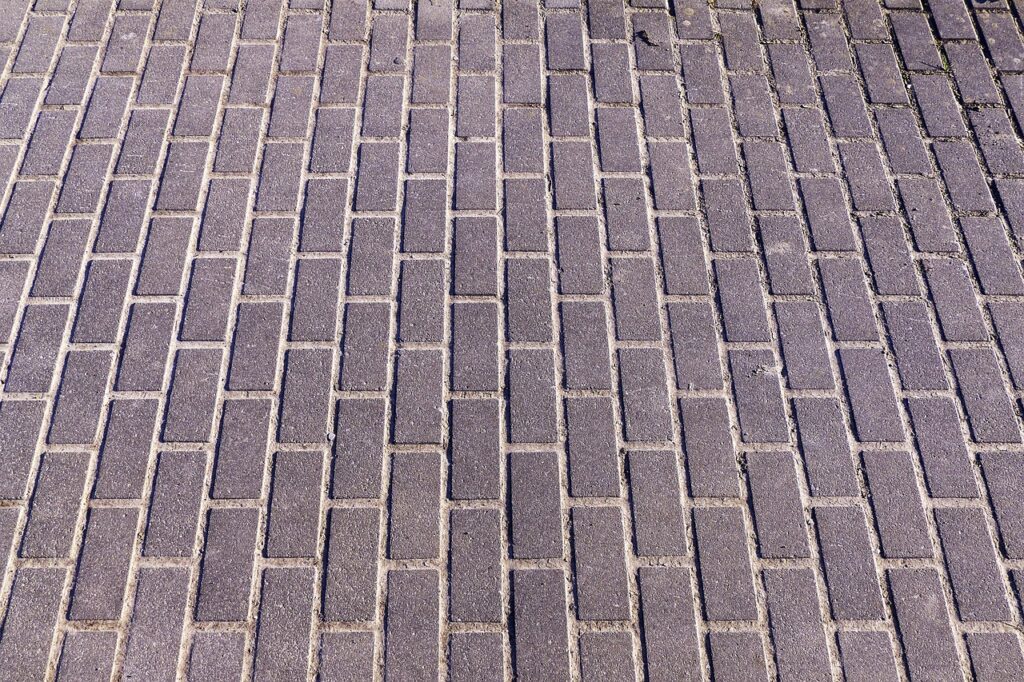
Real thin-brick veneer set in mortar is a classic for traditional homes. It costs $10-$18 per square foot installed and ages gracefully — every nick and stain just adds character. The downside is that mortar joints collect grit and need annual cleaning with a stiff brush and oxygenated cleaner.
Brick-look porcelain delivers similar visuals at $5-$10 per square foot with none of the maintenance. Check the texture in person before buying — many brick-look tiles photograph well but feel plasticky underfoot.
Concrete and Polished Concrete
For modern homes with a slab on grade, polished and sealed concrete makes sense as the entry surface. A penetrating densifier plus a topical urethane sealer handles salt and abrasion. Cost ranges $4-$10 per square foot for grind-and-seal and $7-$14 per square foot for fully polished concrete.
Add a 3×5 foot commercial-grade entry mat with rubber backing on top, regardless of substrate. Even the toughest floor benefits from a first line of defense that catches grit before it grinds in.
Heated Floors at the Entry
If you’re already opening the slab for new flooring, electric radiant mats add a worthwhile upgrade. A 30 sq ft entry can be warmed for $400-$700 in mat plus thermostat costs, with operating costs around $0.30 per day at typical electric rates. The heat melts tracked-in snow within minutes and cuts drying time on wet boots dramatically.
Pair radiant heat with porcelain tile or natural stone for best heat transfer. LVP and laminate over radiant work but lose 20-30% of perceived warmth due to the insulating effect of the wear layer and pad.
Layout and Transition Tips
- Run the hard surface a minimum of 6 feet into the house from the door swing
- Use a Schluter or aluminum T-molding at any height transition
- Install a 3/8 inch threshold dam if water pooling is a concern
- Match grout color to the tile to hide salt residue between cleanings
- Choose mid-tone colors — black shows salt, white shows mud
Cost Comparison Summary
- SPC or LVP, installed: $5.50-$11/sq ft
- Porcelain tile, installed: $11-$26/sq ft
- Slate or bluestone, installed: $14-$28/sq ft
- Polished concrete: $7-$14/sq ft
- Real thin brick: $14-$24/sq ft
Frequently Asked Questions
What is the most durable entrance flooring?
Through-body porcelain rated PEI 5 with a textured surface is the most abrasion-resistant and lowest-maintenance option. It tolerates rock salt, never stains, and lasts indefinitely with basic cleaning.
Is vinyl flooring okay for a front entry?
Yes, provided you choose a rigid-core SPC or WPC product with at least a 20 mil wear layer. Wipe up melted snow and salt promptly to prevent moisture from creeping into seams.
What thickness of entry mat works best?
A 3/8 to 1/2 inch thick rubber-backed mat with a synthetic looped face traps the most grit without becoming a tripping hazard. Commercial-grade Waterhog mats run $80-$200 and last 8-10 years.
How big should an entrance flooring area be?
Plan for at least 36 inches deep from the door swing, ideally extending 5-7 feet into the home. Wider is better in mudrooms, and the entire entrance flooring footprint should accommodate two people removing coats and shoes simultaneously.
Prefer to explore on your own?
See how new flooring looks in your actual room in seconds — free, no signup.
Try the free Floor Studio →