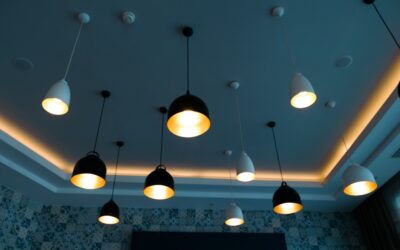
Your entryway light is the first designed element anyone sees when they walk into your home, yet it is one of the most commonly neglected fixtures in residential lighting. The right entryway light fixtures set the tone for your entire interior, provide essential task lighting for finding keys and removing shoes, and create a welcoming atmosphere that says something about your style before guests take another step. Whether you are updating a builder-grade flush mount or choosing a statement chandelier for a two-story foyer, size, style, and brightness all need to work together.
Types of Entryway Fixtures
Pendant lights hang from a single point and work beautifully in entryways with 8-9 foot ceilings. A single oversized pendant (16-24 inches in diameter) creates a modern focal point, while a cluster of smaller pendants adds visual interest. Prices range from $40 for a simple glass globe to $300+ for designer fixtures from brands like Hudson Valley or Visual Comfort.
Chandeliers make sense in foyers with 9+ foot ceilings or two-story entries. They provide both ambient light and architectural drama. A well-scaled chandelier should hang so its bottom is at least 7 feet from the floor — higher in two-story spaces. Budget $100-$500 for quality mid-range options or $500-$2,000 for designer pieces.
Flush and semi-flush mounts sit close to the ceiling and are the practical choice for standard 8-foot ceilings where a pendant would hang too low. Modern semi-flush fixtures from brands like Kichler and Sea Gull Lighting have evolved well beyond the basic “boob light” — current designs include drum shades, geometric cages, and artisanal glass that look intentional rather than generic. Prices run $30-$200.
Lantern-style fixtures combine the presence of a chandelier with the enclosed structure of a pendant. They work in virtually every home style, from farmhouse to transitional to colonial. The cage design throws interesting shadow patterns on walls and ceilings, adding visual texture. Expect $60-$400 depending on size and material.
How to Size an Entryway Light
The most common mistake is choosing a fixture that is too small. An undersized light looks like an afterthought and fails to anchor the space. Interior designers use this formula: add the room’s length and width in feet, then convert that number to inches for the ideal fixture diameter.
For example, a 6×8 foot entryway: 6 + 8 = 14, so a fixture approximately 14 inches in diameter is proportional. For a larger 10×12 foyer: 10 + 12 = 22, suggesting a 22-inch fixture. This is a starting point, not a rigid rule — going 2-3 inches larger usually looks better than going smaller.
For two-story foyers, scale up significantly. The fixture should be proportional to the total visible height, not just the floor plan dimensions. A two-story entry with a 16-foot ceiling can handle a chandelier 24-36 inches wide and 30-48 inches tall without looking oversized. Hang it so the bottom sits at approximately the second-floor railing height.
Choosing the Right Brightness
Entryways need enough light to transition safely from outdoors but should not feel clinical or overlit. Aim for 200-400 lumens in a small entry (under 50 sq ft) and 400-800 lumens in a larger foyer (50-120 sq ft). For two-story entries, 800-1,200 lumens prevents the upper portion from feeling like a dark cavern.
Use warm-toned bulbs (2700K-3000K) in entryways. The entry is a transitional space — you want it to feel inviting, not jarring. Cool or daylight bulbs (4000K+) create a sterile, commercial atmosphere that undercuts even the most beautiful fixture. If your fixture uses exposed bulbs, consider vintage-style Edison or globe LED bulbs that look good even when visible.
Install the fixture on a dimmer switch. Full brightness works during the day and when you are entering with groceries, but dimmed to 30-40% in the evening, entry lighting creates ambiance visible from the street that makes your home look warm and inviting. Dimmer switches cost $15-$30 and take 15 minutes to install.
Style Guide by Home Type
Your entryway fixture should connect visually to the style language of your home’s interior. Mixing a rustic farmhouse chandelier with a mid-century modern living room creates disconnect at the front door.
- Modern/contemporary: Clean lines, geometric shapes, matte black or brushed brass finishes. Look at cylinder pendants, globe fixtures, or linear chandeliers
- Farmhouse: Distressed metal, lantern shapes, aged brass or iron finishes. A cage-style lantern pendant is the quintessential farmhouse entry light
- Traditional: Crystal or glass chandeliers, polished nickel or chrome finishes, candle-style lights. Classic but avoid anything that reads as dated
- Transitional: Blends modern simplicity with traditional warmth. Drum pendants, satin nickel fixtures, and clean-lined lanterns all work. This is the most versatile style category
- Coastal: Natural materials (rattan, woven seagrass, driftwood), whitewashed finishes, simple silhouettes. Beaded chandeliers and woven drum fixtures are popular choices
Installation Considerations
Most entryway light swaps are straightforward — you are replacing an existing ceiling-mounted fixture with a new one using the same electrical box. If your new fixture weighs more than 50 pounds, verify that the electrical box is rated for the weight. Standard plastic boxes support up to 50 pounds; heavier fixtures require a fan-rated metal box anchored to the ceiling joists.
For homes without an existing ceiling fixture in the entry (common in older homes that rely on wall sconces or table lamps), adding a ceiling fixture requires running new wiring. Budget $200-$500 for an electrician to install a new ceiling box, run wire, and connect a switch. This is not a DIY project for most homeowners — working with electrical in ceilings involves code requirements and safety concerns best left to licensed professionals.
If you are hanging a pendant or chandelier, adjustable-length downrods or chains let you set the exact hanging height. Measure twice before cutting a downrod — unlike chain, a cut downrod cannot be extended. Leave the chain or cord at full length during installation, determine the ideal height, then shorten to fit.
Top Picks by Budget
- Under $50: Globe Electric Harrow semi-flush mount in matte black ($35). Clean, versatile, fits 8-foot ceilings perfectly
- $50-$100: Kichler Barrington 12-inch pendant in distressed black and wood ($75). Works in farmhouse, transitional, and industrial entries
- $100-$200: Sea Gull Lighting Hunnington lantern pendant ($130). Classic proportions, available in multiple finishes, suits entries up to 80 sq ft
- $200-$500: Hudson Valley Lighting Boca 4-light chandelier ($350). Statement piece for larger foyers, available in aged brass and polished nickel
- $500+: Visual Comfort Darlana medium lantern ($580). The designer gold standard for entryway lanterns, seen in countless home magazines and worth the investment for a true focal point
Coordinating with Other Fixtures
Your entryway light does not exist in isolation. It should coordinate with visible adjacent fixtures — hallway lights, stairway sconces, and the exterior porch light seen through sidelights or transom windows.
Finish matching is the simplest coordination strategy. If your entryway fixture is brushed gold, carry that finish into the hallway and nearby rooms. You do not need identical fixtures — different shapes in the same finish family create visual cohesion without monotony.
An increasingly popular approach is mixing metals intentionally. Pairing a matte black entryway pendant with brushed brass hardware and sconces in adjoining spaces looks deliberate and sophisticated. The key is limiting the mix to two metal tones and repeating each at least twice throughout the visible sightlines. Three or more metal finishes in one view feels chaotic rather than curated.