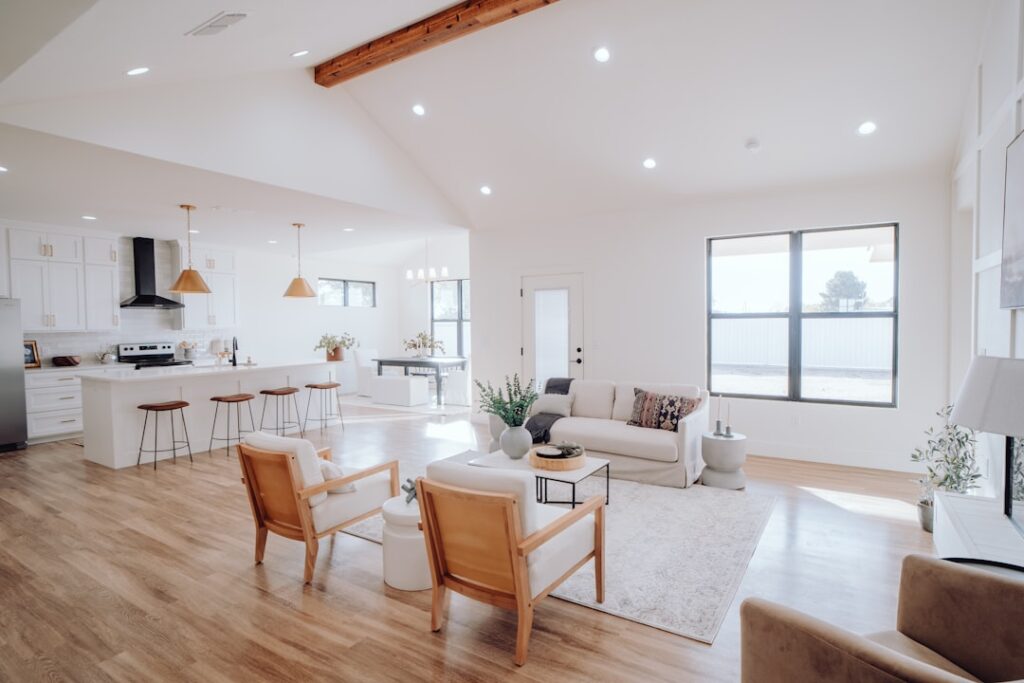
The word “excelsior” gets used by at least three flooring brands in the US, and that confusion costs buyers money. Most often excelsior flooring refers to reclaimed and antique-grade wide planks milled from salvaged barn timbers, factory beams, and old-growth pine — the kind of boards you see in restored New England farmhouses. Less commonly, it refers to engineered lines from regional manufacturers using the Excelsior trade name. Knowing which one you’re shopping for changes everything about price, grade, and lead time.
- The Reclaimed Wood Definition
- Pricing Across Grades
- Pros That Drive the Premium
- Cons You Should Understand Upfront
- Installation Method Matters
- Finish Options for Reclaimed Stock
- Verifying You’re Buying Real Reclaimed
- Who Excelsior Flooring Suits
- Working With a Reclaimed Supplier
- Installer Selection Matters
The Reclaimed Wood Definition
Genuine reclaimed Excelsior planks come from buildings 80 to 200 years old. Suppliers like Carlisle Wide Plank Floors, The Hudson Company, and Olde Wood Limited mill salvaged eastern white pine, heart pine, antique oak, and chestnut into floor planks 6 to 14 inches wide. The grain density on old-growth heart pine alone often exceeds 30 rings per inch — modern plantation pine averages 6 to 10 — which explains why these floors stay stable for centuries.
Pricing Across Grades
Reclaimed wide-plank excelsior flooring runs $9 to $22 per sq ft for the raw boards, plus another $3 to $6 for milling, kiln drying, and finishing. Installation adds $4 to $8 per sq ft because the variable widths and nail-down spec demand a skilled crew. Total installed cost typically lands between $18 and $36 per sq ft, with rare grades like circle-sawn heart pine pushing past $40.
Engineered Excelsior-branded lines from regional manufacturers sit lower, usually $4.50 to $7.50 per sq ft, but those are conventional 1/2-inch engineered oak with a 3mm to 4mm wear layer and don’t carry the character of true reclaimed stock.
Pros That Drive the Premium
Old-growth lumber is dimensionally stable in ways modern wood can’t match. The tight grain, lower moisture content at felling, and decades of in-service drying mean these planks barely move with humidity swings. Janka hardness on antique heart pine reaches 1225, compared to 870 for modern southern yellow pine. Visually, you get nail holes, saw kerf marks, weathering patina, and color variation that no manufacturer can fake convincingly.
There’s also the sustainability angle — every reclaimed plank is one less tree felled and one less timber sent to landfill. Most reclaimed suppliers carry FSC Recycled certification.
Cons You Should Understand Upfront
Cost is the obvious one. Lead times are the silent killer — expect 8 to 16 weeks from order to delivery on custom reclaimed runs. Width and length variation also means waste factors of 12 to 18 percent versus the 5 to 7 percent typical of standard hardwood. Budget the extra material.
Old nails are a real hazard. Even after metal-detection screening, occasional nail fragments survive into the milled planks and will eat through carbide blades fast. Plan to burn through two or three saw blades on a 1,000 sq ft job.
Installation Method Matters
Reclaimed wide planks should be face-nailed or screwed and plugged through 3/4-inch tongue-and-groove edges into a wood subfloor with cleats every 8 to 10 inches. Wide planks over 8 inches are prone to cupping if installed in environments outside the 35 to 55 percent RH range, so a whole-house humidifier is essentially mandatory in northern climates.
Many installers also use construction adhesive between plank and subfloor on widths over 10 inches — a belt-and-suspenders approach that prevents creep and squeak.
Finish Options for Reclaimed Stock
Three finishes dominate. Oil finishes from Rubio Monocoat or Pallmann Magic Oil penetrate into the wood and accentuate grain — they’re easy to spot-repair but require annual reapplication in high-traffic areas. Water-based polyurethanes like Bona Traffic HD give a low-sheen, hard-wearing surface with low VOC. Tung oil and beeswax mixes look gorgeous on heart pine but need maintenance every 18 to 24 months.
Verifying You’re Buying Real Reclaimed
Ask three questions before you wire a deposit. What building did the timber come from, and is there documentation? Has it been kiln-dried to 6 to 9 percent moisture content with metal detection done post-milling? Is the supplier a member of the National Wood Flooring Association or the Reclaimed Wood Council? A legitimate seller answers all three without hesitation. If the answer is vague on provenance, you’re likely getting new wood distressed to look old.
Who Excelsior Flooring Suits
This is a floor for owners building or restoring homes meant to last generations. The cost and lead time make it impractical for flips, rentals, or starter homes. But in a custom farmhouse, lake cabin, or historic renovation, reclaimed excelsior flooring delivers character and stability that engineered or modern solid hardwood can’t replicate. If your budget caps at $10 installed per sq ft, look instead at wide-plank engineered hickory from Mannington’s Mountain View Hickory or Shaw’s Anderson Tuftex Vintage line for some of that same character at a third of the price.
Working With a Reclaimed Supplier
Reclaimed flooring projects work differently than ordering off a showroom floor. Most reputable suppliers require a site visit or video walkthrough before quoting — they want to see subfloor conditions, joist spacing, and humidity controls. Expect a deposit of 30 to 50 percent at order, with balance due before shipping. Material typically ships on a single pallet for orders under 800 sq ft and on a flatbed truck for larger jobs. Plan to receive material 2 to 3 weeks before installation to acclimate properly.
Installer Selection Matters
Standard hardwood installers often refuse reclaimed work because of the variable widths, nail risk to blades, and species mixing. Look for NWFA Master Craftsman certified installers with documented reclaimed experience. Ask for photos of three past reclaimed jobs and references with phone numbers — a 30-minute conversation with a previous client tells you everything about what to expect on cost overruns, timeline reality, and post-install service. The right installer is worth a 20 to 30 percent premium over standard rates because reclaimed work done wrong shows up loudly for the next 50 years.
Prefer to explore on your own?
See how new flooring looks in your actual room in seconds — free, no signup.
Try the free Floor Studio →