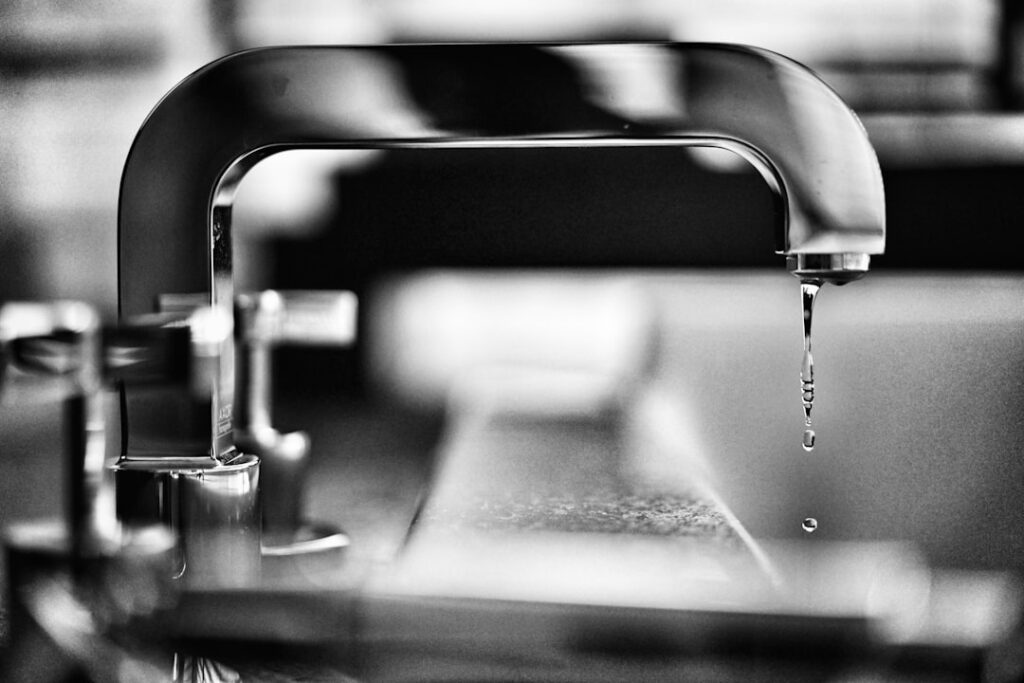
A faucet dripping once per second wastes roughly 3,000 gallons a year — enough to take 180 showers, per EPA figures. The good news is that most faucet repair jobs need a $5 to $40 part and less than an hour, no plumber required. The trick is diagnosis: a drip from the spout, a puddle at the base, and weak flow are three different failures with three different fixes. This guide sorts them out the way a service plumber would, symptom by symptom.
- First: Identify What You Are Working On
- Before Any Repair: Shut Off and Prep
- Fix 1: Dripping From the Spout
- Fix 2: Leaking Around the Base or Handle
- Fix 3: Low Flow or Sputtering
- Fix 4: Stiff, Loose, or Broken Handles
- Fix 5: Pull-Down Spray Heads and Hoses
- The Repair Toolkit Worth Owning
- When Repair Is the Wrong Call
- The 15-Minute Preventive Routine
First: Identify What You Are Working On
Every repair starts with knowing the valve design, because that dictates the replacement part. Single-handle faucets are almost always cartridge or ceramic-disc types; older Delta single-handles use a ball valve with springs and rubber seats; two-handle faucets are either cartridge or old-school compression (rubber washer) designs. If the handle turns 90 degrees and stops, it is likely ceramic disc or cartridge. If it turns multiple revolutions and tightens like a screw, it is compression.
Find the brand before you shop. Look for a logo on the body, the handle button, or the escutcheon. Moen, Delta, Kohler, and Pfister all offer lifetime warranties on parts — call the manufacturer with a photo and they will frequently mail the repair kit free, which turns most repairs into a zero-dollar job plus shipping time.
Before Any Repair: Shut Off and Prep
Close the two shutoff valves under the sink, then open the faucet to bleed pressure. If the shutoffs are seized or absent — common in houses from before the 1980s — kill the main water valve instead. Plug the drain with a rag so screws cannot escape, and lay parts out in disassembly order on a towel. Take photos at each step with your phone; they settle every “which way did that spring face” argument during reassembly. Wrap pliers jaws with tape so you do not chew up the finish.
Fix 1: Dripping From the Spout
A spout drip means the internal valve is no longer sealing. The fix depends on the design:
- Cartridge faucets: Pop the handle cap, remove the handle screw, pull the retaining clip or nut, and extract the cartridge with pliers. Take it to the hardware store to match, or order by model — a Moen 1225 runs about $20, and knowing how to identify and swap a faucet cartridge covers the majority of single-handle drips.
- Compression faucets: Unscrew the stem and replace the rubber seat washer (usually a 3/8-inch or 1/2-inch flat washer, under $2) and the O-ring on the stem. If the drip returns quickly, the brass valve seat below is pitted — dress it with a $10 seat-grinding tool or replace the seat with a seat wrench.
- Ball faucets: Buy the full repair kit ($15 to $25) with new springs, seats, cam, and O-rings. Replace everything at once; piecemeal fixes on ball valves rarely hold.
- Ceramic disc: Genuine disc failures are rare. Usually debris is caught between the discs — remove the cylinder, lift out the neoprene seals underneath, and rinse everything clean before assuming the cartridge is dead.
One diagnostic shortcut for two-handle faucets: shut off one supply valve at a time. Whichever side stops the drip is the side with the bad washer or cartridge.
Fix 2: Leaking Around the Base or Handle
Water pooling at the base of a kitchen faucet while it runs points to worn O-rings on the spout body, not the valve. Twist and lift the spout off after removing the handle and retaining hardware, roll the old O-rings off with a pick, and install new ones coated with plumber’s silicone grease — never petroleum jelly, which degrades rubber. O-ring kits cost $3 to $8.
Leaks from under the handle itself usually mean a loose packing nut or a worn cartridge O-ring. Snug the nut an eighth of a turn first; over-tightening makes the handle stiff. If water seeps below the sink deck around the supply connections, re-seat the supply line and tighten the coupling nuts a quarter-turn past hand-tight — and if the braided lines are more than 10 years old, replace them for $8 each while you are under there. Burst supply lines cause far more flood damage than any drip.
Fix 3: Low Flow or Sputtering
Weak flow from one faucet — while the rest of the house runs fine — is nearly always a clogged aerator. Unscrew it from the spout tip (tape your pliers), disassemble the screen stack, and soak the parts in white vinegar for an hour to dissolve mineral scale. A new aerator costs $3 to $6 if the screen is corroded. On pull-down kitchen faucets, the spray head itself unscrews from the hose; check the small filter screen at that connection, which catches debris after any plumbing work in the house.
If the aerator is clean, suspect the cartridge inlet screens or a kinked supply line under the sink. Sputtering that affects hot water only often traces back to sediment from the water heater, not the faucet. And after any repair, remove the aerator and flush the faucet for 30 seconds — dislodged debris will otherwise clog it immediately.
Fix 4: Stiff, Loose, or Broken Handles
A handle that grinds or resists usually means dried lubricant or mineral buildup on the cartridge; pull it, clean it, grease it with silicone, and it often smooths right out. A loose, floppy handle is typically a stripped set screw or worn handle adapter — a $10 hardware kit fixes it. On Moen faucets, a handle that lifts but no longer controls temperature correctly signals a worn 1225 cartridge shell, which is a five-dollar-part diagnosis once you have it out.
Fix 5: Pull-Down Spray Heads and Hoses
Kitchen pull-down faucets add two failure points of their own. A spray head that leaks at the swivel, sticks between spray modes, or dribbles after shutoff has worn internal seals — unscrew it from the hose (there is usually a small C-clip or washer at the connection; do not lose it) and either soak it in vinegar to clear mineral binding or replace it outright. Brand-name replacement heads run $25 to $60 and warranty claims frequently cover them. A hose that no longer retracts usually has a snagged counterweight under the sink; clear whatever the weight is catching on and reposition it along the hose. If the hose itself is abraded or kinked, replacements cost $20 to $35 and connect with the same quick-release fitting — a ten-minute swap that feels like a new faucet.
The Repair Toolkit Worth Owning
Every fix above uses the same short list of tools, and owning them turns faucet problems into 30-minute events instead of service calls. The essentials: a basin wrench ($15), channel-lock pliers, a set of hex keys for handle set screws, a utility knife, and plumber’s silicone grease ($5 a tube, lasts a decade). Add a cartridge puller ($20) if you own Moen fixtures and a seat wrench ($8) for older compression faucets. Keep a small parts box with assorted O-rings, seat washers, and PTFE tape — a $12 assortment covers years of drips. Total outlay is less than half of one plumber visit, and every tool transfers to toilet, shutoff, and supply-line work elsewhere in the house.
When Repair Is the Wrong Call
Repair loses its economics in a few situations. Replace the faucet when the body itself is cracked or corroded through, when chrome is flaking into the sink, when it is an off-brand unit with no matchable parts, or when you have replaced the same cartridge twice in three years — chronic cartridge deaths usually mean debris or high pressure, and a pressure gauge test ($12 at any hardware store) is worth running if house pressure may exceed 80 PSI. A solid mid-range replacement costs $120 to $250, and a straightforward faucet installation is well within DIY range with a basin wrench.
The 15-Minute Preventive Routine
Twice a year, do three things: unscrew and vinegar-soak the aerators, exercise the under-sink shutoff valves so they do not seize, and check supply lines for bulges or rust at the crimps. Wipe fixtures with mild soap only — abrasive pads and bleach-based cleaners destroy finishes and shorten O-ring life. Ten minutes of maintenance per faucet is the difference between a lifetime fixture and a service call, and it keeps every future repair at the easy end of the scale.