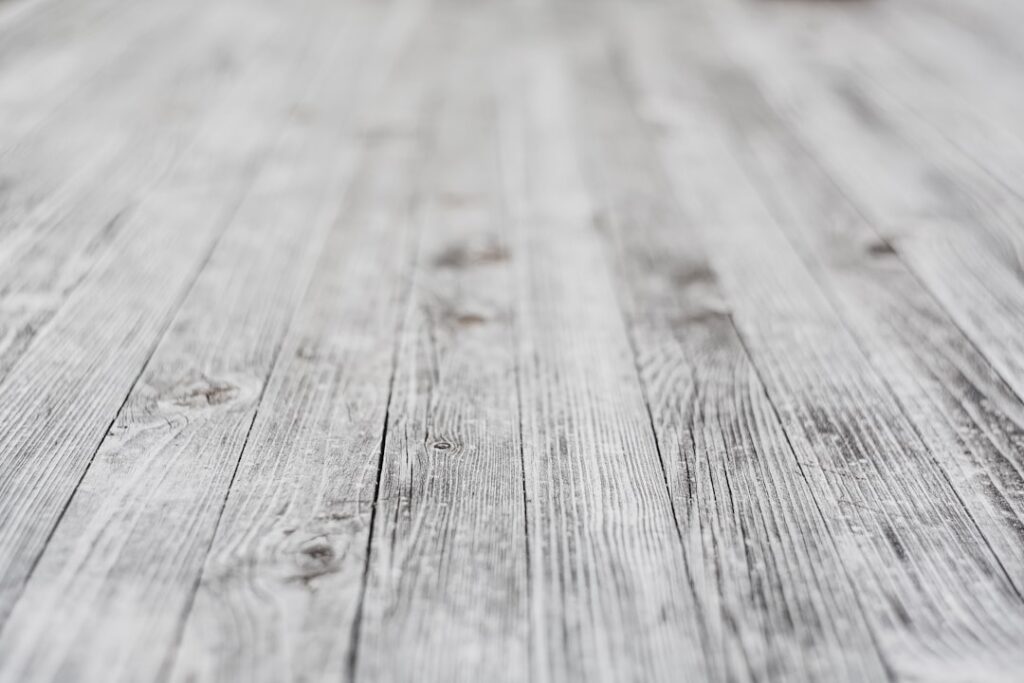
Gray is the hardest stain color to get right. Straight from the can, a gray wood stain can land anywhere from elegant driftwood to purple-tinged concrete depending on the wood underneath, the binder chemistry, and the topcoat you put over it. The fix isn’t luck — it’s understanding how gray pigment interacts with wood’s natural warm tones, and layering when the wood fights you. This guide maps the gray shade range, ranks the widely available products, and gives you the recipes that keep gray looking like weathered wood instead of a mistake.
The Gray Shade Range
Gray stains cluster into four families, and knowing which family you want narrows the shopping fast:
- Whisper grays (barely-there): Minwax Weathered Oak, Varathane Weathered Gray. More gray-beige than gray; they neutralize warm tones and read “sun-faded” rather than colored. The safest grays for beginners.
- Silver/driftwood grays: Minwax Classic Gray, Varathane Sunbleached. Clearly gray but translucent, with visible grain. The coastal and Scandinavian look.
- Mid grays: Varathane Smoke Gray, General Finishes Gray Wood Stain. Full-strength gray with real coverage; grain still shows but the wood’s own color is largely overridden.
- Charcoal grays: Varathane Carbon Gray, layered Classic Gray over Ebony. Deep, moody, almost-black grays for accent walls and modern furniture.
Why Gray Goes Wrong: The Blue-Purple Problem
Gray pigment is essentially diluted black — and black pigment over a warm base creates optical mixing. Red oak’s pink base plus translucent gray reads lavender. Pine’s yellow base plus gray reads greenish or muddy. This is the single most common gray-stain complaint, and there are three reliable fixes:
- Choose the right species. White oak and ash have neutral tan bases that accept gray cleanly. Red oak and pine are the troublemakers.
- Kill the warmth first. On red oak, a first coat of a warm neutral like Minwax Weathered Oak or a thin coat of Early American, dried, then gray over the top, cancels the pink instead of mixing with it. Counterintuitive, but layering warm-then-gray is the pro move.
- Pick a gray with brown in it. Gray-beige “greige” stains (Weathered Oak, Sunbleached) carry enough warm pigment to sit neutrally on warm woods without help.
Brand Picks Compared
| Product | Base | Gray family | Notes |
|---|---|---|---|
| Minwax Classic Gray | Oil | Silver | The reference gray; translucent, layers well |
| Minwax Weathered Oak | Oil | Whisper | Gray-beige; best pink-neutralizer on red oak |
| Varathane Weathered Gray | Oil | Whisper-silver | Slightly more pigment than Minwax equivalents |
| Varathane Sunbleached | Oil | Silver-driftwood | Popular farmhouse gray; hint of blue on warm woods |
| Varathane Carbon Gray | Oil | Charcoal | Deep modern gray, strong coverage |
| General Finishes Gray (WB) | Water | Mid | Truest neutral gray; acrylic binder never ambers |
| Minwax WB Semi-Transparent (gray tints) | Water | Any (tinted) | 200+ counter-tinted options including cool grays |
If you want a dead-neutral gray with no amber drift over time, water-based products win on chemistry alone — oil binders start slightly amber and yellow with age, which slowly warms and muddies gray. Our water based wood stain guide covers the trade-offs in depth.
Layering Recipes That Work
- Warm driftwood (red oak): Coat 1: Minwax Weathered Oak or a 50% thinned Early American. Dry 8 hours. Coat 2: Classic Gray, wiped at 5 minutes. Result: silvered wood with no purple.
- Restoration-style greige (pine): Pre-stain conditioner, then 1:1 mix of Classic Gray and Special Walnut. The brown anchors the gray and hides pine’s yellow.
- Charcoal modern (white oak): Coat 1: Ebony, wiped immediately for a light black wash. Coat 2: Classic Gray. Deep smoky gray with visible grain.
- Sun-bleached fence-board look (any wood): Water-based gray thinned 25% with water, ragged on, wiped fast, then a second pass only on random boards for natural variation.
Record every ratio and dwell time on the back of your sample board. Gray layering is precise enough that “about a minute” versus “three minutes” is a visibly different color.
Application Tips Specific to Gray
- Sand evenly to one grit everywhere. Gray shows sanding-grit differences more than browns; a 120-grit patch next to a 220-grit patch takes gray at two visibly different depths.
- Wipe with the grain, uniformly. Gray shows lap marks and rag streaks mercilessly. Use clean rags and refold often.
- Topcoat with water-based polyurethane. Oil-based poly adds amber that turns silver grays greenish-tan. This one choice preserves or destroys the color you worked for. If you must use oil poly, choose a gray one notch cooler than your target.
- Test under your room’s light. Gray shifts hugely between warm 2700K bulbs (pulls beige) and daylight windows (pulls blue). Judge samples where the piece will live.
Where Gray Stain Works Best in 2026
Peak-farmhouse gray-everything has receded, but gray stain still earns its place: driftwood-toned accent furniture, coastal built-ins, mantels against white shiplap, ceiling planks, and outdoor-adjacent pieces like pergola-side benches (for actual exterior structures, use a UV-rated product — see our outdoor wood stain guide). The current direction is warm gray: greige stains and gray-over-warm layering rather than stark silver. If you’re choosing between gray and a warm brown for a whole room’s worth of wood, compare undertones side by side on the master wood stain color chart before committing.
Gray Stain vs Gray Paint vs Weathering Acids
Stain keeps grain visible and is the right call when the wood itself is attractive. Solid gray paint or solid-color stain covers grain entirely — better for patched or ugly wood. A third option, iron-acetate “weathering” solutions (steel wool dissolved in vinegar) reacts with wood tannins to create genuine silvered aging; it’s cheap and organic-looking but unpredictable — high-tannin woods like oak go nearly black, while pine barely shifts. Commercial versions like Varathane Weathered Wood Accelerator ($13/qt) are more consistent. For controllable, repeatable results across a multi-board project, pigmented gray stain remains the reliable choice.
Fixing a Gray Job Gone Wrong
Because gray fails in predictable ways, the rescues are predictable too. A purple or blue cast on red oak can usually be corrected without stripping: once the offending coat is fully dry, wipe on a thin coat of a warm gray-beige (Weathered Oak) or a 50%-thinned warm brown and wipe it back immediately — the added warmth cancels the violet the same way the base-coat method would have prevented it. A gray that dried too dark can be lightened one step by dampening a rag with mineral spirits (for oil stain, within a day or two of application) and wiping with the grain; this lifts surface pigment evenly. Streaks and lap marks are harder — light streaking sometimes evens out under a second full wet coat wiped uniformly, but pronounced lap lines mean sanding back to bare wood on that face. A gray that reads too flat and lifeless usually just needs its topcoat: raw dried gray stain looks chalky, and a coat of matte water-based poly restores depth. Test every rescue on the least visible face first, and give each corrective coat its full dry time before judging.
Cost and Product Sizing
Gray stains price identically to browns in the same lines: $6-9 per half-pint and $11-15 per quart for Minwax and Varathane oil products; General Finishes waterborne gray runs $18-25 per pint. Layered recipes double the material list but not the cost meaningfully — a half-pint of the base color and a half-pint of the gray finish a dresser with plenty left for the sample boards you should be making anyway. Add $7 for conditioner on pine and $20-30 for a quart of water-based polyurethane, and a complete gray furniture refinish lands around $40-60 in materials.
FAQ
Why did my gray stain turn purple? Translucent gray over red-toned wood (usually red oak) mixes optically to lavender. Neutralize with a warm base coat first, or switch to a gray-beige product.
Can I make gray stain darker? A second coat adds about 25% depth. For charcoal, layer gray over a black wash rather than piling on coats.
Does gray stain need special prep? Same as any stain — but be stricter about uniform sanding and dust removal, because gray telegraphs prep flaws more than browns do.
What topcoat keeps gray looking gray? Water-based polyurethane, matte or satin. Every oil-based topcoat warms the color.
Gray rewards testing more than any other stain color. Two sample boards — one straight from the can, one layered over a warm base — will tell you in an afternoon which route your wood needs.