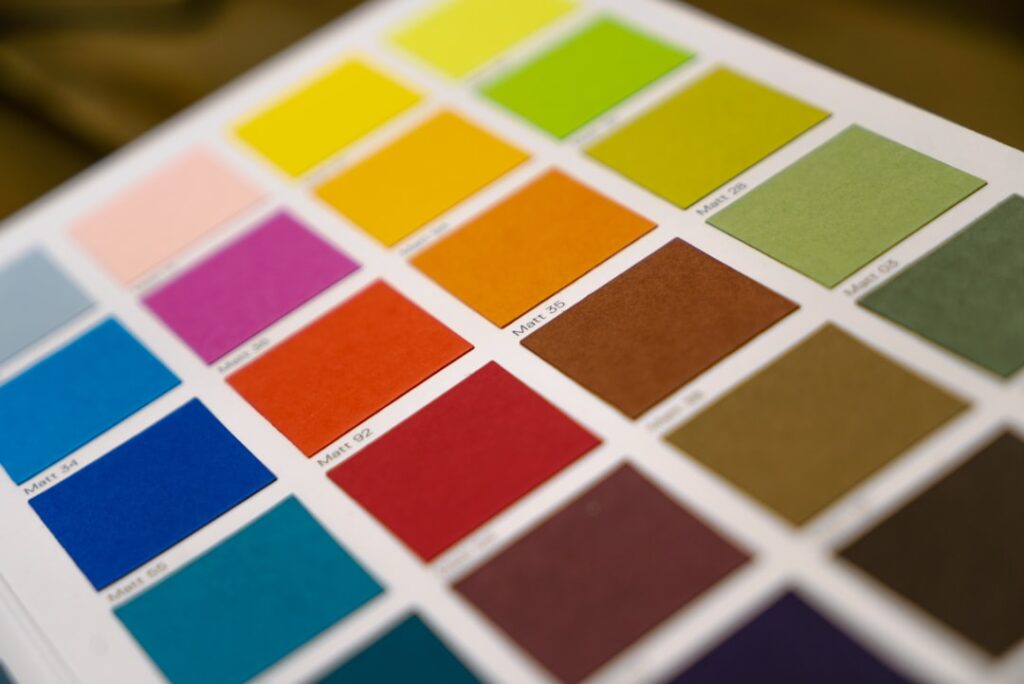
Stain names are not standardized, and the sample chip at the store rarely matches what shows up on your project. A good wood stain color chart solves both problems: it groups the most popular colors by tone, tells you what undertone each one carries, and warns you how the color shifts on different wood species. This guide compares 15 of the most-used stain colors in the US market — the shades you see on furniture flips, trim, built-ins, and DIY projects — with brand equivalents so you can shop across Minwax, Varathane, and General Finishes without guessing.
- The Master Chart: 15 Popular Stain Colors Compared
- How to Read Undertones Before You Commit
- How Wood Species Changes Every Color on the Chart
- Matching Colors Across Brands
- Picking a Depth: Light, Medium, or Dark
- Application Tips That Keep Colors True to the Chart
- Trend Check: What's Popular Right Now
- FAQ
The Master Chart: 15 Popular Stain Colors Compared
Colors are ordered light to dark. “Undertone” describes the cast the color takes once dry with a clear topcoat; “Best on” reflects the species where the color reads truest. Depth ratings run 1 (barely tints) to 5 (nearly opaque-dark).
| Color | Depth | Undertone | Best on | Common brand names |
|---|---|---|---|---|
| Natural | 1 | Warm clear | Any species | Minwax Natural, Varathane Natural |
| Golden Oak | 2 | Orange-gold | Red oak, ash | Minwax Golden Oak, Varathane Golden Oak |
| Ipswich Pine | 2 | Amber-yellow | Pine, fir | Minwax Ipswich Pine |
| Weathered Oak | 2 | Gray-beige | White oak | Minwax Weathered Oak, Varathane Weathered Gray |
| Puritan Pine | 2 | Muted tan | Pine, poplar | Minwax Puritan Pine |
| Early American | 3 | Warm red-brown | Pine, oak | Minwax Early American, Varathane Early American |
| Special Walnut | 3 | Neutral brown | Oak, walnut, pine | Minwax Special Walnut, GF Antique Walnut (close) |
| Provincial | 3 | Warm mid-brown | Red oak, birch | Minwax Provincial, Varathane Provincial |
| Classic Gray | 3 | Cool silver-gray | White oak, ash | Minwax Classic Gray, Varathane Weathered Gray |
| English Chestnut | 3 | Red-brown | Oak, mahogany | Minwax English Chestnut |
| Red Mahogany | 4 | Deep red | Mahogany, oak | Minwax Red Mahogany, Varathane Red Mahogany |
| Dark Walnut | 4 | Cool dark brown | Oak, walnut | Minwax Dark Walnut, Varathane Dark Walnut |
| Jacobean | 5 | Espresso, slight red | Oak, hickory | Minwax Jacobean, GF Java (gel, close) |
| Ebony | 5 | Black, cool | Oak, ash | Minwax Ebony, Varathane Ebony |
| True Black | 5 | Flat black | Any open grain | Minwax True Black, Varathane Black |
How to Read Undertones Before You Commit
Undertone is the single biggest reason stain projects disappoint. Two “medium browns” can look nothing alike once a topcoat goes on: Provincial leans warm and slightly orange, while Special Walnut stays neutral to cool. If your room has warm elements — brass hardware, terracotta, cream walls — warm undertones (Golden Oak, Early American, English Chestnut) will feel cohesive. Cool-toned spaces with gray walls or black fixtures pair better with Special Walnut, Classic Gray, Dark Walnut, or Ebony.
Watch for hidden red. Jacobean is marketed as espresso-dark, but on red oak it pulls a subtle burgundy in daylight. If you want zero red at that depth, Ebony or a true black stain is the safer pick. Conversely, if a color looks too flat and cold on your sample board, blending in 25% of a warm shade like Early American brings it back to life — mixing stains from the same brand and same base is a standard, safe practice.
How Wood Species Changes Every Color on the Chart
The same can of stain produces visibly different results across species because pigment loads into pores, and pore structure varies wildly.
- Red oak: Deep open grain grabs lots of pigment; colors read darker and the grain stripes boldly. The pink base warms everything up a notch.
- White oak: Slightly tighter grain, tan base. Grays and neutrals (Weathered Oak, Classic Gray) read truest here.
- Pine: Uneven density causes blotching — dark colors can go patchy fast. Always use a pre-stain wood conditioner; expect colors to land 10-20% lighter than the chip.
- Maple and birch: Tight, closed grain resists pigment. Mid and dark colors often look muddy or streaky; gel stains or dye stains work better than liquid oil stains.
- Poplar: Takes stain fairly evenly but its green cast shifts warm browns slightly olive. Conditioner plus a warmer color choice compensates.
The rule that saves projects: test on a scrap of your actual wood — same species, same sanding grit — and topcoat the sample. A coat of polyurethane deepens and warms almost every color by roughly half a shade.
Matching Colors Across Brands
Brand equivalents in the chart above are close, not identical. Varathane’s premium fast-dry line runs slightly more pigmented than Minwax Wood Finish, so one coat of Varathane Dark Walnut lands close to where a coat and a half of Minwax Dark Walnut does. General Finishes colors are water-based or gel formulas that sit more on the surface, producing more uniform color with less grain contrast. If you’re deciding between waterborne and oil chemistry, our guide to water based wood stain breaks down dry times, odor, and grain-raising in detail, and the Minwax wood stain colors chart covers that brand’s full lineup name by name.
Picking a Depth: Light, Medium, or Dark
Light colors (depth 1-2) show maximum grain, hide the least damage, and are the most forgiving to apply — lap marks and uneven wiping barely register. Medium colors (depth 3) are the workhorses of furniture and trim: enough color to unify mismatched boards while keeping the wood looking like wood. Dark colors (depth 4-5) deliver drama and hide repairs and filler well, but they telegraph every application mistake and show dust, scratches, and water spots more readily. If you’re going dark, read our dedicated guide to dark wood stain for blotch-control technique — dark shades on pine and maple are where most projects go wrong.
Application Tips That Keep Colors True to the Chart
- Sand to the right grit. Stop at 120-150 on hardwoods and 150-180 on softwoods. Sanding finer than 220 burnishes the surface and the stain wipes off lighter than the chart shows.
- Control dwell time. Most wipe-on oil stains reach the chart color at 5-15 minutes of dwell before wiping. Wiping immediately gives a lighter tint; letting it sit 15 minutes gives full saturation. Never let oil stain dry unwiped — it turns gummy.
- Second coats deepen, but with limits. A second coat of pigment stain adds maybe 20-30% more depth. Beyond that, extra coats just sit on the surface and cause adhesion problems for the topcoat.
- Stir, never shake. Pigment settles hard at the bottom of the can. Unstirred stain applies as mostly-clear binder and reads two shades light.
- Topcoat changes the color. Oil-based polyurethane adds amber warmth; water-based poly stays clear but can leave cool colors looking slightly flat. Sample with your actual topcoat.
Trend Check: What’s Popular Right Now
The gray-washed farmhouse look that dominated the late 2010s has softened into warm neutrals. Special Walnut is arguably the most-specified stain color in the country right now because it flatters both warm and cool palettes. Weathered Oak and other gray wood stain shades still sell strongly, but they’re increasingly layered over a warm base coat rather than used alone, which kills the blue-purple cast raw gray stains can throw. On the dark end, true black on white oak — think modern mantels and open shelving — has largely replaced red-heavy espresso tones.
FAQ
Can I lighten a stain color from the chart? Yes. Thin oil stain up to 50% with mineral spirits (or water-based stain with the manufacturer’s extender) for a lighter wash of the same undertone.
Why does my result look nothing like the chip? Chips are printed or sprayed on a generic substrate. Species, sanding grit, dwell time, and topcoat each shift the result — the chart’s “best on” column tells you where the printed color is most trustworthy.
Can I stain over an existing finish? Not with standard penetrating stains — they need bare wood. Gel stains can tone over a scuff-sanded finish, which is a different technique with its own products.
How much do these stains cost? Expect $6-9 per half-pint and $10-15 per quart for Minwax and Varathane; General Finishes runs $18-25 per pint. A quart covers roughly 150 square feet on smooth wood.
Print the chart, buy sample sizes of your two finalists, and test on scrap with your topcoat. Twenty minutes of sampling beats living with the wrong undertone for a decade.