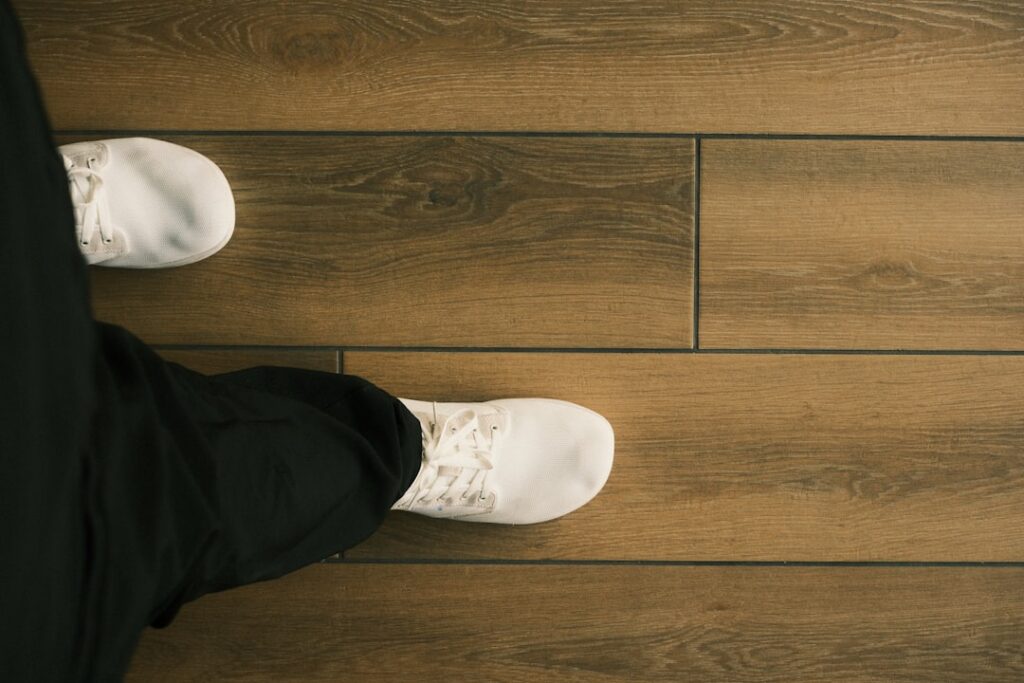
Faux wood flooring has reached a point where even flooring professionals have to look twice to tell it apart from real hardwood. The technology behind wood-look products has advanced so dramatically that choosing faux wood is no longer a compromise — it is a strategic decision that gives you the look of hardwood with better water resistance, lower maintenance, and significantly lower cost.
The three main types of faux wood flooring — luxury vinyl plank (LVP), laminate, and wood-look porcelain tile — each have distinct strengths and ideal applications. This guide compares them side by side so you can choose the right one for every room in your home.
Types of Faux Wood Flooring
The term faux wood flooring covers any flooring product that mimics the appearance of real wood without using solid or engineered hardwood. The three major categories dominate the market:
Luxury Vinyl Plank (LVP) is the current market leader. It uses a high-resolution photographic print layer under a clear wear layer, all bonded to a rigid or flexible vinyl core. Modern LVP features embossed-in-register (EIR) textures that align the surface texture with the printed grain pattern, creating a remarkably realistic wood appearance and feel.
Laminate flooring was the original faux wood product and remains popular for its affordability and easy installation. A high-density fiberboard (HDF) core supports a photographic décor layer protected by a melamine wear layer. Laminate has improved significantly, though it still lacks the water resistance of LVP.
Wood-look porcelain tile is the most durable option. Porcelain tiles are printed and textured to mimic wood grain, available in plank sizes that install like traditional tile. It is completely waterproof, scratch-proof, and suitable for any room including outdoor spaces.
Less common faux wood options include wood-look vinyl sheet, engineered bamboo (technically real wood but often grouped with faux wood products), and WPC/SPC vinyl planks with enhanced cores for rigidity and thermal insulation.
Luxury Vinyl Plank (LVP)
LVP is the most popular faux wood flooring choice in 2026 for good reason. It combines realistic wood appearance with practical performance that real wood cannot match.
Construction: A typical LVP plank has four layers — a backing layer for stability and sound dampening, a waterproof core (either WPC foam core or SPC stone polymer core), a photographic print layer with the wood grain image, and a clear wear layer on top that protects against scratches and scuffs.
Appearance: Top-tier LVP from brands like COREtec, Shaw Floorte, and Mohawk RevWood is virtually indistinguishable from real hardwood at standing height. EIR textures create authentic tactile grain patterns. Available in every wood species look from white oak to walnut to exotic species.
Water resistance: LVP is waterproof at the plank level. Water sits on the surface indefinitely without damage. The click-lock seams are water-resistant but not fully waterproof, so prolonged flooding can seep between planks. For normal bathroom and kitchen use, LVP handles moisture without issue.
Installation: Click-lock floating installation over nearly any existing floor. No adhesive, no nails, no special tools. A miter saw or utility knife, tape measure, and spacers are all you need. Most homeowners install LVP in a weekend.
Comfort: WPC core LVP is noticeably warmer and softer underfoot than tile or laminate. SPC core is harder and more rigid, closer to laminate in feel. Both are quieter than laminate, especially WPC products with attached cork or foam underlayment.
Laminate Wood Flooring
Laminate was the original faux wood flooring and it still holds a significant market share thanks to competitive pricing and improved water resistance in newer products.
Construction: An HDF (high-density fiberboard) core provides structure and stability. Above the core, a photographic layer displays the wood grain image. A melamine resin wear layer on top provides scratch and abrasion resistance. Below the core, a balancing layer prevents warping.
Appearance: Modern laminate from brands like Pergo, Quick-Step, and Mohawk RevWood uses high-definition printing that closely mimics real wood. The main visual giveaway compared to LVP is a slightly more uniform, less dimensional texture. That said, premium laminate at $3.00+ per square foot is impressively realistic.
Water resistance: This is laminate’s Achilles heel. The HDF core absorbs water, causing swelling and permanent damage. Water-resistant laminate (treated with water-repellent coatings at the seams and edges) is available and handles brief splashes. But it is not waterproof — standing water will still cause damage. Laminate is not recommended for bathrooms, laundry rooms, or below-grade basements.
Installation: Click-lock floating installation, similar to LVP. Laminate was actually the first flooring to popularize this method. Installation is straightforward and DIY-friendly. Laminate does require an underlayment pad (unless pre-attached), adding a small cost and an extra installation step.
Durability: Laminate’s melamine wear layer is extremely hard — harder than LVP’s polyurethane wear layer. Laminate resists scratches from pet claws and furniture legs better than most LVP products. AC3 rating is adequate for residential use, AC4 handles heavy traffic, and AC5 is commercial grade.
Wood-Look Porcelain Tile
Wood-look tile is the most durable faux wood flooring option, ideal for high-moisture and high-traffic applications where LVP and laminate may not perform.
Construction: Porcelain tile is fired at extremely high temperatures, creating a dense, hard surface that is effectively impervious to water, scratches, and stains. Inkjet printing technology applies wood grain patterns with remarkable detail, and textured finishes add tactile realism.
Appearance: Modern wood-look porcelain tile is stunning. The inkjet printing process can replicate any wood species, color, and grain pattern with photographic accuracy. Tile planks come in lengths up to 48 inches, mimicking real wood plank proportions. The main visual difference is the grout lines between tiles, though rectified (precision-cut) tiles allow for minimal grout joints.
Water resistance: Completely waterproof. Porcelain tile absorbs less than 0.5% moisture by weight (the standard for porcelain classification). This makes it suitable for bathrooms, showers, outdoor patios, and any area where water is a concern. No other faux wood product matches tile for water imperviousness.
Installation: Tile requires mortar, spacers, grout, and experience. This is not a casual DIY project. Professional tile installation runs $4.00-$8.00 per square foot for labor. The installation process takes longer than LVP or laminate and creates more mess.
Comfort: Tile is hard and cold underfoot. It is the least comfortable faux wood option for bare feet, though radiant heat systems ($5-$10/sq ft installed) eliminate the cold issue. Standing for extended periods on tile is more fatiguing than on LVP or laminate.
Side-by-Side Comparison
Here is how the three main faux wood flooring types compare across key factors:
Realism: LVP leads with the most convincing wood look and feel, thanks to embossed-in-register textures. Wood-look tile is a close second. Laminate is third but closing the gap with newer HD printing technology.
Water resistance: Tile is fully waterproof. LVP is waterproof at the plank level with water-resistant seams. Laminate is water-resistant at best and water-intolerant at worst.
Scratch resistance: Tile is nearly scratch-proof. Laminate’s melamine surface is harder than LVP’s wear layer. LVP is the most susceptible to scratches, especially from heavy furniture and large dog claws. Higher mil wear layers (20+ mil) improve LVP scratch resistance significantly.
Comfort: LVP (especially WPC core) is the most comfortable underfoot. Laminate with quality underlayment is moderately comfortable. Tile is hard and cold without radiant heat.
Installation difficulty: LVP and laminate are equally easy to DIY. Tile requires professional installation for best results.
Longevity: Tile lasts 50+ years. Quality LVP lasts 15-25 years. Laminate lasts 10-20 years. Budget versions of each last considerably less.
Best Faux Wood for Each Room
Choosing the right faux wood flooring depends on the room’s specific demands:
Living rooms and bedrooms: LVP or laminate. Both provide warmth, comfort, and a realistic wood look. LVP is the safer choice if spills are likely. Laminate offers slightly better scratch resistance for homes with large dogs.
Kitchens: LVP is the best choice. It handles spills, dropped items, and heavy foot traffic. Its waterproof core protects against dishwasher leaks and sink splashes. Wood-look tile is also excellent in kitchens but costs more to install.
Bathrooms: LVP or wood-look tile. Never install laminate in a bathroom. LVP handles typical bathroom moisture well. For shower surrounds and high-splash areas, tile is the better option.
Basements: LVP with SPC core. The rigid stone polymer core handles the potential moisture and temperature fluctuations of below-grade spaces. Avoid laminate in basements due to moisture sensitivity. Tile works but is cold on concrete without radiant heat.
Entryways and mudrooms: Wood-look tile or SPC vinyl plank. These areas take the most abuse from shoes, water, and debris. Tile is indestructible here. SPC vinyl handles it well at lower cost.
Whole-home flooring: LVP is the most versatile single product for running throughout a home, including kitchens and bathrooms. For a mixed approach, use wood-look tile in entryways and bathrooms with matching LVP in living areas for continuity at lower cost.
Cost Comparison
The total installed cost of faux wood flooring varies significantly by type:
Laminate: $1.00-$3.00 per square foot for materials, plus $0.30-$0.50 for underlayment, plus $1.00-$2.00 for professional installation. Total installed: $2.30-$5.50 per square foot. DIY installed: $1.30-$3.50 per square foot.
LVP: $2.00-$5.00 per square foot for materials (with attached underlayment on most products). Professional installation adds $1.50-$3.00. Total installed: $3.50-$8.00 per square foot. DIY installed: $2.00-$5.00 per square foot.
Wood-look tile: $2.00-$6.00 per square foot for materials, plus $0.30-$0.50 for mortar and grout, plus $4.00-$8.00 for professional installation. Total installed: $6.30-$14.50 per square foot. DIY installation is possible but not recommended for beginners.
For comparison, real hardwood: $4.00-$10.00 per square foot for materials plus $3.00-$8.00 for installation. Total installed: $7.00-$18.00 per square foot.
Every faux wood option is significantly cheaper than real hardwood, with laminate offering the most savings and wood-look tile coming closest to hardwood pricing.
Durability and Lifespan
Long-term durability is where these faux wood flooring options diverge most:
Wood-look tile is essentially permanent. Porcelain does not fade, scratch, or wear under normal residential use. The only durability concerns are cracked tiles from impact (dropped heavy objects) and grout maintenance. With proper care, wood-look tile lasts 50+ years.
LVP lasts 15-25 years for quality products (20+ mil wear layer). Budget LVP (6-12 mil wear layer) may show wear in 7-12 years. The main durability limit is the wear layer thickness. Once scratched through, LVP cannot be refinished like real wood. Heavy furniture and pet claws are the biggest wear factors.
Laminate lasts 10-20 years depending on the AC rating and traffic exposure. AC3 lasts 8-12 years in moderate traffic. AC4 lasts 12-18 years. AC5 lasts 15-20+ years. Laminate’s major vulnerability is water damage, which causes irreversible swelling. A single undetected leak can ruin an entire laminate floor.
Refinishing: None of these products can be sanded and refinished like real hardwood. When they wear out, they must be replaced entirely. This is the one significant disadvantage of all faux wood flooring compared to solid hardwood, which can be refinished 3-5 times over its lifetime.
Frequently Asked Questions
What is the most realistic faux wood flooring?
Luxury vinyl plank (LVP) with embossed-in-register (EIR) texture is currently the most realistic faux wood product. The surface texture aligns perfectly with the printed grain pattern, creating both visual and tactile realism. Premium LVP from COREtec, Shaw Floorte, and Mohawk is difficult to distinguish from real hardwood without close inspection.
Is faux wood flooring good for pets?
Yes, faux wood is generally better for pets than real hardwood. LVP resists moisture from pet accidents better than hardwood or laminate. Laminate’s hard melamine surface resists scratches from claws better than LVP. Wood-look tile is the most pet-proof option — completely waterproof and virtually scratch-proof. For large dogs, laminate or tile provides the best scratch protection.
Does faux wood flooring decrease home value?
Quality faux wood flooring does not decrease home value and can increase it compared to worn carpet or outdated flooring. Real hardwood is still preferred by buyers in the luxury market, but LVP and quality laminate are well-accepted in the mid-range market. Wood-look tile is viewed positively in any market segment. The key is choosing a quality product and installing it well.
Can you mix faux wood types in one house?
Yes, and many homeowners do. A common approach is LVP in main living areas and kitchens, wood-look tile in bathrooms and entryways, and laminate in bedrooms. Choose products with matching color tones and use transition strips between different flooring types. The result is optimized performance for each room at a lower total cost than using the most expensive option everywhere.
How do you clean faux wood flooring?
All three types clean easily. Sweep or vacuum regularly to remove grit. Damp mop with a mild, pH-neutral cleaner. Avoid excessive water on laminate. Do not use wax or polish on LVP (it causes buildup). For tile, clean grout lines periodically with a grout cleaner to prevent discoloration. Avoid abrasive cleaners and steel wool on all faux wood products.
Prefer to explore on your own?
See how new flooring looks in your actual room in seconds — free, no signup.
Try the free Floor Studio →