A bare fence reads like a wall. The right plantings turn that same fence into a backdrop, a privacy curtain, or a focal point. Strong fence landscaping ideas consider what the fence is doing — hiding a neighbor, framing a view, or anchoring a flower border — and choose plants and hardscape that match. After designing fence-line plantings on hundreds of yards, here are the layouts that actually work in U.S. climates.
Part of our Decks & Outdoor guide — explore the full guide →
- Layered Border for a Wood Privacy Fence
- Flowering Vines on Lattice Toppers
- Hiding Chain-Link with Hedges
- Cottage Border Against White Picket
- Stone Beds and Mulch Strips
- Container Gardens for Renters
- Lighting Along the Fence
- Edible Espalier on Sunny Fences
- Framing a Garden Gate
- Wildlife and Pollinator Borders
- Modern Minimalist Plantings
- Putting It Together
Layered Border for a Wood Privacy Fence
A six-foot cedar or pine fence cries out for layers. Plant evergreen shrubs three to four feet from the fence, then perennials in front, then a low groundcover or grass edge. The layers add depth and stop the fence from looming.
Boxwood, dwarf yew, and inkberry holly hold their shape year-round. Add coneflower, salvia, and ornamental grasses for summer color. Keep the tallest shrubs against the fence and step everything down toward the lawn — a drop of about 12 inches per layer feels balanced.
Flowering Vines on Lattice Toppers
Vines soften any fence and add vertical interest fast. Climbing hydrangea, clematis, and trumpet honeysuckle thrive on wood lattice or cattle panel attached to fence posts. A single $20 clematis can cover six feet of lattice in two seasons.
Avoid English ivy and wisteria on permanent fences. Both are aggressive enough to pull boards apart or rot the wood under the foliage. Stick to twining or non-rooting climbers that drop their grip when you prune.
Hiding Chain-Link with Hedges
Chain-link is the hardest fence to make beautiful. The fastest fix is a hedge of fast-growing privet, hicks yew, or arborvitae planted three feet off the fence. Privet hits eight feet in three seasons; arborvitae takes longer but stays dense year-round.
If you cannot wait, run black UV-rated mesh fabric on the chain-link first to dampen the visual noise, then plant in front. Spacing matters — privet needs three feet on center, arborvitae four to five.
Cottage Border Against White Picket
White picket calls for a tumbling, informal cottage border. Plant catmint, lady’s mantle, lavender, and David Austin roses against the fence. Let the foliage spill over the rails — the contrast between the structured pickets and loose plants is the entire charm.
Repeat three or four anchor plants every six to eight feet to keep the border from looking like a yard sale of mismatched perennials. Catmint twice, salvia twice, lavender twice — repetition reads as design.
Stone Beds and Mulch Strips
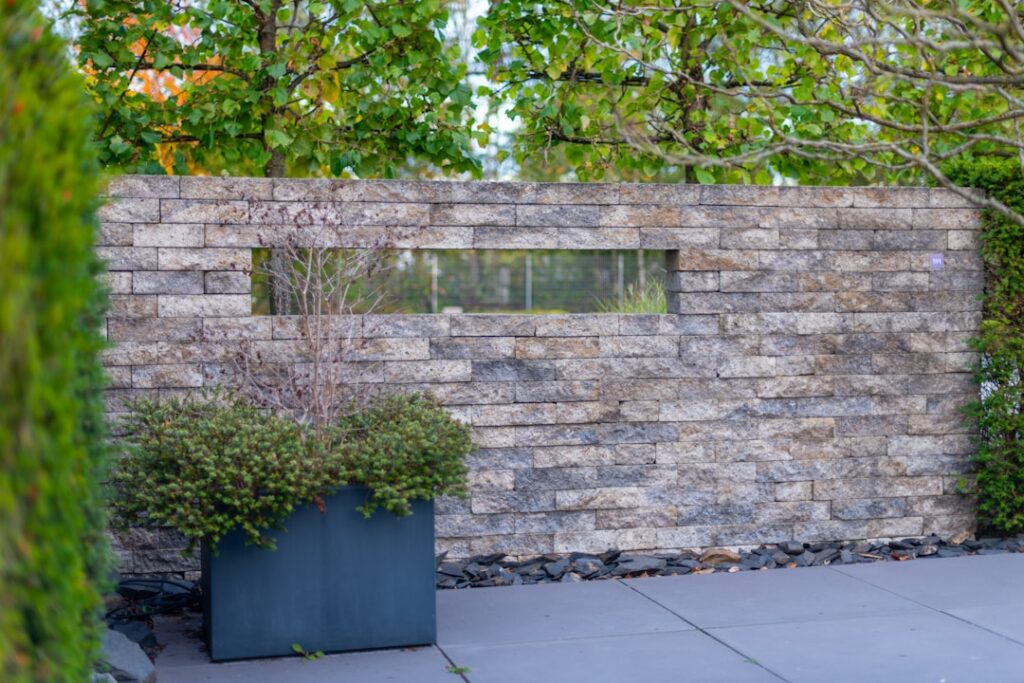
Hardscape ribbons under the fence solve the eternal trim problem. Run an 18- to 24-inch strip of crushed stone or shredded hardwood mulch directly under the fence line, contained by steel or aluminum edging. Mowers do not bang the boards, weed-whackers do not splinter the wood, and the line looks crisp.
Top the strip with stepping stones every four feet so you can reach in to weed or paint. Black stone reads modern; pea gravel reads cottage; cedar mulch reads traditional. Match the choice to the fence stain.
Container Gardens for Renters
If you cannot dig, hang the garden. Mount three or four large half-barrel planters on fence posts or use a hanging-basket bracket every six feet. Cascading petunias, sweet potato vine, and trailing rosemary tumble over the rim and read as full planting from the lawn.
- Sun side: calibrachoa, lantana, sweet potato vine
- Shade side: coleus, fuchsia, tuberous begonia
- Edibles: trailing rosemary, oregano, strawberries
- Year-round: dwarf evergreens with seasonal annual layer
Lighting Along the Fence
Low-voltage path lights at the fence base wash the boards with light at night and turn the fence into a feature instead of a barrier. Space lights every six to eight feet, point fixtures up at 30 degrees, and use 2700K warm-white bulbs for a candle-like glow.
Solar fence-cap lights run $15 to $40 each and need no wiring. Hardwired systems with transformers cost more but last longer and stay reliable through cloudy weeks.
Edible Espalier on Sunny Fences
South-facing fences hit USDA zone 7 in microclimate effect — perfect for espaliered apples, pears, or figs. The fence reflects heat, ripens fruit two weeks early, and turns a dead wall into productive garden space. Use bare-root trees ($25 to $45 each) and train them along horizontal wires installed eight inches off the fence.
Plan three to four feet between trees and prune twice a year. Inside three seasons, you have a working fruit wall and a striking architectural feature.
Framing a Garden Gate
The gate is the punctuation mark on a fence. Frame it with two matching shrubs — boxwood balls, conical arborvitae, or hydrangea trees — set 18 inches off each side. Add an arbor with climbing roses or clematis above and the gate becomes a destination.
Underplant with bulbs for spring color: 50 daffodils on each side cost $30 and bloom for five weeks every March. The gate reads as designed instead of utilitarian.
Wildlife and Pollinator Borders
Skip the manicured hedge and go wild. Plant native species along the fence — bee balm, milkweed, joe-pye weed, switchgrass, and goldenrod — for a pollinator strip that doubles as privacy. The plants grow four to six feet, screen the yard, and attract butterflies, hummingbirds, and beneficial insects.
Maintenance drops to one cutback in late winter. Fertilizer is unnecessary. Native plant nurseries sell starter kits for $80 to $150 that cover 50 linear feet of fence line.
Modern Minimalist Plantings
For black metal or board-on-board cedar fences in modern yards, less is more. Run a single repeated species — switchgrass, miscanthus, or boxwood spheres — every four feet along the fence. The repetition reads architectural and lets the fence be the focus.
Mulch with crushed black basalt instead of brown bark to keep the modern palette tight. Add a single specimen tree like Japanese maple or river birch for vertical drama.
Putting It Together
Pick the layout that matches your fence material, sun exposure, and how much time you want to spend maintaining the line. The strongest fence landscaping ideas repeat plants, layer heights, and tie hardscape to softscape. Done right, the fence becomes the garden’s spine instead of its boundary — and your yard reads bigger, calmer, and more designed.