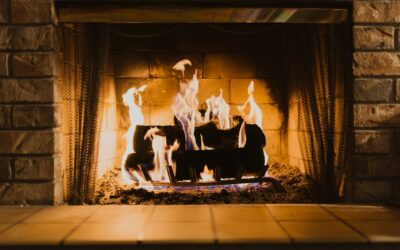
An open masonry fireplace can pull more warm air up the chimney than it puts into the room, especially after the fire burns down and the damper stays open. A fireplace door insert is the fix most homeowners reach for first: a framed set of glass doors that fits into or over the firebox opening, closes off drafts, and keeps embers where they belong. It will not turn a fireplace into a furnace, but a well-fitted door set changes how the room feels on a cold night. This guide covers the door types, how to measure, what glass to choose, realistic costs, and the safety rules that matter.
Part of our Windows & Doors guide — explore the full guide →
- What a Fireplace Door Insert Actually Does
- Types of Fireplace Doors and Frames
- Glass, Mesh, and Finish Options
- How to Measure for a Fireplace Door Insert
- Fireplace Door Insert Costs
- Installing Glass Fireplace Doors
- Using and Maintaining Your Fireplace Doors
- Safety Rules and When to Call a Licensed Professional
- Frequently Asked Questions
What a Fireplace Door Insert Actually Does
A fireplace door insert is a metal frame with glass panels that mounts to the face of the firebox opening. Most units also include an inner mesh curtain or spark screen, adjustable air vents along the bottom, and a gasket or fiberglass rope that seals against the masonry. People sometimes confuse the term with a full fireplace insert, which is a closed stove box that slides into the firebox with its own liner. A door insert is lighter, cheaper, and simpler. It stays attached to the opening and leaves the original firebox, smoke chamber, and flue in service.
Its jobs break down into four practical benefits:
- Draft control: Closed doors stop room air from escaping up an open flue when the fire is out, which is when most heat loss happens.
- Spark and ember containment: Glass and mesh keep popping embers off rugs, hardwood, and carpet in front of the hearth.
- Safety when the fire dies down: You can close the doors at bedtime while coals are still hot, instead of leaving an open firebox unattended.
- Appearance: A new frame hides chipped brick edges, soot-stained openings, and mismatched trim.
Keep expectations honest. Glass doors reduce the radiant heat you feel from a roaring fire because tempered glass blocks some of it. Many owners burn with the doors open and the mesh closed, then shut the glass as the fire winds down.
Types of Fireplace Doors and Frames
Manufacturers sell door sets in a handful of frame styles. Picking the right one depends on your opening shape, whether the fireplace is masonry or factory-built, and how much of the brick face you want covered.
Masonry Fireplace Doors
Built for site-built brick or stone fireboxes, these units have a surround frame that overlaps the opening by 1 to 2 inches on each side. They mount with lintel clamps, masonry anchors, or tension bolts. Most masonry doors are custom-sized to the inch because older brick openings are rarely square.
Prefab or Zero-Clearance Fireplace Doors
Factory-built metal fireboxes need doors that are listed for that specific unit. Installing the wrong doors on a zero-clearance fireplace can block combustion air or cooling channels and overheat the surrounding framing. Check the fireplace manufacturer’s label, usually on the smoke shelf or behind the lower louver, for the approved door model.
Frame Styles
- Standard surround frame: Sits on the face of the brick and covers the edges of the opening.
- Inside-fit or zero-surround frame: Fits flush within the opening for a minimal look; needs a very square, clean firebox edge.
- Arched frames: Match curved masonry openings; usually custom-built.
- Corner and multi-sided frames: For two- or three-sided see-through fireboxes.
Door operation also varies. Bi-fold doors are the most common and fold back to the sides. Twin-pane cabinet doors swing like a cupboard. Single-pane doors open as one panel and work well on narrow openings.
Glass, Mesh, and Finish Options
Glass choice matters more than frame color. Standard tempered glass handles typical wood fire temperatures when the doors are open or used with a moderate fire, but it can crack if you run a hot fire with the doors fully closed. Ceramic glass (sometimes marketed as high-temperature glass) tolerates far more heat and is the better pick if you plan to burn with the doors shut. It typically adds $150 to $500 to the price of a set.
Tinted glass hides a dirty firebox when the fireplace is idle but also dims the flame view. Clear glass shows the fire best and makes soot buildup more obvious, which is a useful reminder to clean. For the mesh, look for a sliding or pull-chain curtain rather than a fixed panel, so you can adjust it without reaching into the firebox.
Frame finishes run from painted black steel to powder-coated bronze, brushed nickel, and solid brass trim. Powder coat holds up better than spray paint near high heat. If you want something that ages well next to red brick, flat black or dark bronze are forgiving choices that do not show soot.
How to Measure for a Fireplace Door Insert
Most returns happen because of bad measurements. Brick openings taper, lintels sag, and hearths are rarely level. Measure carefully and write every number down.
- Measure width across the opening at the top, middle, and bottom. Record the smallest number.
- Measure height on the left, center, and right from the hearth to the underside of the lintel. Record the smallest number.
- Check the face depth by measuring how much flat surface surrounds the opening. You need enough flat brick or stone for the frame to seat against without gaps.
- Note obstructions such as a raised hearth lip, protruding stones, gas logs, a gas key, or a damper handle that swings into the opening.
- Measure firebox depth so bi-fold doors can open without hitting logs or a grate.
For irregular openings, many custom door makers ask for a paper or cardboard template traced around the face. It takes 20 minutes and eliminates guesswork. If your opening is out of square by more than about 1/4 inch, custom sizing is usually the smart route.
Fireplace Door Insert Costs
Prices vary widely by size, glass, and whether the unit is off-the-shelf or custom. Expect these ballpark ranges for a typical 36-inch opening:
| Option | Typical Price | Notes |
|---|---|---|
| Stock bi-fold door set | $150 – $450 | Fixed sizes, tempered glass, basic finish |
| Mid-range adjustable set | $450 – $1,000 | Better frame, mesh curtain, adjustable fit |
| Custom-sized masonry doors | $1,000 – $2,500+ | Exact fit, ceramic glass options, premium finishes |
| Professional installation | $150 – $400 | Higher for arched or multi-sided openings |
Budget for a chimney sweep inspection before installation too, typically $150 to $350. Installing new doors over a firebox with cracked mortar or a damaged damper just hides a problem you will pay for later.
Installing Glass Fireplace Doors
A standard masonry door set is a manageable DIY job for someone comfortable with a drill and a level. Plan on two to three hours. Here is the general sequence most manufacturers follow:
- Clean the firebox face with a stiff brush and a dry vacuum so the gasket seats on solid masonry, not soot.
- Dry-fit the frame and check that it covers the opening evenly on all sides.
- Attach the lintel clamps or masonry anchors per the instructions. Clamps grip the steel lintel; anchors require drilling into mortar joints with a masonry bit.
- Seat the fiberglass gasket against the brick and tighten the frame evenly so it does not rack.
- Hang the doors, adjust hinges so they close without binding, and test the mesh curtain and air vents.
- Run the first small fire with the doors open to cure the paint, which can smell for an hour or two.
When drilling into old brick, wear a respirator rated for silica dust and keep a vacuum running at the bit. Drill into mortar joints rather than brick faces when possible, since brick spalls easily.
Using and Maintaining Your Fireplace Doors
Good habits keep the glass clear and the frame tight for years. Open the bottom air vents fully when starting a fire, and keep the doors open or the mesh closed during the hot phase unless your glass is rated for closed-door burning. Once coals settle, close the doors and leave the vents partly open so the fire keeps getting air and smoke keeps drafting upward.
Clean the glass only when it is completely cool. A dedicated fireplace glass cleaner or a damp paper towel dipped in fine wood ash removes haze without scratching. Avoid ammonia sprays on hot glass and never use steel wool. Every season, check the gasket for gaps, tighten loose frame screws, and lubricate hinges with a high-temperature graphite lubricant rather than oil.
Replace any cracked glass panel immediately. A small crack can fail suddenly under heat, and tempered glass shatters into many small pieces that scatter across the hearth.
Safety Rules and When to Call a Licensed Professional
Glass doors do not make a fireplace sealed or airtight, and they do not replace a working damper, chimney cap, or carbon monoxide alarm. Keep a CO alarm on every level of the house and near sleeping areas. Never close the doors completely on a roaring fire with the vents shut; the fire can starve, produce excess smoke and carbon monoxide, and push fumes into the room.
On gas fireplaces, the rules tighten. Many gas log sets require a minimum damper opening and specific door clearances, and some vent-free gas logs should not be used with glass doors at all. Follow the gas appliance’s listing, and never modify a gas fireplace to accept doors it was not approved for.
Call a licensed professional, such as a CSIA-certified chimney sweep or a qualified hearth technician, when:
- You see cracked firebrick, gaps in the mortar, or a warped steel lintel.
- The fireplace is factory-built and you cannot find the listed door model.
- The damper sticks, smoke rolls into the room, or you smell smoke after the fire is out.
- A gas fireplace, gas logs, or a gas line is involved.
- The chimney has not been inspected in the past year.
Frequently Asked Questions
Do glass fireplace doors save energy?
Yes, mainly when the fire is out. Closed doors block warm room air from escaping up the flue, which reduces drafts and heating loss. During a hot fire, they reduce radiant heat reaching the room.
Can I leave the fireplace doors closed while the fire burns?
Only if the manufacturer allows it and the glass is rated for it. Tempered glass can crack under a hot closed-door fire. Ceramic glass handles higher heat, and you should keep the air vents open either way.
How long does a fireplace door insert last?
A quality steel frame with a good gasket often lasts 15 to 25 years. Gaskets, hinges, and occasionally glass panels need replacement along the way.
Will a fireplace door insert fit a prefab fireplace?
Only if the doors are listed for that firebox model. Factory-built fireplaces rely on specific airflow paths, and unlisted doors can cause overheating.
A fireplace door insert is one of the most affordable upgrades for an open hearth. Measure carefully, pick glass rated for how you actually burn, get the chimney inspected first, and you will end up with a safer, tighter, better-looking fireplace for many winters.