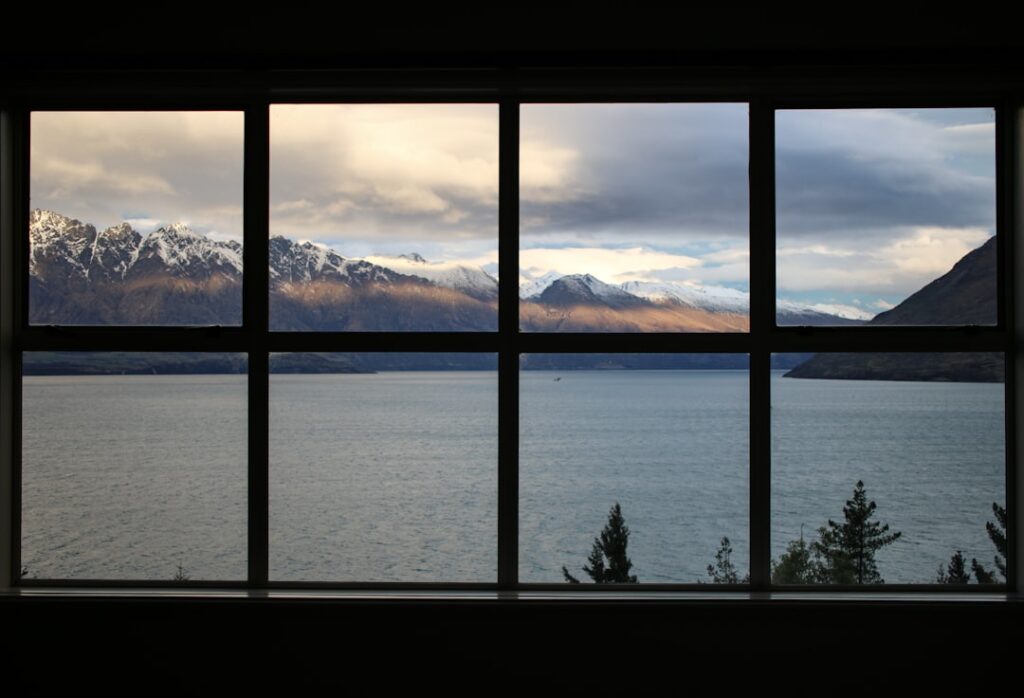
When you want to frame a view like a painting and lose as little heat as possible, nothing beats a fixed picture window. Because it does not open, it has no moving parts, no gaps for air to sneak through, and the largest unobstructed glass area of any window style. That combination makes it both the most energy-efficient and often the most dramatic window in the house. Here is what to know before you order one.
Part of our Windows & Doors guide — explore the full guide →
- What Sets a Fixed Picture Window Apart
- Standard Sizes and Custom Options
- Glass and Energy Performance
- What a Fixed Picture Window Costs
- Frame Materials Compared
- Where a Picture Window Works Best
- Combining Picture Windows Into Larger Assemblies
- Condensation and Comfort
- Installation and Longevity
- Fixed Glazing Window vs Operable Panes: When the Glass Fails
What Sets a Fixed Picture Window Apart
A picture window is a single, large, stationary pane set in a frame. There is no sash to slide, crank, or tilt, which is exactly why it seals so tightly. Operable windows rely on weatherstripping around moving parts, and that weatherstripping is where air leaks develop over time. A fixed unit has none of that, so it holds its seal for decades.
The tradeoff is obvious: it never opens for ventilation. That is why designers usually pair a large picture window in the center with operable casement or double-hung windows on either side, capturing the view through the big pane while getting airflow from the flanking units.
Standard Sizes and Custom Options
Picture windows come in a wide range of sizes because their lack of hardware lets them scale up. Common stock widths run from 2 to 8 feet, and heights from 1 to 8 feet, though custom fabrication can go larger for architectural glass walls.
- Small accent: 24 by 24 inches, used above cabinets or in stairwells.
- Standard living room: 4 by 4 feet up to 6 by 4 feet, a typical single view window.
- Large statement: 6 to 8 feet wide by 5 to 6 feet tall, often the centerpiece of a wall.
Very large panes get heavy and require tempered or laminated safety glass, plus enough structural header above to carry the load. If your opening exceeds roughly 5 feet in either dimension, expect the installer to discuss glass thickness and framing support.
Glass and Energy Performance
The glass package is where a picture window earns its efficiency reputation. Because there is so much glass and no ventilation benefit, the coatings and gas fills matter more here than on a small window.
- Double or triple pane: Two or three glass layers with insulating air space. Triple pane suits cold climates and noisy locations.
- Low-E coating: A microscopically thin metallic layer that reflects heat, keeping warmth in during winter and out during summer.
- Argon or krypton gas fill: Inert gas between panes that insulates better than plain air.
Look at two numbers on the label. The U-factor measures heat loss; lower is better, with quality units around 0.20 to 0.30. The Solar Heat Gain Coefficient, or SHGC, measures how much solar heat passes through; pick lower in hot climates and higher in cold ones to harvest winter sun.
What a Fixed Picture Window Costs
Because it has no operating hardware, a picture window often costs less per square foot than an equivalent operable window, but its larger size can raise the total.
| Size | Unit Price | Installed |
|---|---|---|
| Small (2×3 ft) | $200-$450 | $400-$800 |
| Medium (4×4 ft) | $400-$900 | $700-$1,500 |
| Large (6×5 ft) | $800-$1,800 | $1,300-$3,000+ |
New construction or a simple replacement in an existing opening sits at the lower end. Enlarging an opening, adding a structural header, or craning a heavy oversized pane into place pushes costs up. Frame material also matters, with vinyl the most affordable, fiberglass and composite mid-range, and wood-clad the premium choice.
Frame Materials Compared
The frame affects looks, maintenance, and how well the whole unit insulates.
- Vinyl: Affordable, low maintenance, good insulation. The value pick for most homes.
- Fiberglass: Strong, stable in temperature swings, holds paint well, mid-priced.
- Wood-clad: Warm interior wood with a protective exterior aluminum or vinyl skin. Beautiful but costliest.
- Aluminum: Slim sightlines and strength, but conducts heat unless thermally broken.
For a big picture window, a slim, strong frame maximizes the glass area, which is usually the point. Fiberglass and thermally broken aluminum give you thin profiles without sacrificing much efficiency.
Where a Picture Window Works Best
Place a picture window where the view or the light is the reward and ventilation is not the priority. A living room facing a backyard, a stairwell landing, a dining room overlooking a garden, or a bathroom set high for privacy all suit the style. In rooms that need airflow, flank the fixed pane with operable windows so you get both the view and a breeze.
Orientation matters for comfort. A large south- or west-facing picture window can flood a room with afternoon heat, so choose a lower SHGC glass or plan for shading if summer overheating is a concern. North-facing units give steady, glare-free daylight ideal for work and living spaces.
Combining Picture Windows Into Larger Assemblies
One of the reasons designers love the picture window is how easily it combines into bigger compositions. A single large fixed pane often anchors an assembly, flanked or topped by operable and decorative units to balance view, ventilation, and light.
- Picture window with flanking casements: The classic living-room arrangement. The big pane frames the view; the crank-out casements on each side provide airflow.
- Picture window with transom above: A horizontal window over the main pane raises the light and adds architectural height.
- Grouped mulled units: Several windows joined with structural mullions read as a single glass wall while keeping each unit a manageable size.
Mulling smaller units together is often smarter than ordering one enormous pane, because a giant single sheet of glass gets heavy, expensive, and hard to replace if the seal fails. Grouping keeps each piece serviceable while still delivering an expansive, wall-of-glass effect.
Condensation and Comfort
Because a picture window is a large expanse of glass, its interior surface temperature matters for comfort. On a cold day, a poorly insulated pane feels drafty and can collect condensation as warm indoor air hits the cold glass. A low-U-factor triple-pane unit with a warm-edge spacer keeps the interior glass closer to room temperature, which cuts both the chill and the condensation.
Managing indoor humidity helps too. If you routinely see fog on the inside of the glass, the culprit is usually high indoor humidity rather than a failed window, and improving ventilation solves it. Fog trapped between the panes, on the other hand, means the insulating seal has failed and the unit needs replacement, which is one more reason a tight, high-quality seal is worth paying for on a window this large.
Installation and Longevity
Installing a fixed unit is generally straightforward because there is no sash to adjust, but a large pane is heavy and awkward. Two installers, and sometimes suction lifting tools, set the glass safely. Proper flashing and a continuous bead of sealant around the frame keep water out, and because the unit never moves, that seal stays intact far longer than on an operable window.
With quality glass and a good install, a fixed picture window can last 20 to 40 years before the insulating seal shows any fogging. That longevity, combined with the tightest air seal of any window and the biggest possible view, is why the picture window remains the go-to choice when a homeowner wants to turn a wall into a frame for the outdoors.
When you order, ask the supplier for the exact U-factor, SHGC, and visible transmittance ratings, and confirm whether the glass is tempered or laminated for safety, which many jurisdictions require at large sizes and low sill heights. If the window sits within a certain distance of a walking surface or the floor, code may mandate safety glazing regardless of size. Spend a few minutes matching the glass package to your climate and orientation, because on a window this large the difference between a basic double pane and a well-specified low-E triple pane shows up in both your comfort and your energy bills every season.
Fixed Glazing Window vs Operable Panes: When the Glass Fails
In window-industry terms, a fixed glazing window is any unit whose glass is set permanently into the frame with no sash, and a picture window is simply the best-known example. You will also see it listed as a fixed pane window, a direct-set window, or a stationary unit. Knowing the difference between fixed and operable panes matters most when you are mixing styles on one wall and, years later, when the glass itself needs attention.
An operable pane lives inside a sash, which is a separate frame that moves and seals against weatherstripping. A fixed pane is either glazed directly into the main frame or held in a non-moving sash by removable glazing stops, the narrow strips (also called beads) that clamp the glass in place. With no sash, there is more glass area in the same rough opening, and there is less that can wear out.
| Feature | Fixed pane | Operable pane |
|---|---|---|
| Ventilation and egress | None | Yes; can meet bedroom egress rules |
| Air leakage over time | Very low, no moving seals | Rises as weatherstripping wears |
| Glass area per opening | Largest | Reduced by sash frame |
| Parts that wear out | Insulating glass seal | Seal, hardware, balances, weatherstripping |
Replacing Only the Insulated Glass Unit
Because the frame of a fixed unit rarely wears out, fogging between the panes does not automatically mean a whole new window. The sealed double- or triple-pane assembly, called an insulated glass unit or IGU, can often be swapped on its own. A glass shop measures the existing unit, including its overall thickness and any low-E coating or gas fill, and orders a matching replacement. The installer then removes the glazing stops, cuts the old glazing tape or sealant, lifts the IGU out, sets the new one on setting blocks, and re-seals and re-installs the stops.
An IGU swap makes sense when the frame is square, solid, and not leaking at the flashing. If the frame is rotted, warped, or the window leaks around its perimeter, a full replacement is the better fix. Check whether your manufacturer’s glass-seal warranty still applies before paying out of pocket.
Large panes are heavy and break into sharp edges, so glass removal is safest left to a glazier. If you are helping, wear cut-resistant gloves and eye protection, use suction cups rated for the weight, keep the pane upright rather than carrying it flat, and have two people on anything larger than you can hold at arm’s length comfortably.