A poured concrete porch is fine, until you compare it to the same square footage finished in flagstone. The natural stone reads instantly more expensive, ages gracefully, and adds resale value that thin pavers cannot match. A well-built flagstone porch runs $18 to $32 per square foot installed and lasts 50 to 100 years with basic care. The trick is choosing the right stone for your climate, getting the substrate right, and sealing it before the first rain rather than after.
Picking the Right Flagstone Type
Flagstone is a category, not a single product. Pennsylvania bluestone, Arizona sandstone, Tennessee crab orchard, and Oklahoma chocolate brown all fall under the flagstone umbrella but behave differently underfoot and under weather.
Pennsylvania bluestone is the workhorse of Northeast porches. Tight, dense grain, low water absorption around 2 to 4 percent, and proven freeze-thaw resistance. Expect $5 to $8 per square foot for full-color irregular shapes, or $7 to $12 for thermal-cut pattern stone. Arizona sandstone runs warmer in color (buff, peach, rust) but absorbs more water at 5 to 8 percent, making it a poor choice for hard freeze climates without aggressive sealing.
Dry-Laid vs Mortar-Set Installation
The two main installation methods serve different purposes and budgets. Dry-laid flagstone sits on a compacted gravel and sand bed, with sand or polymeric sand filling the joints. Cost runs $12 to $20 per square foot installed. This method is appropriate for ground-level porches where minor settling is acceptable and water drainage is critical.
Mortar-set flagstone bonds to a poured concrete slab using a Type S mortar like Quikrete Mason Mix or Sakrete Type S ($14 a 60-pound bag). Installed cost climbs to $22 to $34 per square foot. The result is dimensionally stable, supports heavy outdoor furniture without rocking, and lasts longer in heavy-use areas.
Substrate Requirements
Mortar-set flagstone needs a sound concrete slab at least 4 inches thick with a minimum compressive strength of 3,000 PSI. Cracks wider than 1/8 inch should be repaired with Quikrete Concrete Crack Seal before tile setting. Sound, level concrete is the difference between a 50-year porch and one that needs repairs in 8 years.
Dry-laid installations require a 4 to 6 inch base of compacted crushed stone (3/4 inch minus is standard) topped with 1 inch of bedding sand. Compact each lift in 2-inch passes with a plate compactor rented at $80 per day from Home Depot. Skipping compaction is the single most common cause of dry-laid porches that go wavy within two years.
Joint Width and Pattern
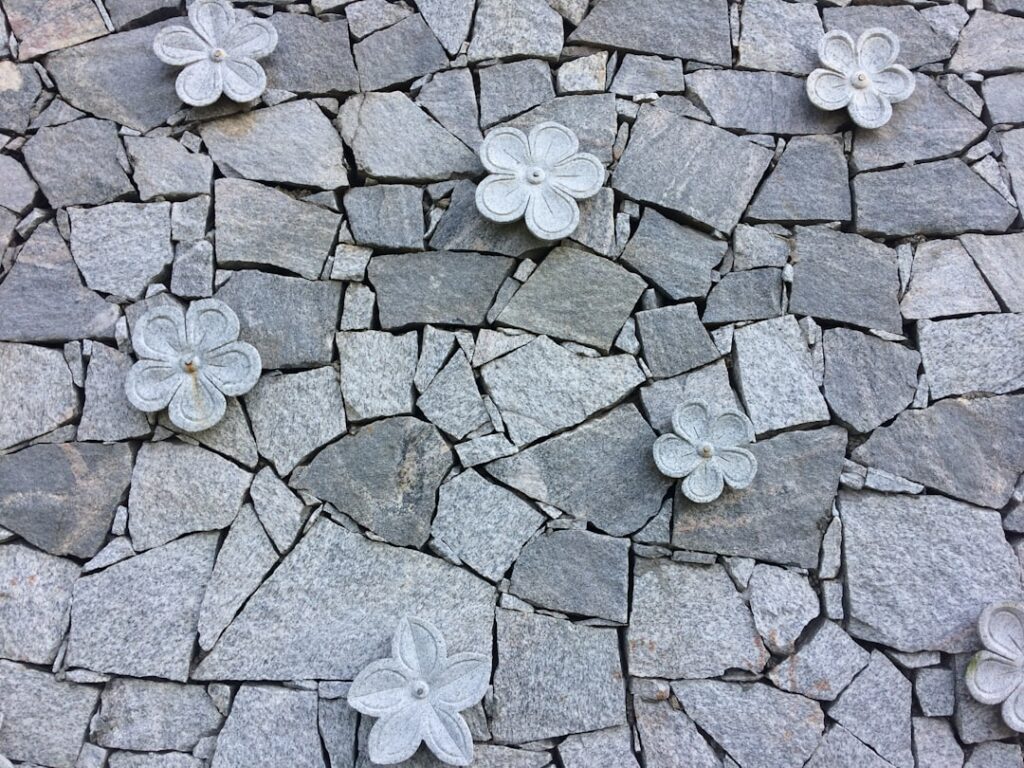
Irregular “crazy quilt” patterns use joints ranging from 1/2 to 1 1/2 inches wide and look organic. Cut-pattern flagstone using rectangular pieces gets tighter 3/8 to 1/2 inch joints and reads more formal. The pattern choice affects material yield and waste, with irregular patterns running about 10 percent waste and cut patterns closer to 5 percent.
For dry-laid joints, Alliance Gator Polymeric Sand ($30 per bag covering about 70 square feet) creates a swept joint that hardens to resist weeds and ants. Apply on a dry day, sweep into joints, compact lightly, then mist with water in three light passes. Skip the heavy initial soak that washes the sand out.
Sealing Schedule and Products
Sealing protects flagstone from staining, freeze damage, and efflorescence. Apply the first coat of sealer 30 days after installation to let any moisture in the substrate escape. Miracle Sealants 511 Impregnator ($55 per quart) penetrates the stone and lasts 3 to 5 years per application on most flagstone types. DryTreat Stain-Proof ($89 per quart) lasts up to 15 years and is worth the cost on high-value installations.
Avoid topical sealers that leave a glossy film, since they trap moisture, peel within seasons, and require chemical stripping to remove. Penetrating sealers from Miracle Sealants, DryTreat, and Aqua Mix all let the stone breathe while blocking water absorption.
Drainage Details That Matter
Slope every flagstone porch a minimum of 1/4 inch per foot away from the house. A 6-foot deep porch needs 1.5 inches of fall from house wall to outer edge. Reverse-slope porches funnel water back toward the foundation, causing basement leaks and stone damage from repeated freeze-thaw cycles.
For porches with railings or roof drains depositing water, add a French drain along the downstream edge. A 4-inch perforated pipe surrounded by 3/4-inch crushed stone, wrapped in geotextile fabric ($30 for a 100-foot roll), captures runoff and carries it away from the foundation.
Cost Breakdown for a Typical Project
A 10×12 foot flagstone porch (120 square feet) using Pennsylvania bluestone irregular shapes set in mortar over an existing concrete slab runs roughly:
- Stone material: $700 to $1,000 (120 square feet plus 10 percent waste)
- Mortar and grout: $180 to $260
- Sealer (one quart): $55 to $90
- Installation labor: $1,800 to $2,400
- Total project: $2,735 to $3,750
DIY installation on a small porch saves the labor portion but requires comfort with masonry tools, a wet saw rental ($75 per day), and 30 to 60 hours of physical work. First-timers should budget for some material waste from misfit cuts.
Maintenance Routine That Works
Sweep monthly during fall to remove tannin-leaching leaves that stain stone. Rinse with a garden hose every couple of weeks during pollen season. For deeper cleaning twice a year, use Aqua Mix Heavy Duty Tile and Grout Cleaner ($35) at the recommended dilution, scrub with a stiff nylon brush, and rinse thoroughly.
Reseal every 3 to 5 years depending on sun exposure and sealer choice. Quick test: drip water on the stone. If it beads tight, the sealer is still working. If it soaks in within 30 seconds, time to reapply.
Long-Term Value Calculation
A flagstone porch typically returns 70 to 95 percent of its installed cost in resale value, compared to 55 to 70 percent for stamped concrete and 40 to 55 percent for plain concrete. The natural material reads as a permanent improvement, which matters in markets where buyers compare comparable homes by curb appeal first.
Get the substrate right, choose stone suited to your climate, seal it properly, and a flagstone porch outlasts the rest of the house. Skip those fundamentals and you will be patching loose stones every spring. Spend a little more on the prep work and the finish becomes maintenance-free for decades.